
Hue Royal Tombs: 7 Best Imperial Tombs Guide
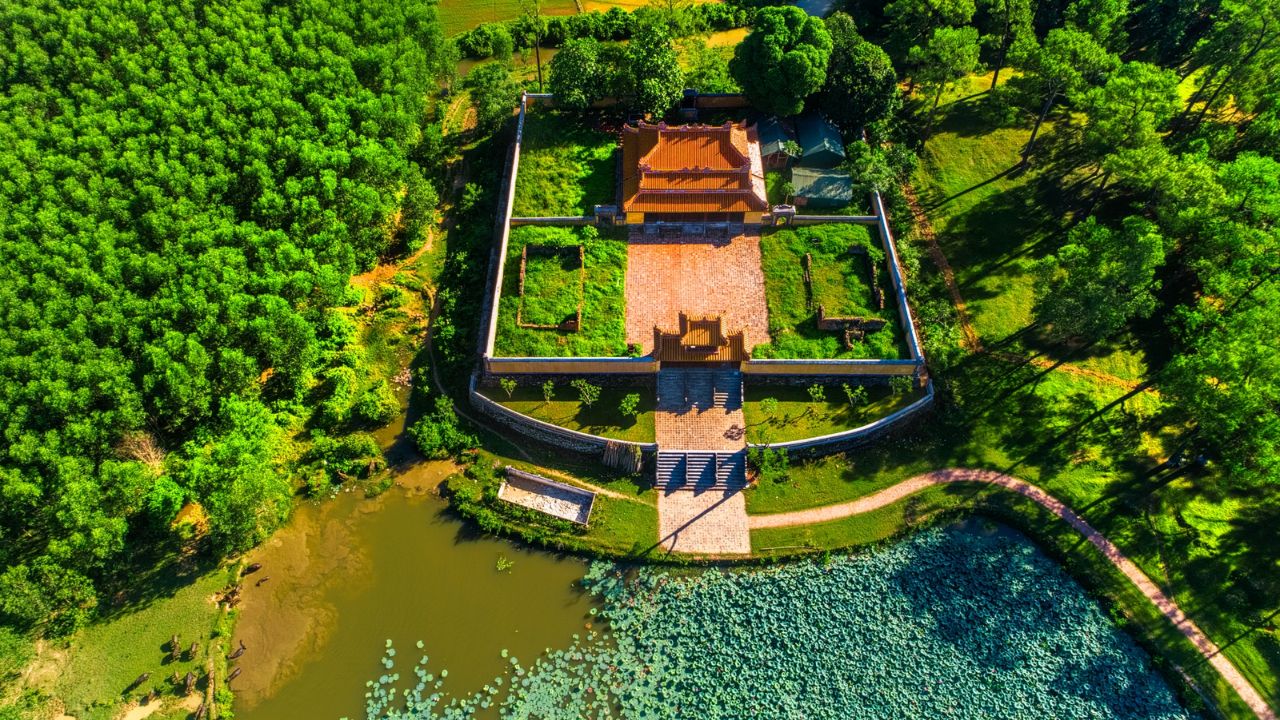
When you hear “tomb” or “mausoleum,” you probably picture something eerie like dark, cold, and unsettling. But Hue Royal Tombs break that image completely. Here, you’ll find quiet lakes, pine-covered hills, and courtyards built more for reflection than for mourning.
That’s because the emperors of the Nguyen Dynasty — Vietnam’s last royal family — designed these tombs as more than resting places. Each one blends architecture, philosophy, and personal taste into a space meant to reflect how the emperor wanted to be remembered. Some feel grand and formal, others quiet and poetic — but all of them offer a rare, peaceful window into Vietnam’s imperial past.
This guide covers the history, design, and practical tips to help you plan a smooth visit.
Hue Royal Tombs Overview
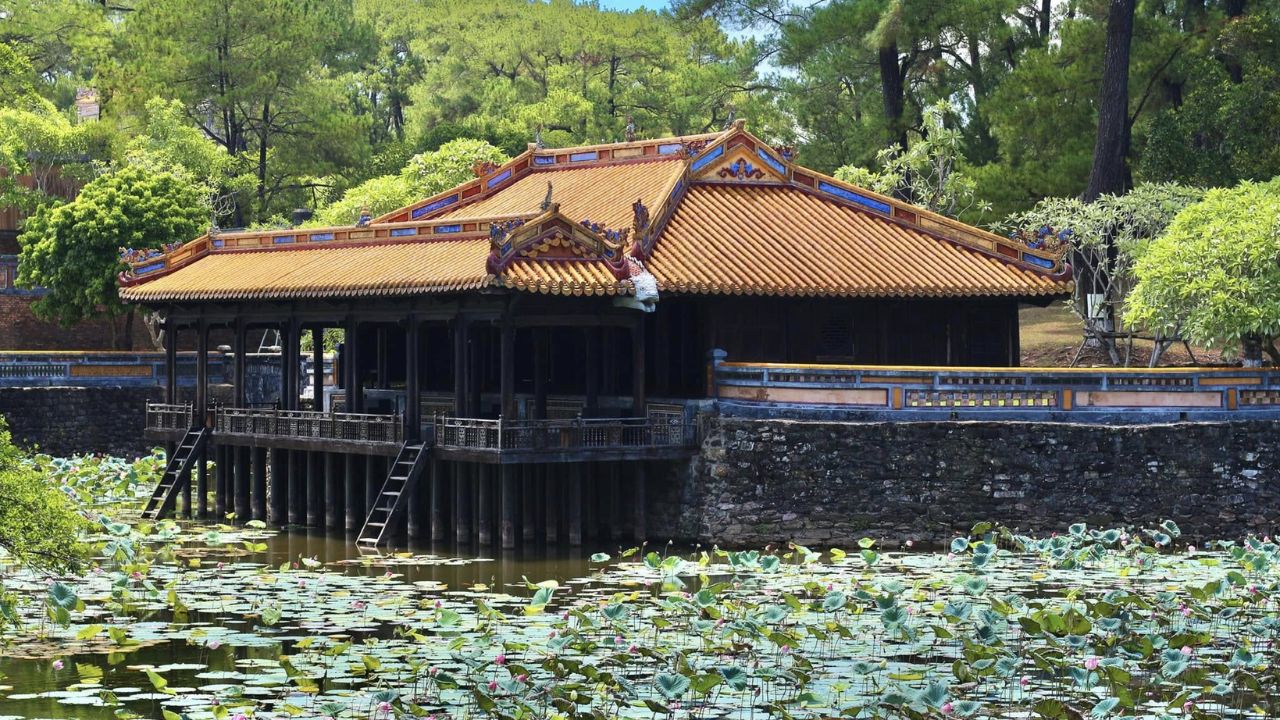
The Hue royal tombs are burial complexes built for the emperors of the Nguyen Dynasty, which ruled Vietnam from 1802 to 1945. Thirteen emperors sat on the throne during this period, but only seven tombs were ever built. That’s a detail I find fascinating, and it usually surprises first-time visitors too.
The Nguyen Dynasty had 13 emperors, but the dynasty built only 7 tombs for them. Some emperors died in exile, some reigned too briefly, and others simply didn’t get a tomb of their own. The seven that remain today belong to Gia Long, Minh Mang, Thieu Tri, Tu Duc, Duc Duc, Dong Khanh, and Khai Dinh. Each one reflects the personality and taste of the man buried there.
This gap between 13 rulers and 7 tombs comes down to historical circumstances rather than one single reason. Some emperors reigned for a short time, some faced political turmoil, and a few were removed from power before a tomb could even be planned. I like how each surviving tomb becomes a small window into a specific chapter of Vietnam’s imperial history.
The Hue royal tombs are also part of the larger Complex of Hue Monuments, and UNESCO recognized this complex as a World Heritage Site.
The Philosophy Behind the Tombs’ Design
Nguyen emperors believed that death wasn’t an end but a continuation of life in another form. Each Royal Tomb reflects this philosophy of death as life, which explains why the tombs feel more like palaces than graveyards. Walking through Tu Duc Tomb, for example, feels closer to strolling through a peaceful royal garden than visiting a cemetery.
Here’s something that catches most visitors off guard: many emperors built their own tombs while they were still alive and ruling. They didn’t see this as morbid. Instead, they saw it as preparing a second home, one they would eventually move into for eternity. Not everyone finds this comforting, but I think it says a lot about how differently these rulers viewed mortality compared to modern attitudes.
The location of each tomb wasn’t picked at random either. Hue Royal Tombs are located near the Perfume River, and this placement follows feng shui principles tied to nature, water, and direction.
The setting sun to the west symbolized the emperor’s passing, and the river added a spiritual layer to the whole burial ground. If you’re someone who enjoys nature blended with history, this part of the story will likely stick with you.
Detailed Breakdown of the 7 Nguyen Dynasty Royal Tombs
Tu Duc Tomb: The Poetic and Lyrical Sanctuary
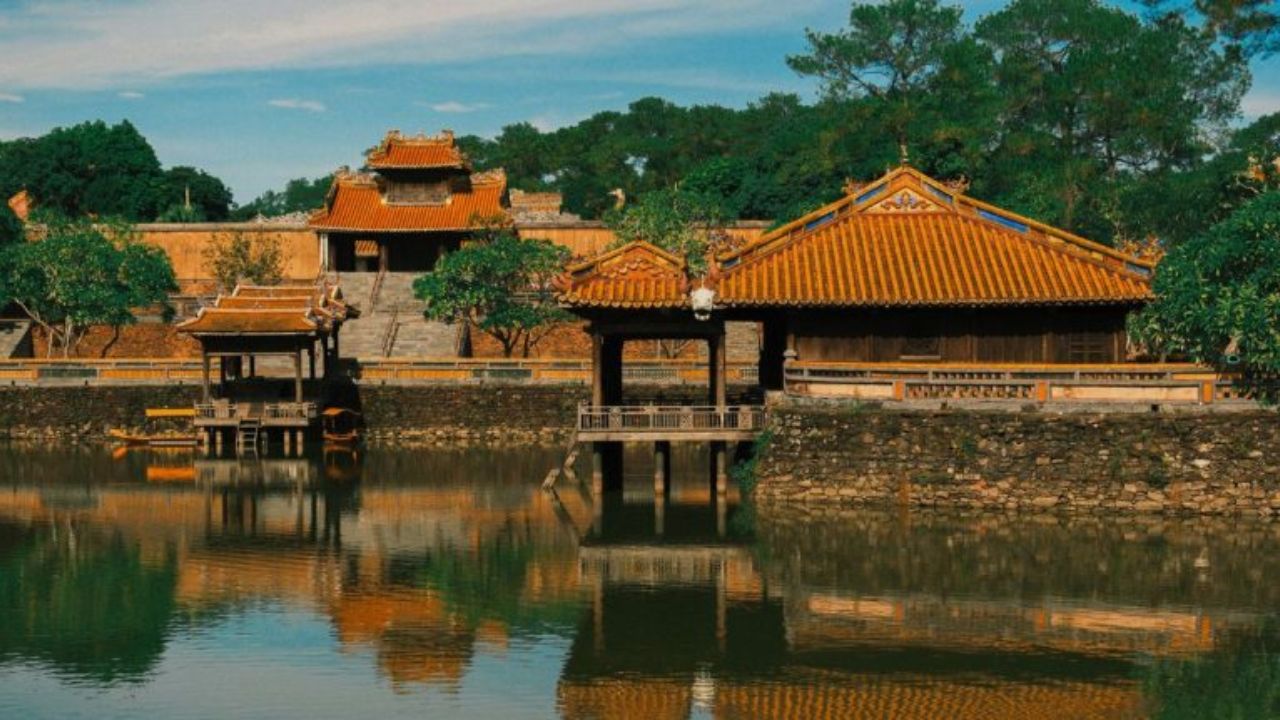
I love spending quiet mornings walking around Tu Duc Tomb, which was built between 1864–1867. This place feels more like an elegant royal park than a burial complex. Emperor Tu Duc used this setting while he was still alive to read books, compose poetry, and relax away from imperial duties.
The landscape features the romantic Luu Khiem Lake, delicate wooden pavilions like Xung Khiem Pavilion, and even Minh Khiem Hall, a historic royal theater. Walking along the shaded pine paths gives you an intimate glimpse into the poetic and reflective soul of this monarch.
What most visitors don’t know is that there’s a quiet, lesser-visited area within the grounds called Boi Lang, tucked inside Tu Duc tomb itself. This is the resting place of King Kien Phuc, the 7th king of the Nguyen Dynasty.
Here’s the sad part: Tu Duc had no children of his own, so he adopted Kien Phuc at just 2 years old. The boy was crowned in 1883, but his reign lasted only eight months before he died young. It’s a small, easy-to-miss corner of the tomb, but if you like the quieter, more personal side of history, it’s worth asking your guide to point it out.
- Entrance fee: 150,000 VND/Adult | 30,000 VND/ Children (7-12 yrs)
- Opening hour:
- Summer (from 16/3 to 15/10): 6:30 AM – 6:00 PM
- Winter (from 16/10 to 15/3): 7:00 AM – 5:30 PM
Minh Mang Tomb: Symmetry and Solemn Majesty
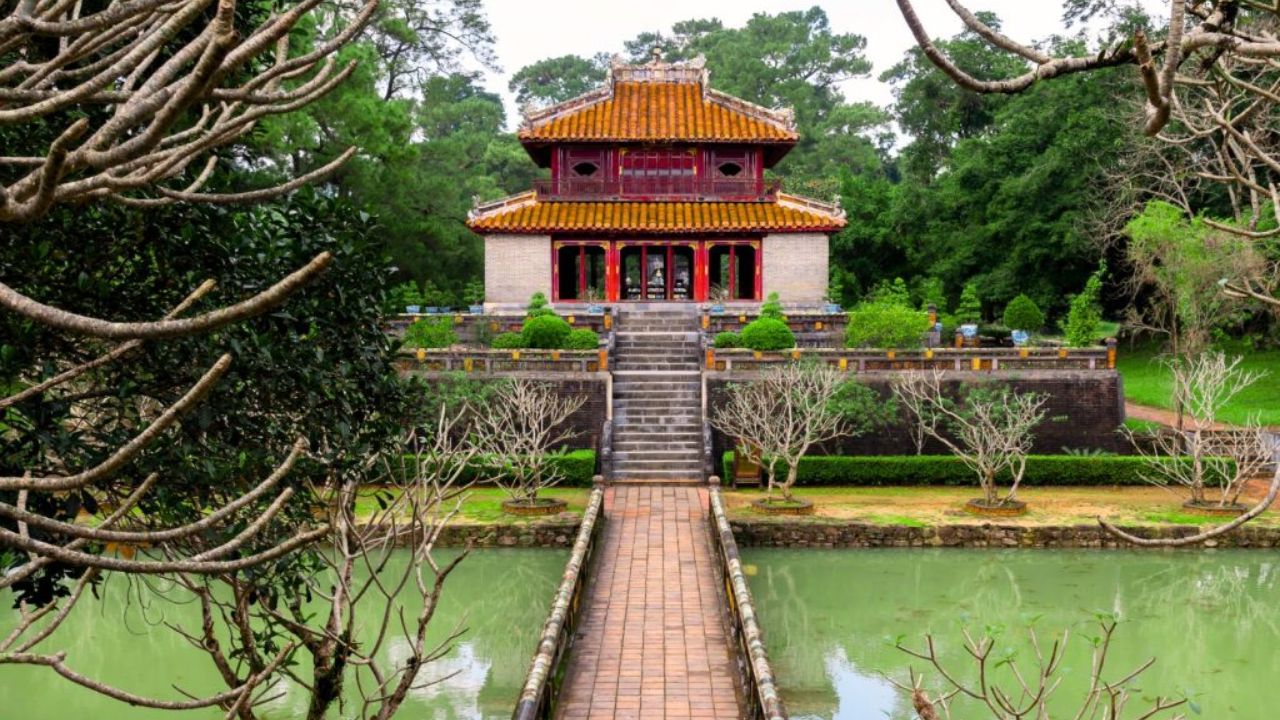
If you appreciate balance and order, Minh Mang Tomb will completely captivate you. Planned by Emperor Minh Mang and finished in the early 1840s, this complex is famous for its strict central axis design.
Everything here follows a straight line running through beautiful stone courtyards, traditional stele pavilions, and decorative gates. Surrounding this central spine are peaceful lotus ponds and towering pine trees. Stone statues of mandarins, horses, and elephants line the honor courtyard, showing off a classic imperial dignity that feels both serious and deeply spiritual.
- Entrance fee: 150,000 VND/Adult | 30,000 VND/ Children (7-12 yrs)
- Opening hour:
- Summer (from 16/3 to 15/10): 6:30 AM – 6:00 PM
- Winter (from 16/10 to 15/3): 7:00 AM – 5:30 PM
Khai Dinh Tomb: The Masterpiece of Ceramic Mosaics
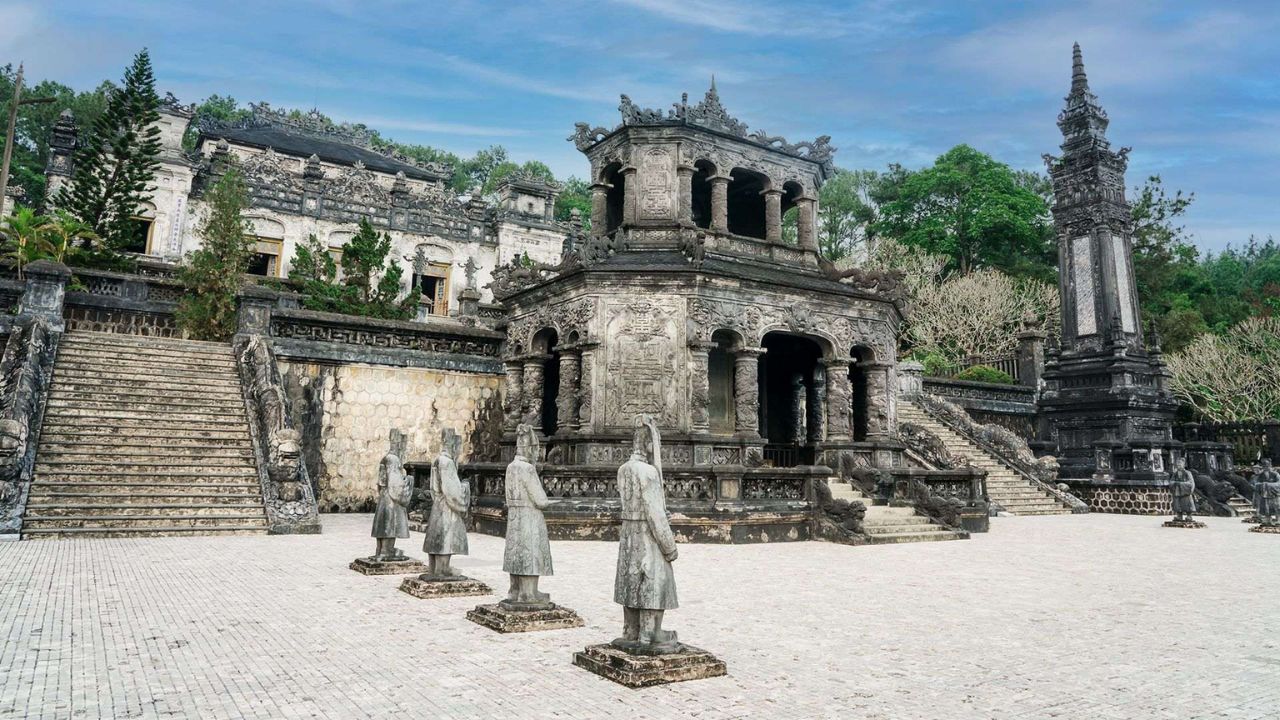
Khai Dinh Tomb is the boldest and most unusual of the seven. Unlike older wooden complexes, this structure utilizes modern concrete, dark wrought iron, and dramatic outdoor staircases.
Inside Thien Dinh Palace, you will discover mind-blowing mosaic murals made entirely out of colorful broken glass and porcelain tiles. It represents a bold fusion of Vietnamese traditions with Western influences, including Roman, Gothic, and Hindu architectural accents.
Here’s the twist though: this tomb has the smallest area of all seven, yet it took the longest time to build, a full 11 years. That’s not a coincidence. Every inch of it demanded serious effort and money, mostly because the materials weren’t sourced locally.
Concrete and iron came all the way from France, while the ceramics and glass mosaics were imported from China and Japan. That’s a lot of logistics for the 1920s, and honestly, it shows in the level of detail once you’re standing inside.
- Entrance fee: 150,000 VND/Adult | 30,000 VND/ Children (7-12 yrs)
- Opening hour:
- Summer (from 16/3 to 15/10): 6:30 AM – 6:00 PM
- Winter (from 16/10 to 15/3): 7:00 AM – 5:30 PM
Gia Long Tomb: Imposing Grandeur in Nature
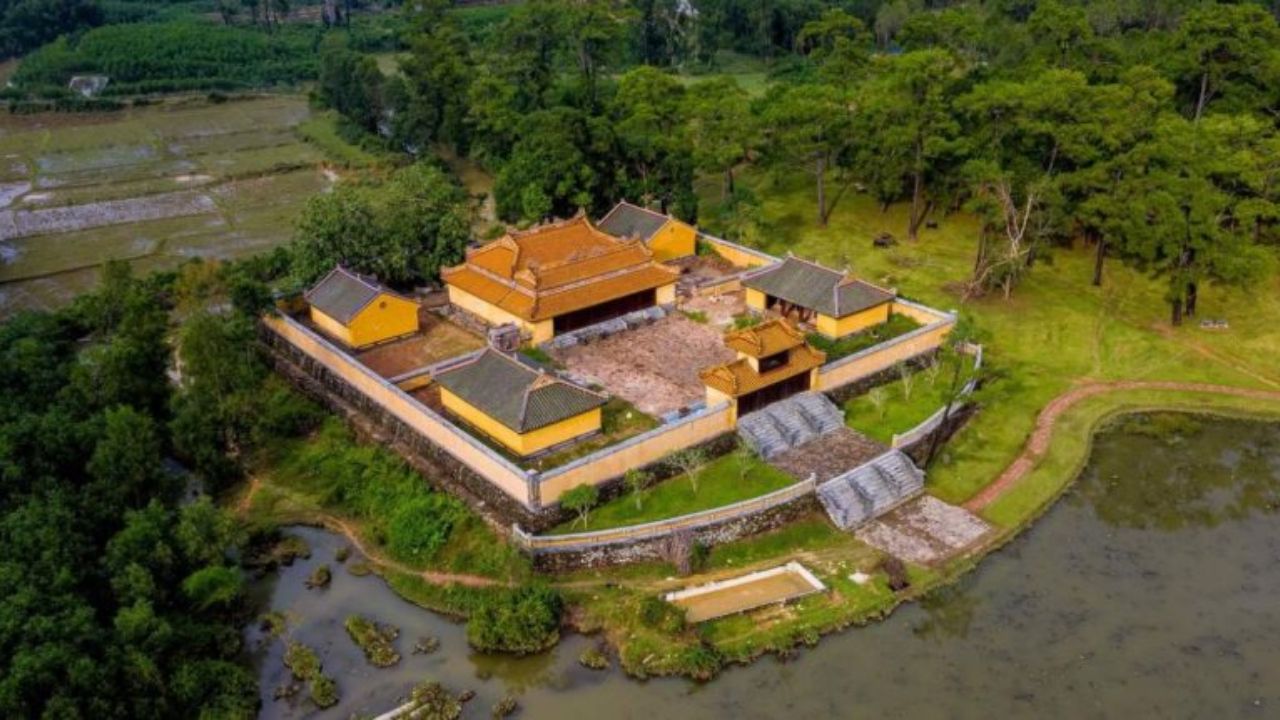
Gia Long Tomb stands as the earliest imperial burial complex, built for the founder who established the Nguyen Dynasty. Located on Thien Tho Son Mountain about 20 kilometers from central Hue, it remains raw, peaceful, and expansive.
Unlike urban sites, this compound blends directly into vast mountain ridges and open skies. You will not find overly flashy decorations here. Instead, massive stone structures and ancient pine trees give it an atmospheric, grand feel that truly honors the ruler who unified the country.
- Entrance fee: 150,000 VND/Adult | Free for Children under 12 yrs
- Opening hour:
-
- Summer (from 16/3 to 15/10): 6:30 AM – 6:00 PM
- Winter (from 16/10 to 15/3): 7:00 AM – 5:30 PM
Thieu Tri Tomb: Lightness and Harmony with the Countryside
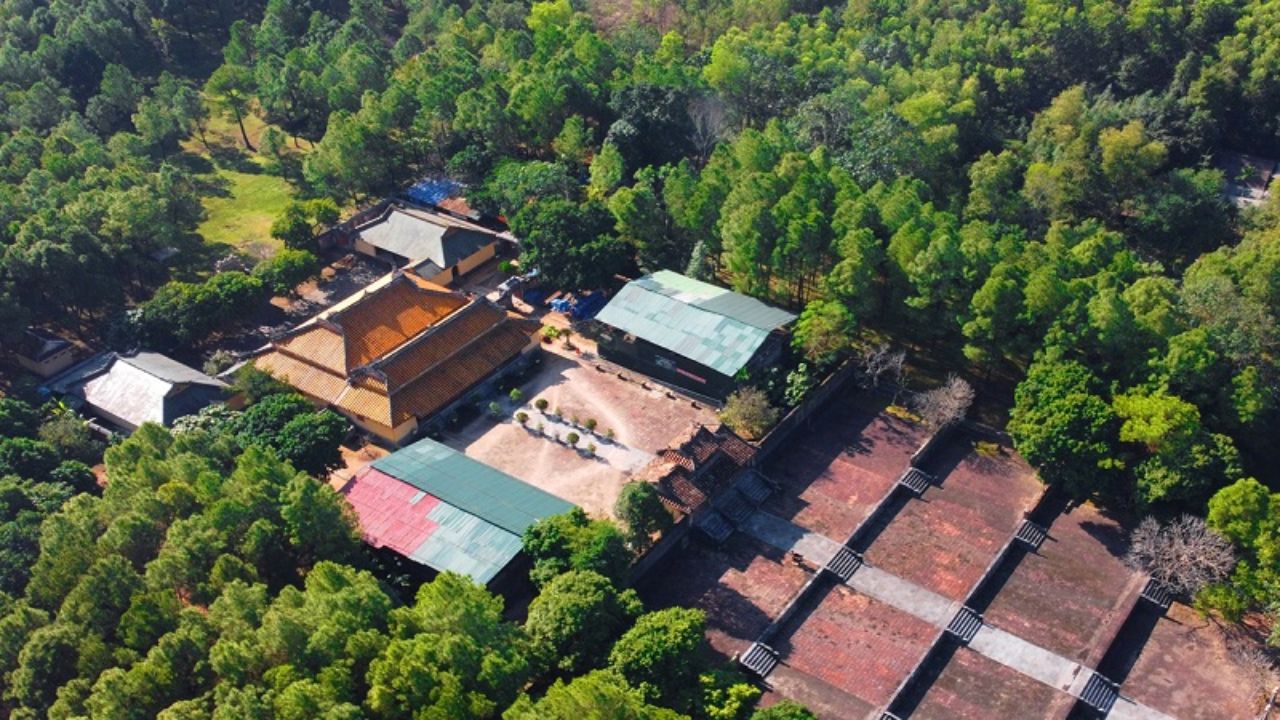
Constructed remarkably fast in just 10 months, Thieu Tri Tomb offers a light and airy atmosphere. Emperor Thieu Tri passed away before planning his site, so his successor built it with simplicity in mind.
It lacks an outer enclosure wall, allowing the compound to blend seamlessly into surrounding rice fields and local orchards. The layout skillfully borrows structural elements from both Minh Mang and Gia Long sites, making it a peaceful stop away from crowded tourist trails.
- Entrance fee: 50,000 VND/Adult | Free for Children under 12 yrs
- Opening hour:
-
- Summer (from 16/3 to 15/10): 6:30 AM – 6:00 PM
- Winter (from 16/10 to 15/3): 7:00 AM – 5:30 PM
Dong Khanh Tomb: The Early Fusion of Eastern and Western Styles
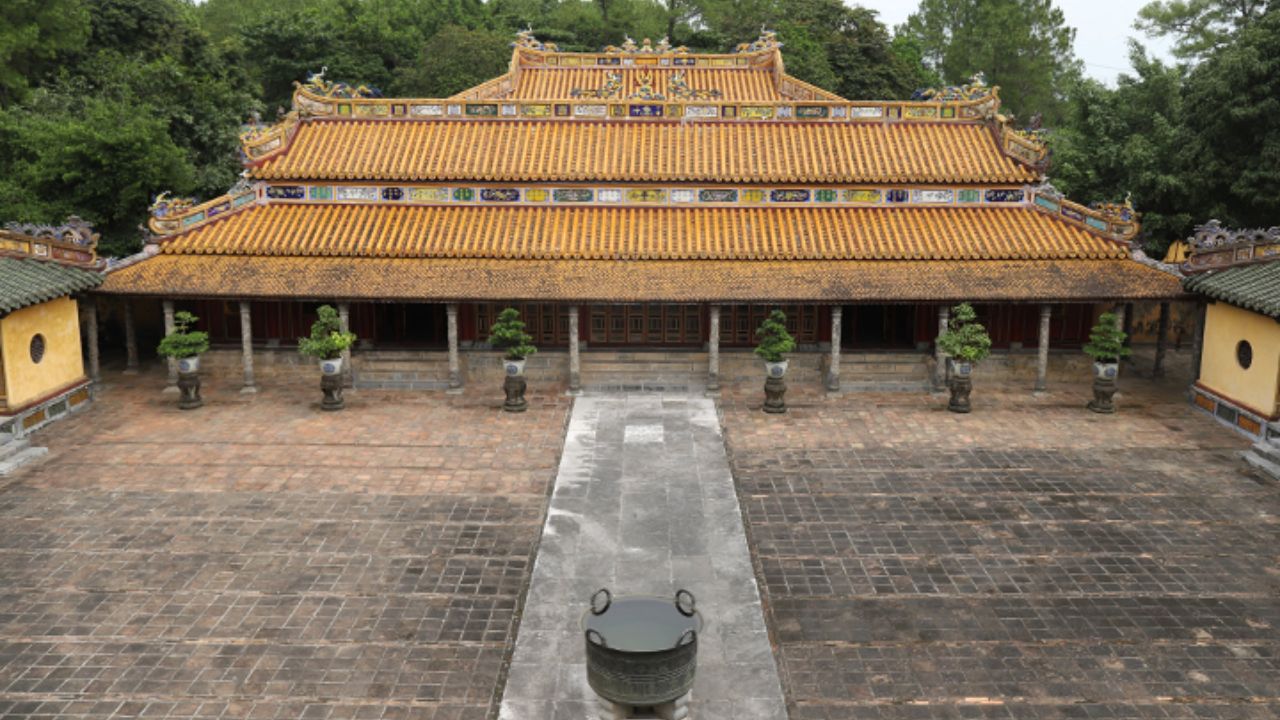
Built between 1888–1923, Dong Khanh Tomb offers a charming peek into a period of stylistic transition. It is located close to Tu Duc Tomb, making it easy to visit both together.
The highlight here is Ngung Hy Palace, which houses exquisite examples of traditional lacquer work, gilded woodwork, and colorful stained-glass windows. You can clearly see early French architectural details beginning to mix with traditional Vietnamese crafts.
- Entrance fee: 100,000 VND/Adult | Free for Children under 12 yrs
- Opening hour:
-
- Summer (from 16/3 to 15/10): 6:30 AM – 6:00 PM
- Winter (from 16/10 to 15/3): 7:00 AM – 5:30 PM
Duc Duc Tomb: Modest Rest for Three Emperors
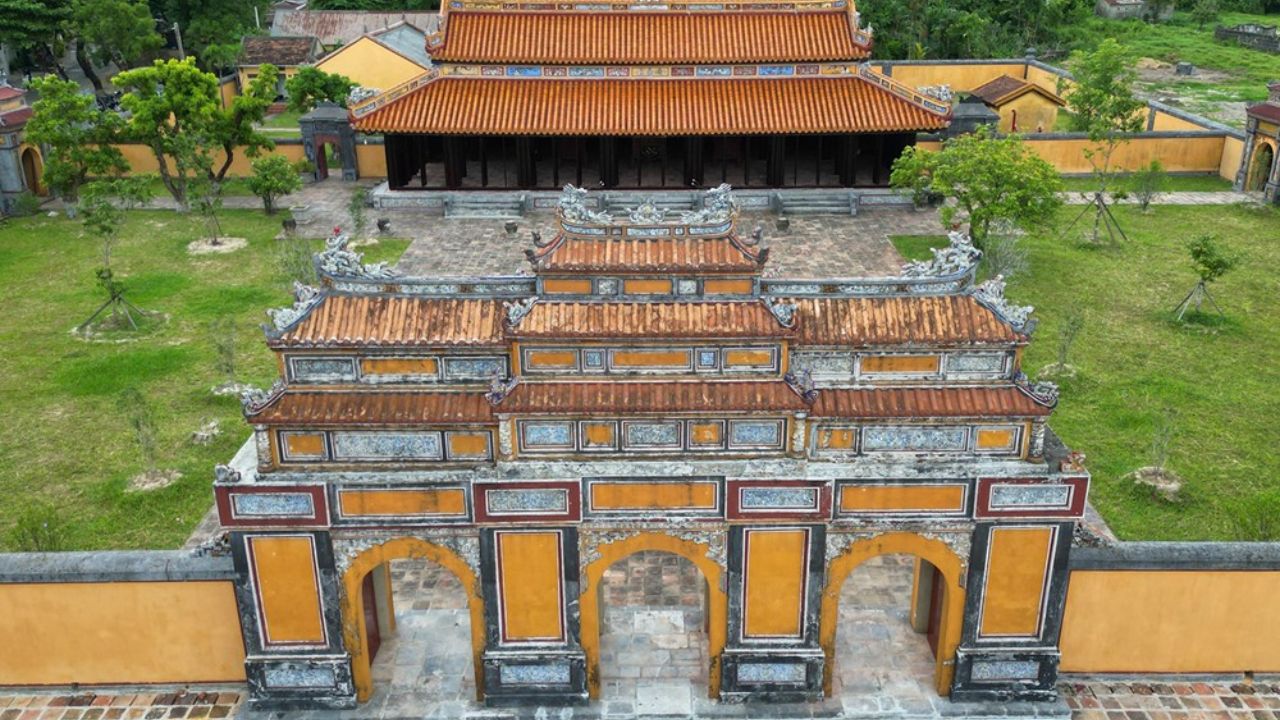
Covering an area of just 3,445 square meters, Duc Duc Tomb is the smallest and most modest imperial complex. Established in 1889, it carries a simple layout without massive lakes or sprawling stone gardens.
Despite its compact size, it holds immense historical weight because it serves as the resting place for three different emperors: Emperor Duc Duc, Emperor Thanh Thai, and Emperor Duy Tan. It offers a humble, quiet spot for history lovers wishing to pay their respects.
- Entrance fee: 50,000 VND/Adult | Free for Children under 12 yrs
- Opening hour:
-
- Summer (from 16/3 to 15/10): 6:30 AM – 6:00 PM
- Winter (from 16/10 to 15/3): 7:00 AM – 5:30 PM
Comparing Architectural Styles, Layouts, and Cultural Concepts
When you evaluate these seven complexes together, clear architectural patterns emerge despite their individual differences. Each complex splits into two fundamental zones:
- The Temple and Palace Section: Working spaces, dining rooms, theaters, and worshipping altars used by the living king and maintained after his passing.
- The Grave Section: The actual underground burial place marked by a stone stele, protective walls, and locked bronze gates.
To help you decide which locations match your travel style best, here is a quick overview comparison:
| Imperial Tomb | Construction | Core Architectural Vibe | Key Highlight Feature |
|---|---|---|---|
| Tu Duc | Built 1864–1867 | Poetic, graceful, and natural | Luu Khiem Lake & Minh Khiem Hall |
| Minh Mang | Built 1840–1843 | Solemn, symmetrical, and majestic | Central axis & lotus pond |
| Khai Dinh | Built 1920–1930 | Bold, mosaic-rich, East-meets-West | Thien Dinh Palace mosaics |
| Gia Long | Built 1814–1820 | Imposing, massive, and scenic | Wild mountain landscapes |
| Thieu Tri | Built in 10 months | Flexible, open, and light | Countryside integration without outer walls |
| Dong Khanh | Built 1888–1923 | Charming, detailed, and hybrid | Ngung Hy Palace lacquer art |
| Duc Duc | Built 1889–1906 | Simple, compact, and modest | Shared burial of 3 monarchs |
The architectural evolution is easy to track. Early sites like Gia Long and Minh Mang focused on grand natural harmony and strict Confucian order. Mid-period complexes like Tu Duc added artistic garden elements. Later constructions like Dong Khanh and Khai Dinh introduced European materials, concrete, and ornate ceramic art.
Best Itineraries and Selection Guide for Visitors
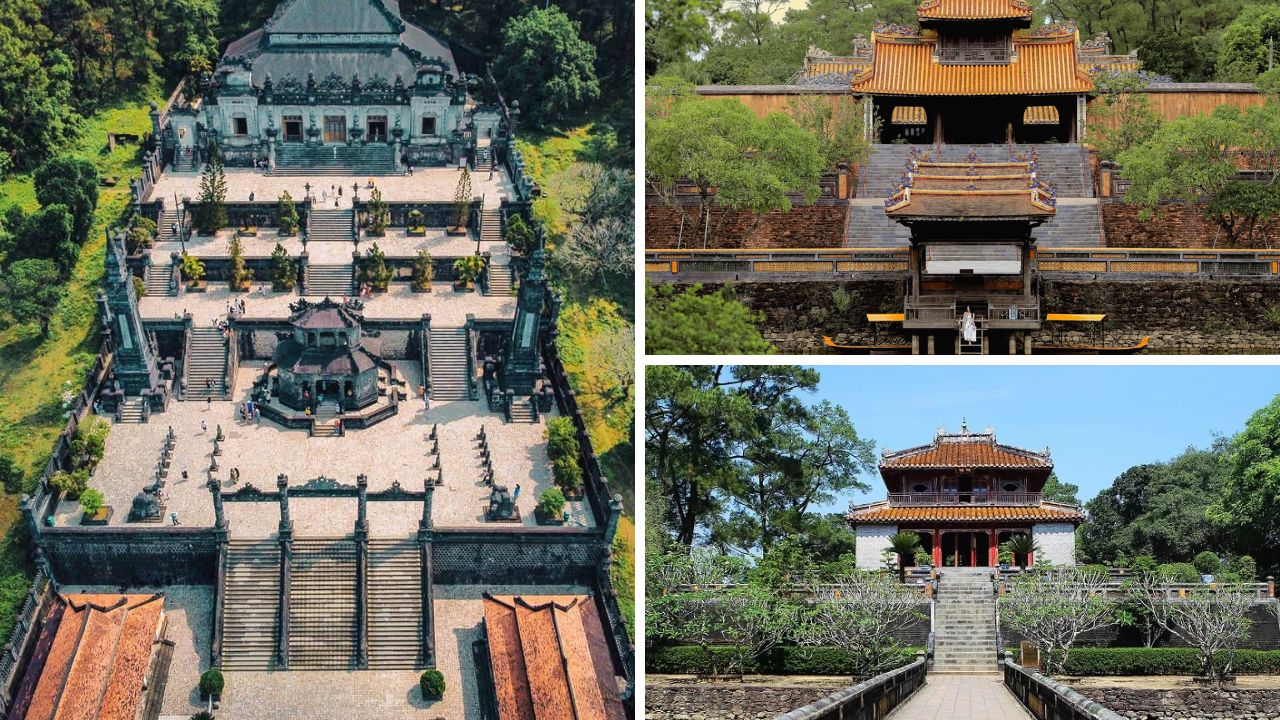
If your schedule is tight, you do not need to squeeze all seven sites into a single trip. In fact, doing so can easily lead to sightseeing fatigue. Here is how I suggest structuring your day based on available time:
- The Essential Highlights (Half-Day Itinerary): Focus on the top three sites—Minh Mang Tomb, Tu Duc Tomb, and Khai Dinh Tomb. These three offer the most striking visual contrast and represent the high points of imperial architecture. You can easily book a Tombs Tour with Rento Travel with stress-free.
- The Deep Dive (Full-Day Itinerary): Start early at Minh Mang, visit Khai Dinh, explore Tu Duc, and add Dong Khanh or Thieu Tri in the afternoon. Finish your day with a sunset river journey along the Perfume River back to central Hue.
- The Off-The-Beaten-Track Route: If you dislike crowds, rent a private car and head straight out to Gia Long Tomb and Thieu Tri Tomb. You will likely have entire courtyards to yourself!
For a smooth vacation, combine these mausoleum visits with other popular historical stopovers in town. You can check out our complete guide on unforgettable central Vietnam travel experiences to plan your daily sightseeing map like a professional.
Visitor Guide: Opening Hours, Tickets, Location, and Travel Tips
To make your trip smooth and hassle-free, keep these practical details in mind before setting off:
- Money-Saving Combo Tickets: If you plan to visit the Hue Citadel plus two or three mausoleums, buy a multi-site combo ticket at the main entrance counter to save significant cash.
- Getting Around: Hiring a private car with a local driver is the most comfortable choice, especially on hot summer days. Alternatively, adventurous travelers can rent a scooter or join an organized daily group tour.
- Best Time to Visit: The drier months from February to April offer pleasant weather and cool breezes, making outdoor walking enjoyable. September to October is also nice, though rainfall increases.
- What to Wear: Respectful dress is required inside altar rooms and temple halls. Keep your shoulders covered, wear knees-length shorts or trousers, bring a wide hat, apply sunscreen, and carry plenty of bottled water.
FAQs about Hue Royal Tombs
Which Hue royal tomb is the most popular?
Minh Mang, Khai Dinh, and Tu Duc Tombs are the most visited, thanks to their distinct architecture and historical significance.
How much time should I spend at each imperial site?
Plan to spend around 1 to 1.5 hours at sprawling complexes like Tu Duc and Minh Mang. Smaller or more direct sites like Khai Dinh or Duc Duc take about 45 to 60 minutes.
Can I travel between the sites by boat along the Perfume River?
Yes! You can hire a traditional dragon boat from central Hue to reach riverside sites like Minh Mang Tomb. However, you will still need short taxi rides or bicycle hires to reach inland spots like Khai Dinh.
Is one day enough to visit all 7 tombs?
It’s tight but possible if you hire a private car. Most travelers prefer focusing on 3 to 4 tombs to avoid rushing through each site.
