
Duc Duc Tomb: Guide to History & Unique Architecture

Nestled within the ancient capital, the Duc Duc Tomb stands as a profound milestone in Vietnamese imperial history. Known locally as An Lang, this historic complex reflects both royal heritage and national resilience.
Unlike larger imperial grounds, it holds a quiet dignity. It serves as the resting site for three generations of patriotic monarchs: Emperor Duc Duc, Emperor Thanh Thai, and Emperor Duy Tan. Visitors discover a site where royal traditions meet remarkable personal sacrifice.
The Tragic Story of Emperor Duc Duc’s Death and Burial
Emperor Duc Duc’s story is one of the saddest in Vietnam’s imperial history. Emperor Tu Duc (the fourth Emperor) had no son, so he adopted his nephew, who became Emperor Duc Duc (the fifth Emperor) in 1883. His reign lasted only three days before officials removed him from power. He was imprisoned and starved to death.
Soldiers wrapped his body in a mat and carried it for burial. Along the way, near An Cuu village, the rope holding his body snapped. His remains fell to the ground right there. Taking this as a sign from heaven, they buried him hastily on that very spot, with no proper ceremony at all.
Not long after, a beggar died near that unmarked grave. Villagers, unaware of what lay beneath, buried him right on top of the emperor.
In 1889, Emperor Thanh Thai exhumed his father’s remains and found two sets of bones. He chose to rebury both together and built a proper tomb, naming it An Lang. Later, Emperor Duy Tan’s remains joined them after his death in a plane crash, completing the tomb as the resting place of three generations.
The Historical Legacy and Patriotism of Duc Duc Tomb
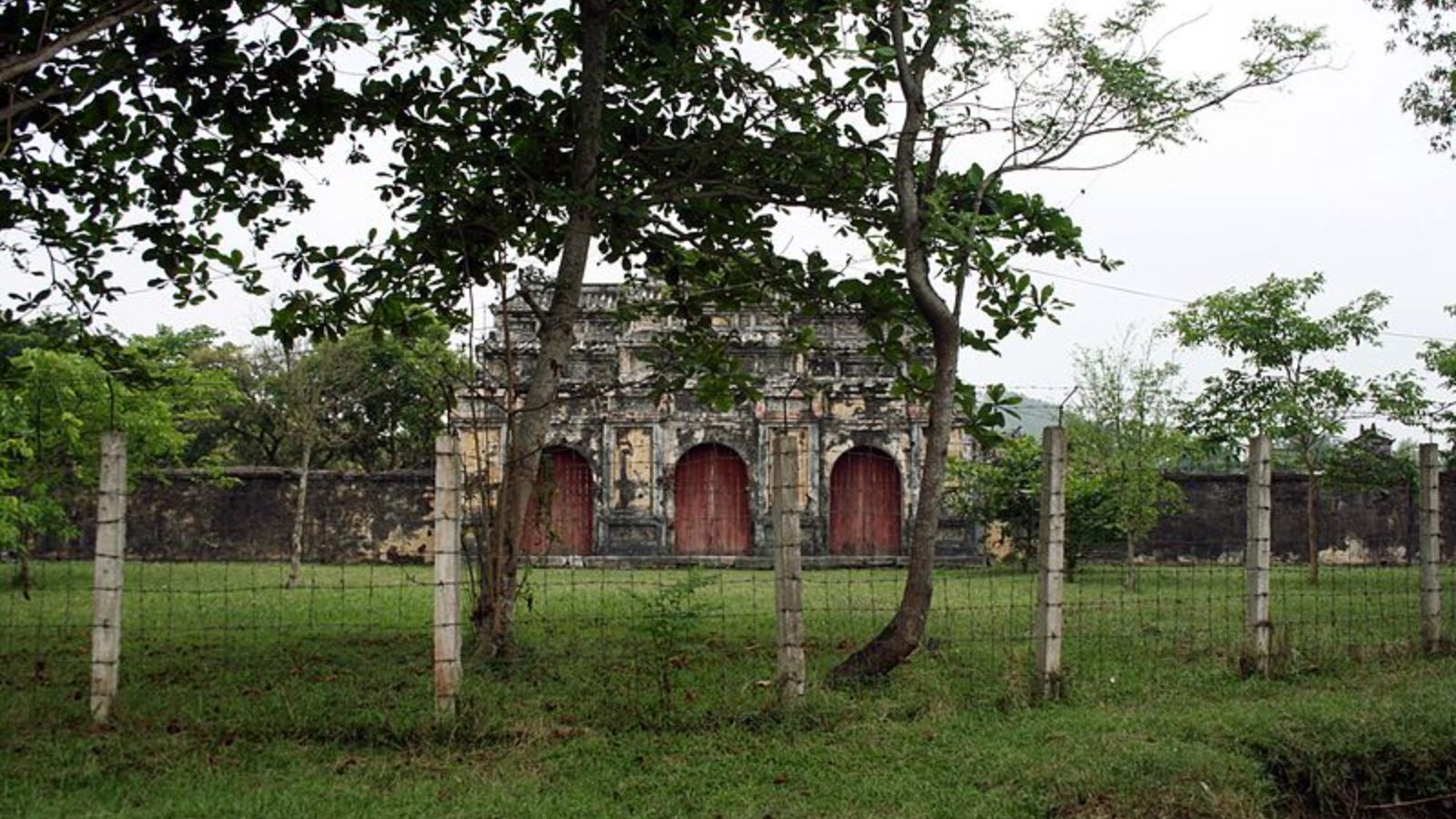
When we explore historical destinations, we often look for stories that resonate deeply. This site offers exactly that. Duc Duc Tomb is the sacred resting place for three distinct generations of Nguyen Dynasty monarchs. The complex houses Emperor Duc Duc, his son Emperor Thanh Thai, and his cousin Emperor Duy Tan.
Each ruler left an indelible mark on Vietnam’s history. Emperor Thanh Thai and Emperor Duy Tan became iconic figures of anticolonial resistance. They bravely exchanged their imperial thrones to fight against foreign colonial rule. They sacrificed supreme power for national sovereignty.
Because of this monumental history, the government recognized the complex as a national architectural relic (and national relic for art and architecture) on September 27, 1997. The designation was officially granted under Decision 2890-VH/QD by the Ministry of Culture and Information.
When we compare this site to other imperial monuments, its emotional weight sets it apart. While some tombs showcase opulent wealth, this sacred space honors heroic political sacrifice. It serves as a true Hue imperial historic site for travelers seeking historical depth.
If you are putting together an itinerary, check out these top cultural sites in historic Hue for more inspiration.
Unique Architectural Features and Feng Shui Design
The architecture of An Lang surprises almost every visitor. It breaks away from traditional imperial design choices. Spanning a rectangular area of 3,445 m², the layout emphasizes functional moderation.
Unlike the grandiose Nguyen Dynasty royal tombs nearby, this site features a minimalist layout. You will immediately notice a striking structural departure from other royal grounds:
- There are no large stone statues lining the courtyard.
- There is no traditional stele house (Bi Dinh) or engraved stone stelae (bi ky).
- The traditional stone guardians are completely absent.
Instead, visitors enter through two cement-roofed, three-entrance gates. Right in front of the Buu Thanh boundary, you will see a unique Huynh Oc house. This structure replaces the traditional stele house. Inside, a stone platform and a stone coach take the place of stelae. Royal attendants used this exact stone platform and coach for placing altars and preparing ceremonial offerings.
The builders aligned the grounds strictly with classical Feng Shui principles:
- Phuoc Qua Islet serves as the tien an (guarding screen).
- Mu Niem River acts as the minh duong (illuminated court water element).
- Tam Thai Mountain provides the hau cham (rear support mountain).
This harmonic arrangement creates an atmosphere of peaceful balance across the entire simple royal tomb architecture.
Long An Palace and Royal Burial Grounds
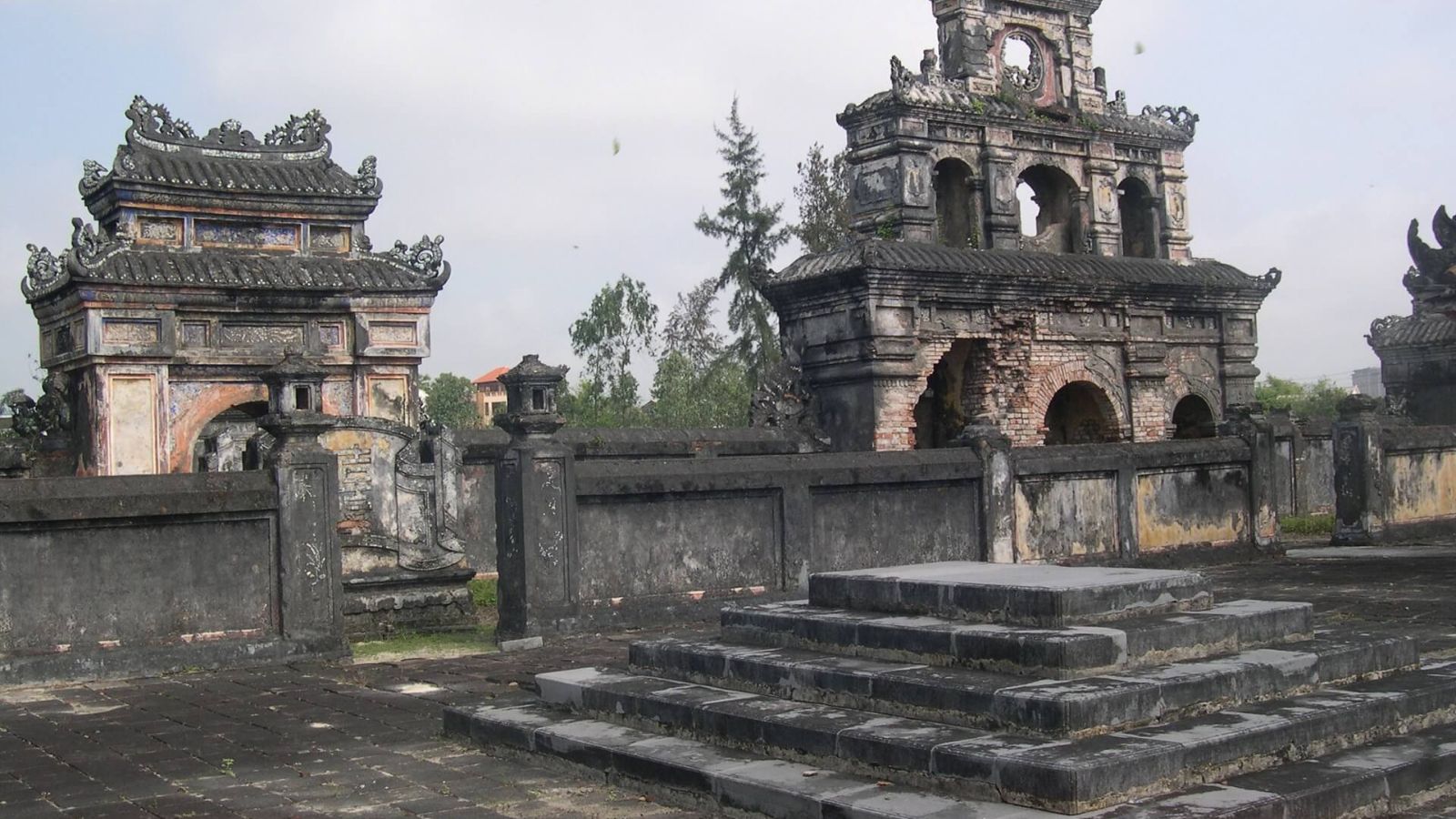
At the geometric heart of the complex lies Long An Palace. Constructed in the traditional style of a Hue royal palace, this building serves as the central sanctuary for spirit tablets and ancestral worship.
Inside the palace, you will find three primary altars:
- The central altar honors Emperor Duc Duc and his wife, Empress Tu Minh.
- The left altar honors Emperor Thanh Thai.
- The right altar honors Emperor Duy Tan.
Behind Long An Palace, the grounds open into quiet burial yards. Here rest imperial family members and key figures. Royal wives buried on the premises include Nguyen Gia Thi Anh, Nguyen Thi Dinh (mother of Emperor Duy Tan), and Khoan Phi Ho Thi Phuong. You will also find the tombs of Princess Luong Linh and Mai Thi Vang (wife of Emperor Duy Tan).
The surrounding cemetery grounds hold immense historic volume. The area contains 39 tombs of lords and madams. Additionally, there are 121 tombs of Nguyen Phuc clan members scattered across the grounds. Walking through this tranquil space gives us a clear window into royal lineage dynamics.
Practical Visitor Guide to The Tomb of Duc Duc
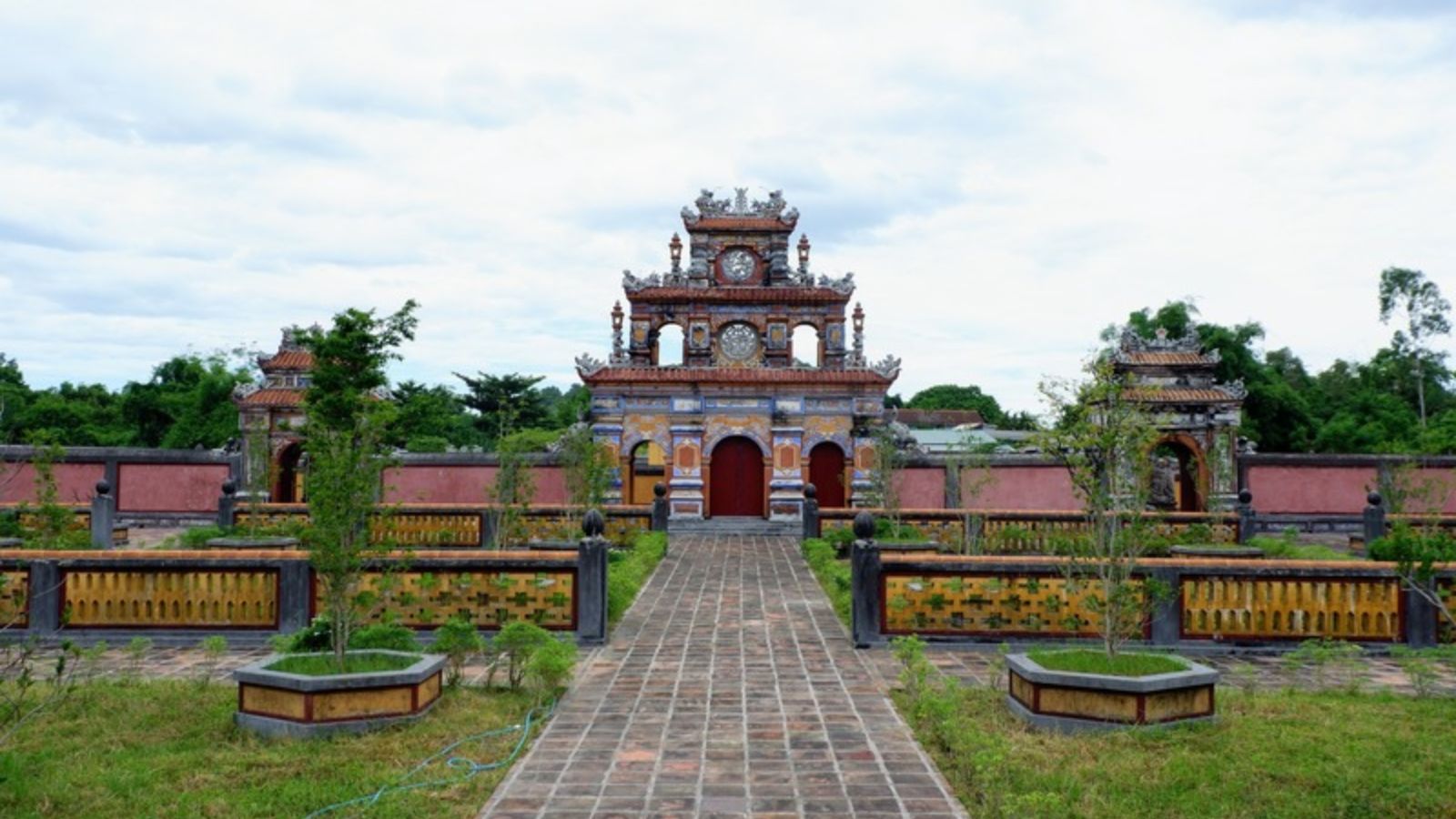
Planning a trip here is simple and straightforward. We recommend adding this site to any morning or afternoon heritage tour.
| Detail Category | Visitor Information |
|---|---|
| Address | 8 Duy Tan, An Cuu Ward, Hue City |
| Opening Hours | 7:00 AM – 5:30 PM daily |
| Entrance Fee | 50,000 VND per person |
| Visit Duration | 1.0 to 1.5 hours recommended |
| Best Visit Window | Early morning or late afternoon |
The site sits conveniently close to major central landmarks. Here are typical travel distances to nearby attractions:
- Imperial City of Hue: ~8 km
- Khai Dinh Tomb: ~10 km
- Tu Duc Tomb: ~12 km
We like visiting early in the morning when the light hits the wooden gates. We do not like crowded tour buses, so arriving around 8:00 AM offers a peaceful experience. You can also explore the quiet grounds before heading to nearby street stalls for local Hue noodle soups.
