
Mausoleum of Emperor Khai Dinh: History, Architecture & Visitor Guide
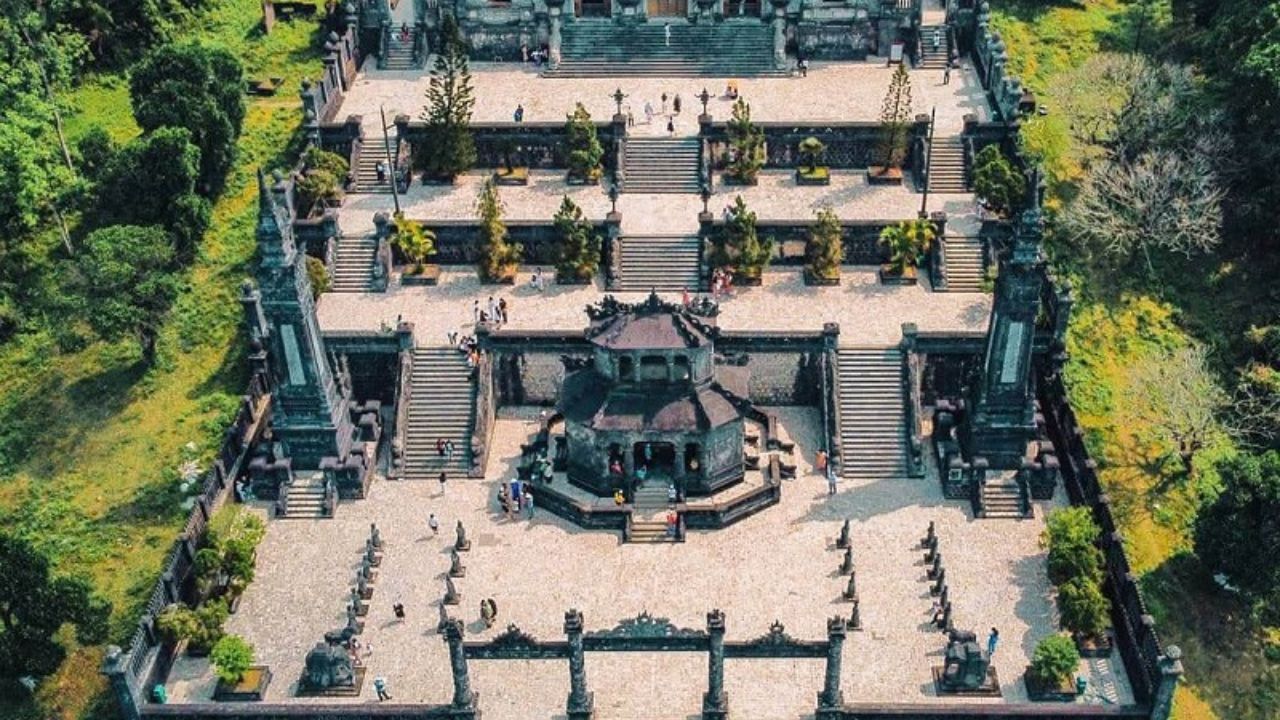
The mausoleum of Emperor Khai Dinh is one of the most talked-about stops on any Hue itinerary, and for good reason. This tomb tells a different story than the other royal resting places scattered across the old imperial city. It mixes Vietnamese tradition with European flair, and it does so in a way that still surprises visitors more than a century later.
Below, you’ll find the history behind the site, a walk-through of its architecture, the structures worth slowing down for, and the practical details needed before booking a visit. Every section builds on the last, so by the end, the full picture of this remarkable Nguyen Dynasty landmark should be clear.
The History Behind Emperor Khai Dinh’s Mausoleum
Khai Dinh ruled Vietnam from 1916 to 1925. His close relationship with the French colonial government made him unpopular at home, and historians still debate how that partnership shaped his legacy. What isn’t debated is his personal taste — he wanted a tomb unlike anything built before him.
Construction started on September 4, 1920. Khai Dinh died in 1925, six years before the project was finished. His son and successor, Bao Dai, completed the mausoleum in 1931, closing out 11 years of labor-intensive work.
Funding the build reportedly meant raising the national tax rate by 30 percent, a decision that drew criticism from historians then and now. Some scholars argue the tax hike wasn’t solely tied to the tomb, but the connection between the two has stuck in popular memory regardless.
That quote sums up the irony of the place well. Smaller footprint, bigger price tag, and a design that still stands out among Vietnam’s royal architecture.
The Architectural Style of Khai Dinh’s Mausoleum
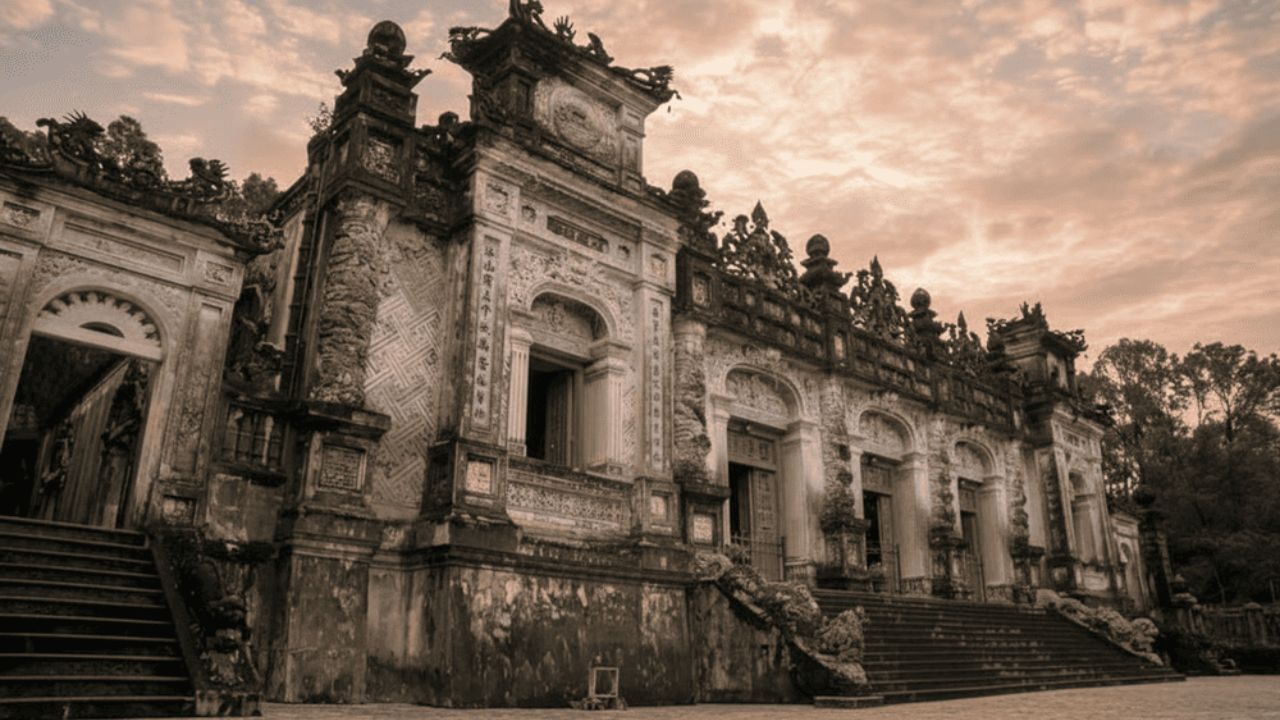
This is where the tomb really sets itself apart. Most Nguyen Dynasty tombs lean fully into traditional Vietnamese design. This one doesn’t. Instead, it blends Vietnamese and Western architecture, borrowing from Baroque, Gothic, and Neoclassical influences all at once.
Materials matter here too. Builders used concrete, steel, iron, and slate rather than the wood and brick typical of older tombs. That choice gives the facade its weathered, almost gothic black-concrete look. It’s a style choice, not decay — though it does add a layer of mystery to the place.
I’m genuinely a fan of this mash-up style. It shouldn’t work on paper, mixing so many traditions into one structure, but walking through it in person makes the combination feel intentional rather than chaotic.
Key Structures Inside the Mausoleum Complex
Tam Quan Gate & Entry Staircase
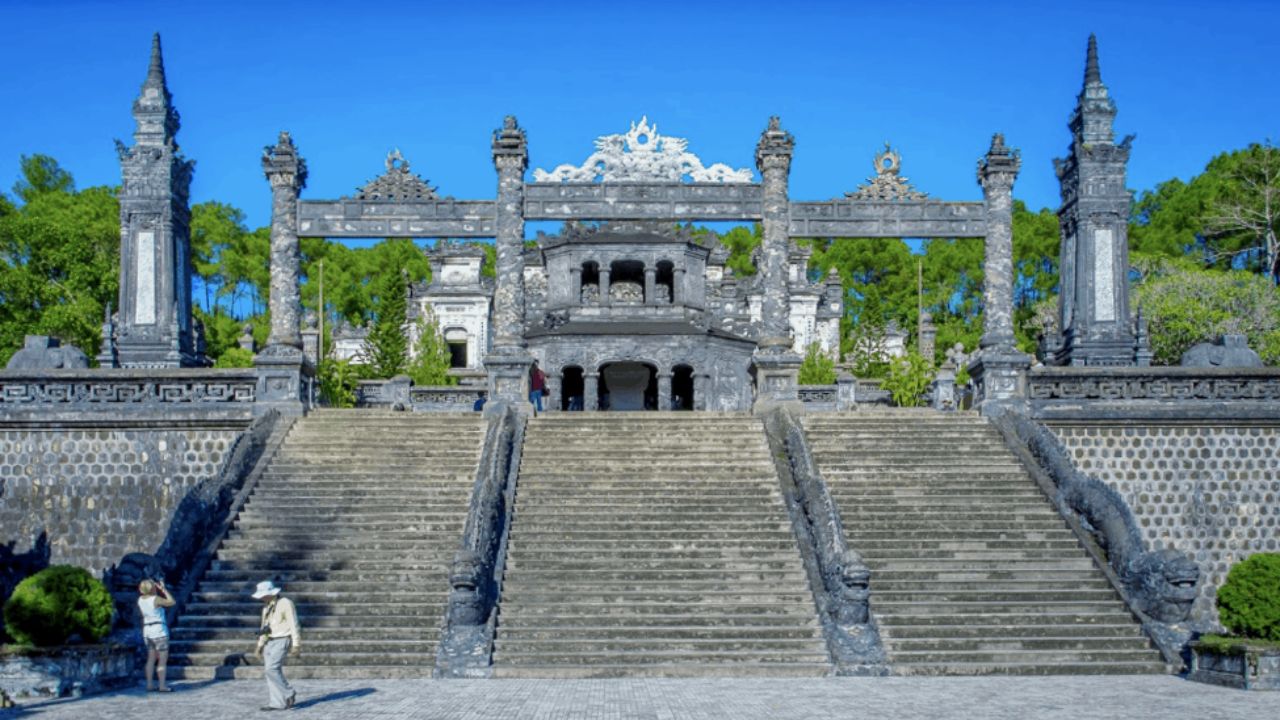
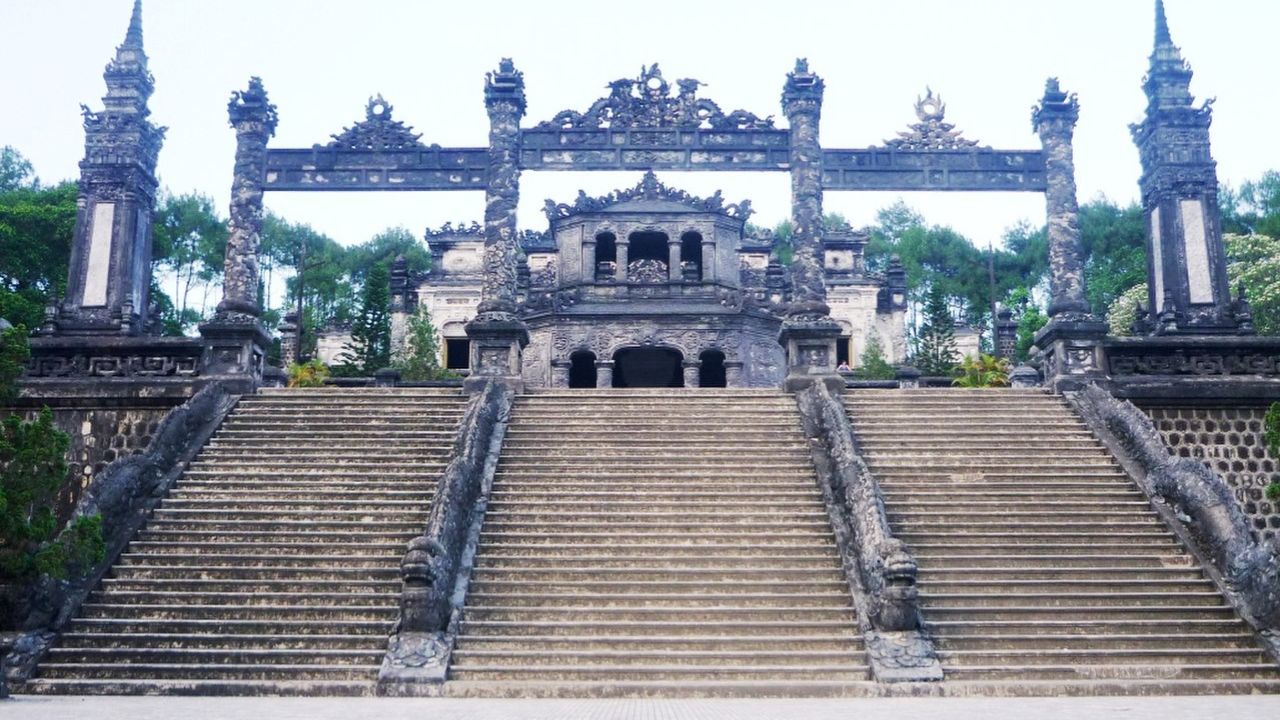
The journey begins at the Tam Quan Gate and entry staircase. You climb a total of 127 steps divided across five terraced tiers up the slope of the mountain.
The initial staircase features two large dragon carvings running down the railings, representing the largest dragon sculptures in Vietnamese imperial history. At the top of the first climb sits the triple-arched gate with imported French wrought iron gates that close off the main complex.
Bái Đính Yard (Salutation Court)
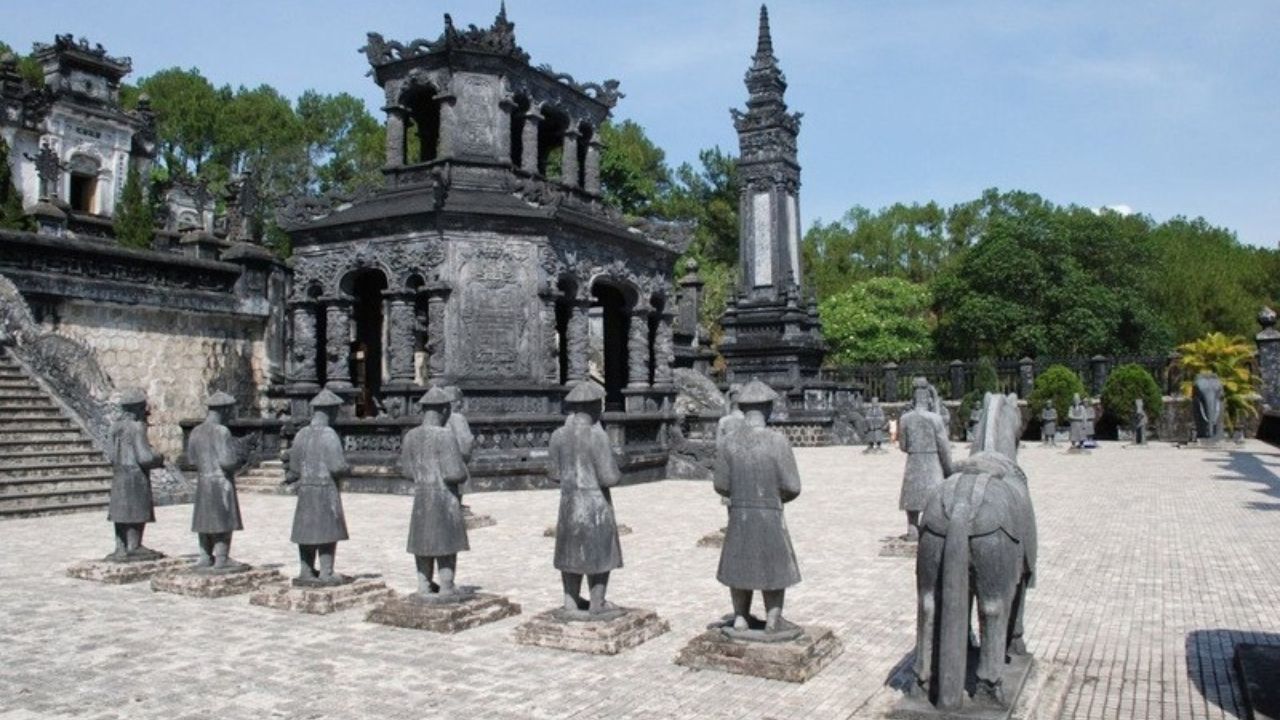
Continuing upward brings you to the Bái Đính Yard (Salutation Court). Here, two double rows of life-sized stone figures stand guard along the pathway. Unlike older royal tombs that used single rows of somewhat crude figures, this compact area features highly detailed mandarin officers, attendants, horses, and elephants designed to protect the grave and escort the emperor’s spirit.
Octagonal Stele Pavilion (Nhà Bia)
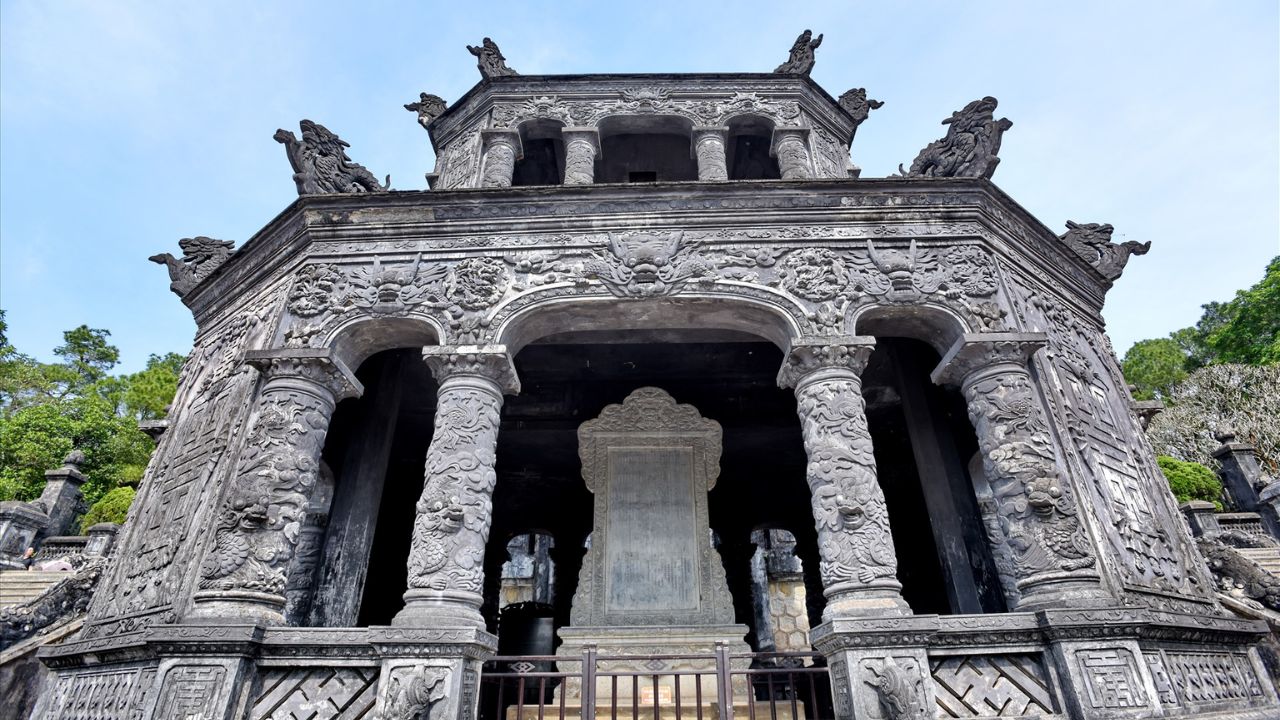
At the center of this tier stands the Octagonal Stele Pavilion (Nhà Bia). This two-tiered reinforced concrete structure is unique compared to the square pavilions found at other Nguyễn Dynasty tombs.
Decorated with arched entrances and Chinese characters for longevity (shòu) surrounded by bats representing blessings, it houses a massive stone stele. Engraved on the stone is Khải Định’s official imperial biography, composed by senior court officials but formally attributed to his son, Emperor Bảo Đại. Two tall pillars (trụ biểu) shaped like obelisks topped with stupas flank the pavilion.
Thiên Định Palace: Exterior Facade
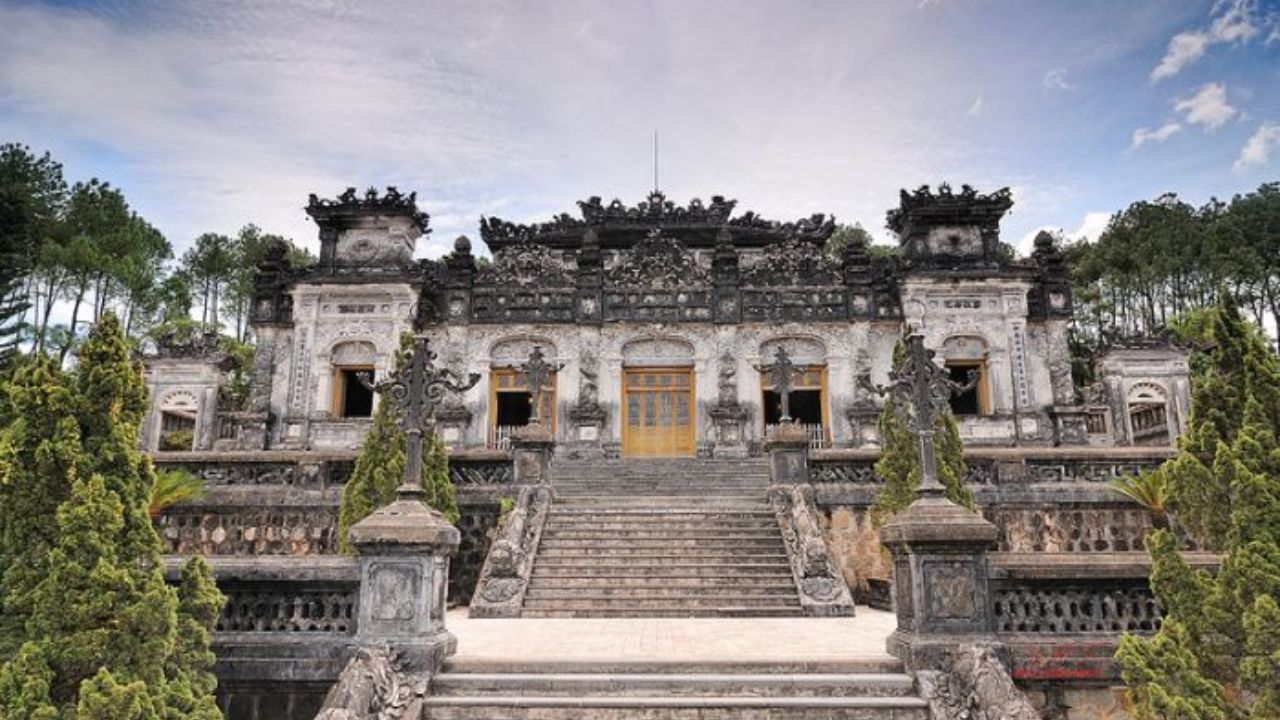
At the very top tier sits Thiên Định Palace, the main and most opulent structure of the entire mausoleum complex. The grayish-white and dark concrete exterior features five arched entrances flanked by pilasters. The stone walls are carved with geometric swastikas, dragons, and Confucian proverbs selected from the Analects of Confucius.
Interior Porcelain and Glass Mosaics
Inside, the walls explode into vivid color. Skilled artisans transformed thousands of broken porcelain pieces and imported colored glass into complex mosaic murals depicting dragons, floral patterns, and daily scenes.
Nine Dragons Ceiling Mural
Looking upward in the central hall, you can admire Cửu Long Ẩn Vân (Nine Dragons in the Clouds), a famous ceiling painting created by royal artist Phan Văn Tánh. Remarkably, he painted this massive masterwork using his feet as well as his hands while hanging from scaffoldings.
Khải Thành Palace & Altar Room
The left hall displays Khải Định’s personal memorabilia, including old photographs, French gifts like silver and porcelain dinner sets, bejeweled belts, and swords. Next to these items stands a life-size 160-cm standing bronze statue of the emperor in military regalia.
In the central altar room, three sets of doors lead to the crypt. Sitting directly above the burial site is a second bronze statue depicting Khải Định seated on his throne in traditional imperial garments, which was cast in Marseille, France.
How Khai Dinh’s Mausoleum Compares to Other Nguyen Dynasty Tombs
This tomb breaks a few patterns compared to its predecessors.
- Size: Much smaller footprint than other royal tombs in the area.
- Cost: Despite the smaller size, it was the most expensive and labor-intensive to build.
- Statue arrangement: Double rows of guardian statues instead of the usual single row.
- Pavilion shape: Octagonal stele pavilion instead of the traditional square design.
Not everyone prefers this style over the older, more understated tombs — and that’s a fair take. Some travelers like the simplicity of earlier Nguyen tombs better. But for anyone drawn to bold, unconventional design, this one wins by a wide margin.
UNESCO World Heritage Recognition
The mausoleum became part of the Complex of Hue Monuments, inscribed as a UNESCO World Heritage Site in 1993. That recognition covers 18.19 hectares and places the tomb alongside other significant structures from the same dynasty. It’s a status that helps preserve the site and keeps its historical value front and center for future visitors.
Visitor Information for the Mausoleum
Practical details before booking a visit:
- Opening hours: 7 AM to 5 PM daily.
- Entrance fee: 150,000 VND per adult, 30,000 VND per child.
- Recommended visit length: One to one and a half hours is usually enough to see everything without rushing.
Sample itinerary for a half-day plan: start early to beat the heat, spend about 90 minutes exploring the tomb complex, then head toward nearby sites before lunch. This pacing works well for most travelers, though history buffs might want to add extra time at Khai Thanh Hall alone.
How to Get to Khai Dinh Tomb
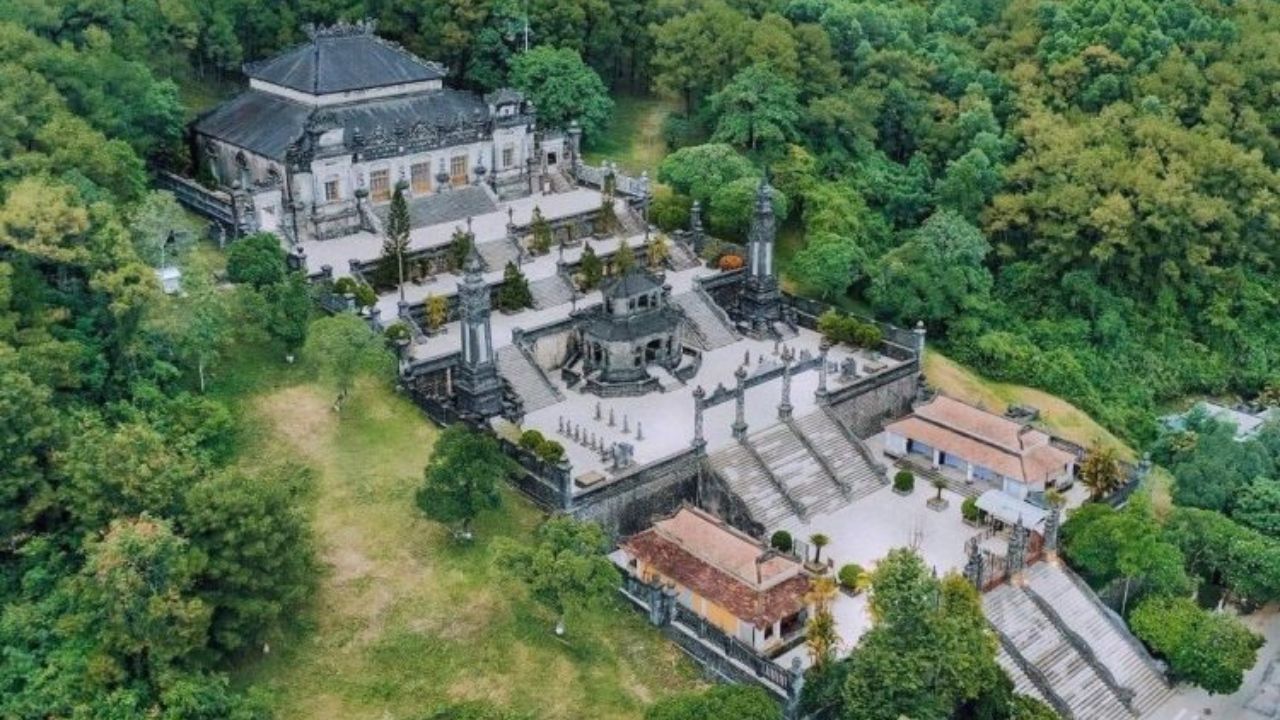
The tomb sits on Chau Chu Mountain, roughly 10 kilometers from central Hue. Feng shui experts of the time picked this spot on purpose. Hills and streams surround the site, and that natural setting still shapes how the place feels today — quiet, elevated, and a little dramatic.
Getting there is straightforward. A few common options:
- By car or motorbike along National Road 49, the most direct route.
- By local bus, heading toward Dong Ba – Cho Tuan and getting off at the Khai Dinh stop.
- By taxi, including electric taxi services now operating in the city.
- By boat, which takes about 45 minutes — slower than the road but a scenic option if time allows.
I like the taxi route best for first-time visitors. It’s simple, it’s fast, and there’s no guesswork involved. If a slower pace sounds more appealing, though, the boat ride adds a nice bit of atmosphere before arrival.
Nearby Attractions to Combine With a Visit
Since the mausoleum sits a bit outside central Hue, it makes sense to group it with other nearby stops rather than visiting it alone. Popular additions include:
- Minh Mang Tomb — a more traditional, garden-style royal tomb.
- Tu Duc Tomb — a poetic, tranquil retreat built amidst pine forests and lotus ponds.
- Hue Imperial City — the historic seat of Nguyen Dynasty power.
- Thien Mu Pagoda — one of the city’s oldest and most photographed religious sites.
A local tip: If you plan to visit 3 tombs combined with the Imperial city, you should buy a combination ticket, it will save your money. And it valids in 2 days, so no worry if you can’t cover all attractions in 1 day. To save time moving between sites, many travelers book a guided tour of Hue’s imperial tombs instead of visiting each one alone.
For anyone mapping out a broader itinerary, exploring this mausoleum fits perfectly alongside other essential historic Hue attractions across the regional countryside.
FAQs about Khai Dinh Tomb
What was King Khải Định’s cause of death?
Emperor Khải Định died on November 6, 1925, from tuberculosis (some historical records specifically mention bone tuberculosis or severe exhaustion caused by prolonged tuberculosis).
How long should I plan for the visit?
One to two hours covers the full complex comfortably.
Is the tomb far from central Hue?
It’s about 10 kilometers away, reachable by taxi, motorbike, bus, or boat.
What makes this tomb different from other Nguyen Dynasty tombs?
Its mix of Vietnamese and Western architecture, smaller size, and higher construction cost set it apart from the rest.
