
Thien Mu Pagoda in Hue: History, Architecture & Visitor Guide
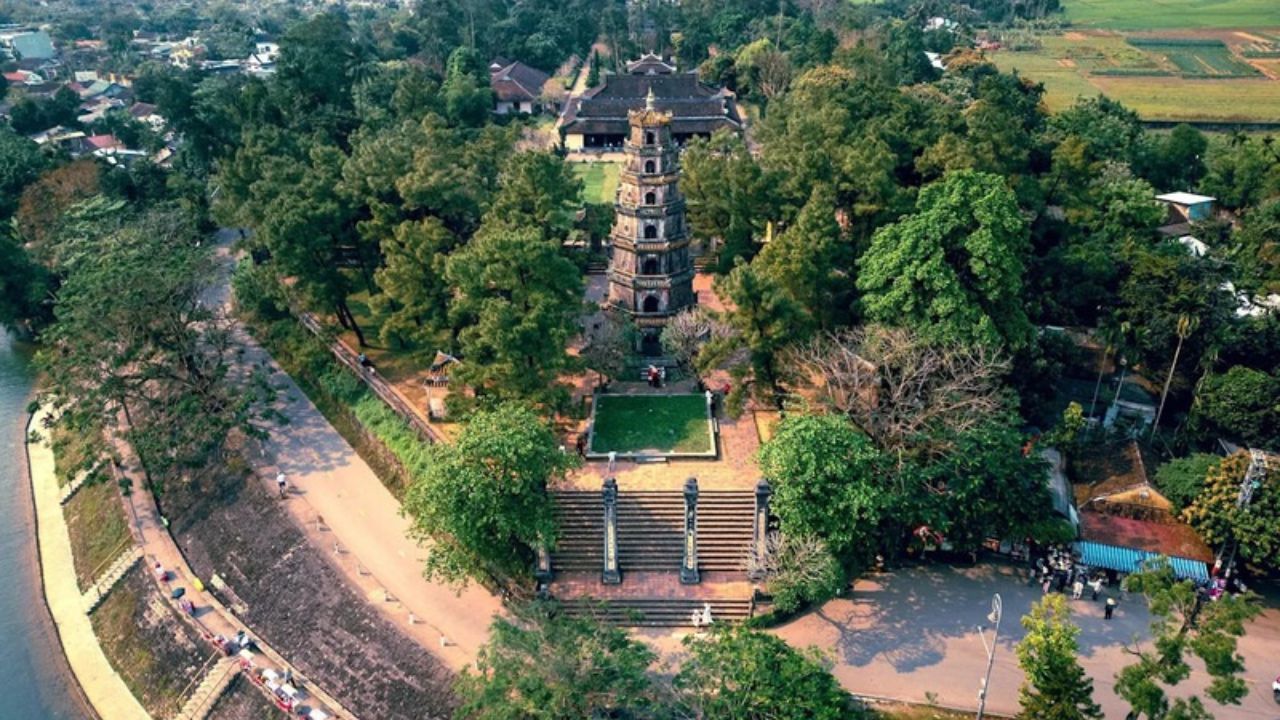
Perched gracefully along the northern bank of the river, Thien Mu Pagoda in Hue stands as an enduring symbol of spiritual heritage and classical architecture. This historic sanctuary attracts travelers from around the world who seek to explore its tranquil gardens, centuries-old relics, and sacred legends.
Also known as Linh Mu Pagoda or the Heaven Fairy Lady Pagoda, the site offers a unique glimpse into Vietnam’s imperial past. Visiting this complex provides clear insights into the cultural foundation of the ancient city, making it an essential stop for anyone discovering local sights.
History and the Celestial Lady Legend
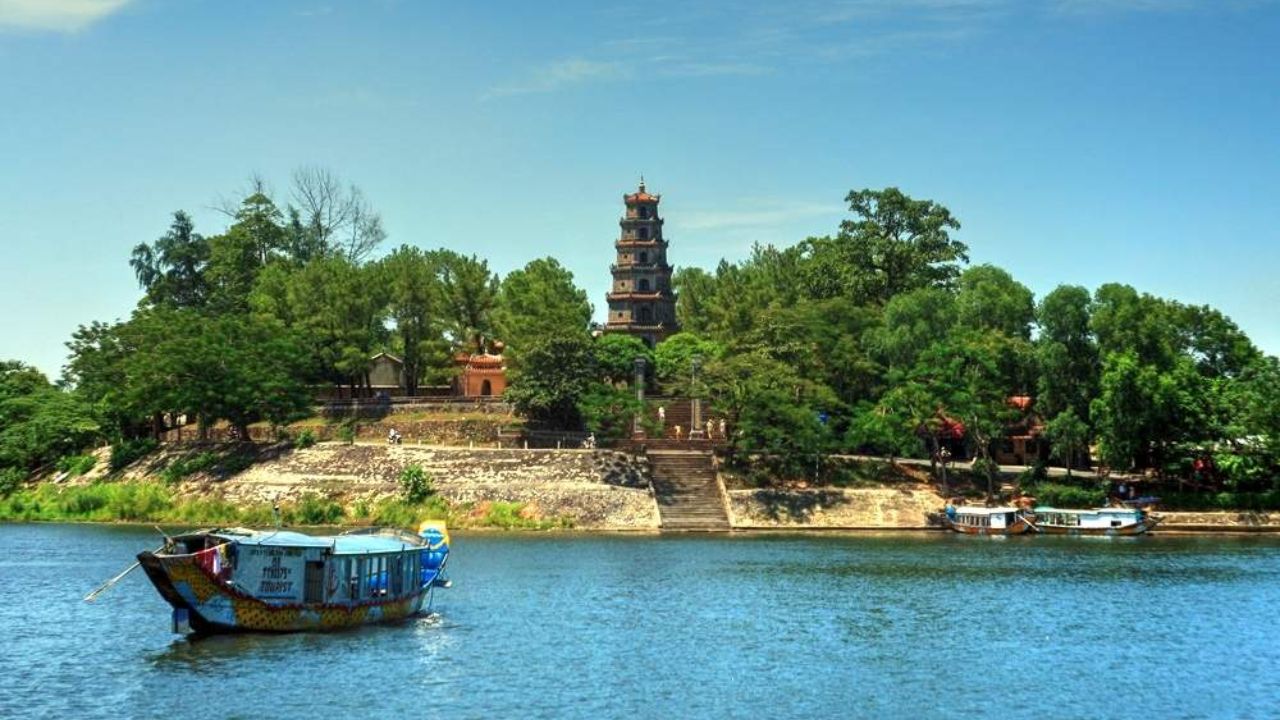
The origin of this sanctuary mixes historical facts with fascinating folk stories. Back in 1601, Lord Nguyen Hoang, who was the governor of Thuan Hoa, toured the area and heard a local legend.
An old woman dressed in red and blue—known as the Celestial Lady or Thien Mu—appeared on the hill. She rubbed her cheeks and prophesied that a great lord would come and erect a pagoda on the hill to pray for the country’s prosperity before she vanished into thin air.
Upon hearing this, Lord Nguyen Hoang ordered the construction of the temple, marking the official founding year in 1601. Historically, this local deity was also connected to the Cham deity Po Nagar, showing how different cultural influences blended together over time.
Over the next few centuries, various rulers expanded the grounds:
- 1665: Lord Nguyen Phúc Tan undertook the first major refurbishment.
- 1695–1714: Lord Nguyen Phuc Chu invited Zen Master Shi Da Shan (Thich Dai San) from China to set up a formal Buddhist congregation. Lord Chu later funded massive expansions, including new gates, halls, and towers.
- 1844: Emperor Thieu Tri built the iconic tower that dominates the skyline today.
- 1907: After a severe cyclone in 1904, Emperor Thanh Thai authorized vital reconstruction work to preserve the grounds.
Key Architectural Highlights and Sacred Structures
Phuoc Duyen Tower
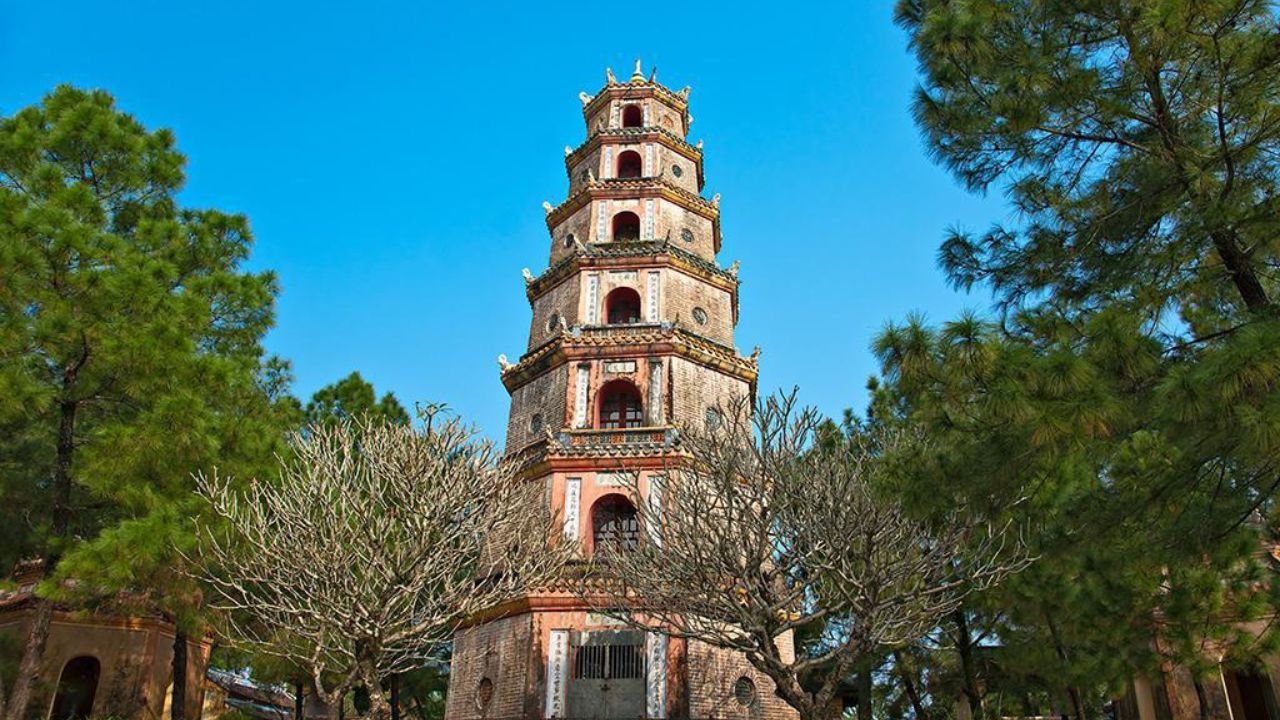
Erected in 1844 by Emperor Thieu Tri (originally named Tu Nhan Tower), this structure stands 21 meters tall. The Phuoc Duyen Tower features an octagonal shape with 7 stories, where each level is dedicated to a different Buddha form. Today, it remains the highest stupa in Vietnam and serves as the unofficial symbol of Hue.
Dai Hong Chung Bell & Stele Pavilion
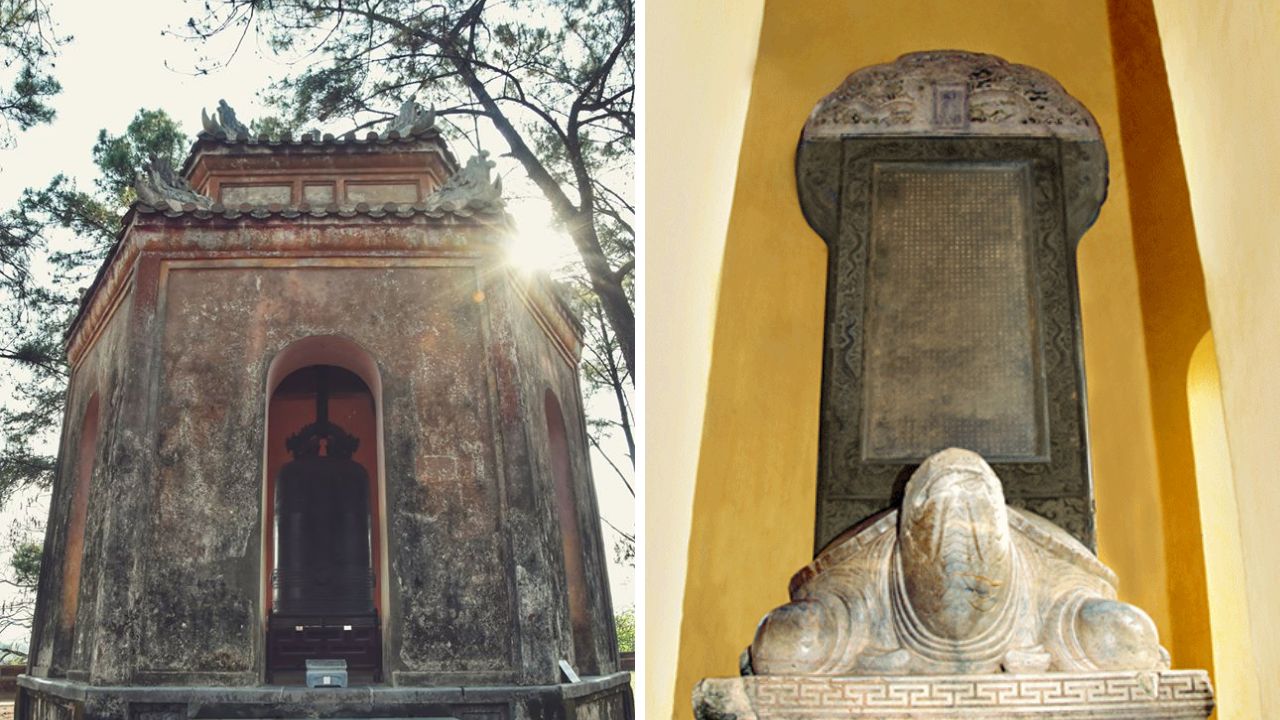
To the side of the tower, you will find a pavilion housing the massive Dai Hong Chung Bell. Commissioned in 1710 by Lord Nguyen Phuc Chu, this solid bronze bell weighs 3,285 kilograms and stands 2.5 meters high.
Legend says its strike can be heard up to 10 kilometers away. Across from the bell sits a heavy stone stele dated from 1715, which rests on the back of a 2.58-meter marble turtle that symbolizes longevity.
Dai Hung Shrine & Outer Grounds
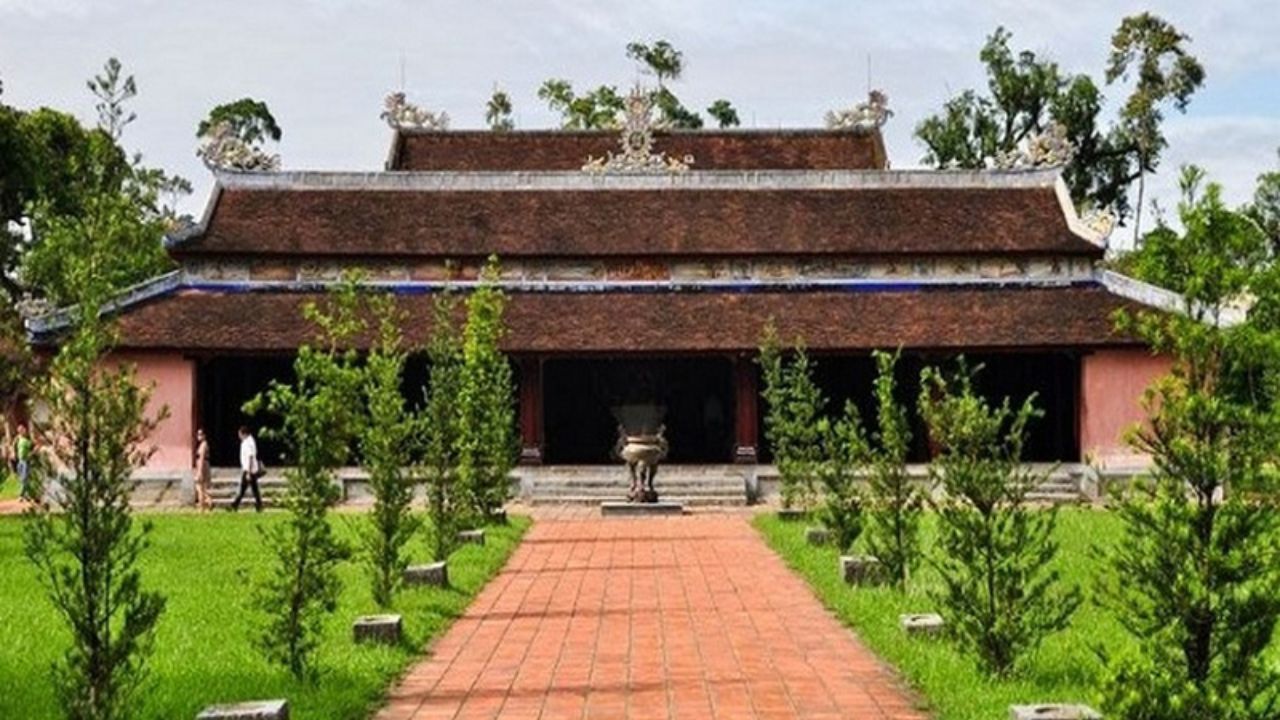
The main hall, known as the Dai Hung Shrine, houses a central statue of Maitreya Buddha flanked by Manjushri Bodhisattva and Samantabhadra Bodhisattva. Inside, you can see valuable historic items like a bronze gong cast in 1677 and a gilded inscription board from 1714.
Further back, past the Tam Quan Gate and the monolithic jackfruit wood drum, lies a quiet pine tree garden that shelters the tomb stupa of the late Venerable Thich Don Hau.
Modern Historical Significance & Political Role
Beyond its ancient roots, the site played a pivotal role in modern history during the 20th century. During the summer of 1963, the grounds became a key center for anti-government demonstrations against religious discrimination during the Diem regime.
The temple served as a primary organizing site for hunger strikes, peaceful barricades, and public protests. In one of the glass display rooms near the rear garden, you can see the famous blue Austin motor vehicle. This is the exact car that carried monk Thich Quang Duc to Saigon before his famous self-immolation protest in 1963. That event brought global attention to the Buddhist movement in Vietnam.
Visitor Guide & Essential Travel Information
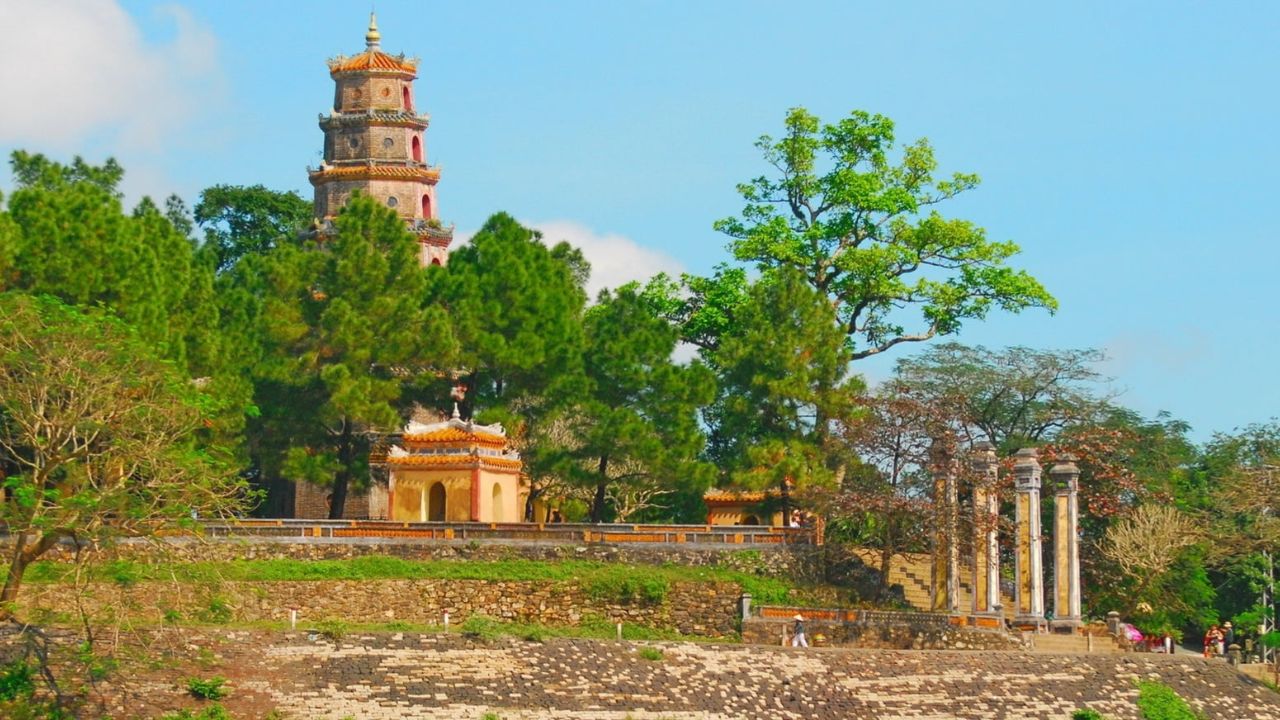
Visiting this iconic temple requires very little planning, but a few key details will make your journey smooth. I love how accessible this spot is whether you want a quick morning ride or a slow afternoon cruise.
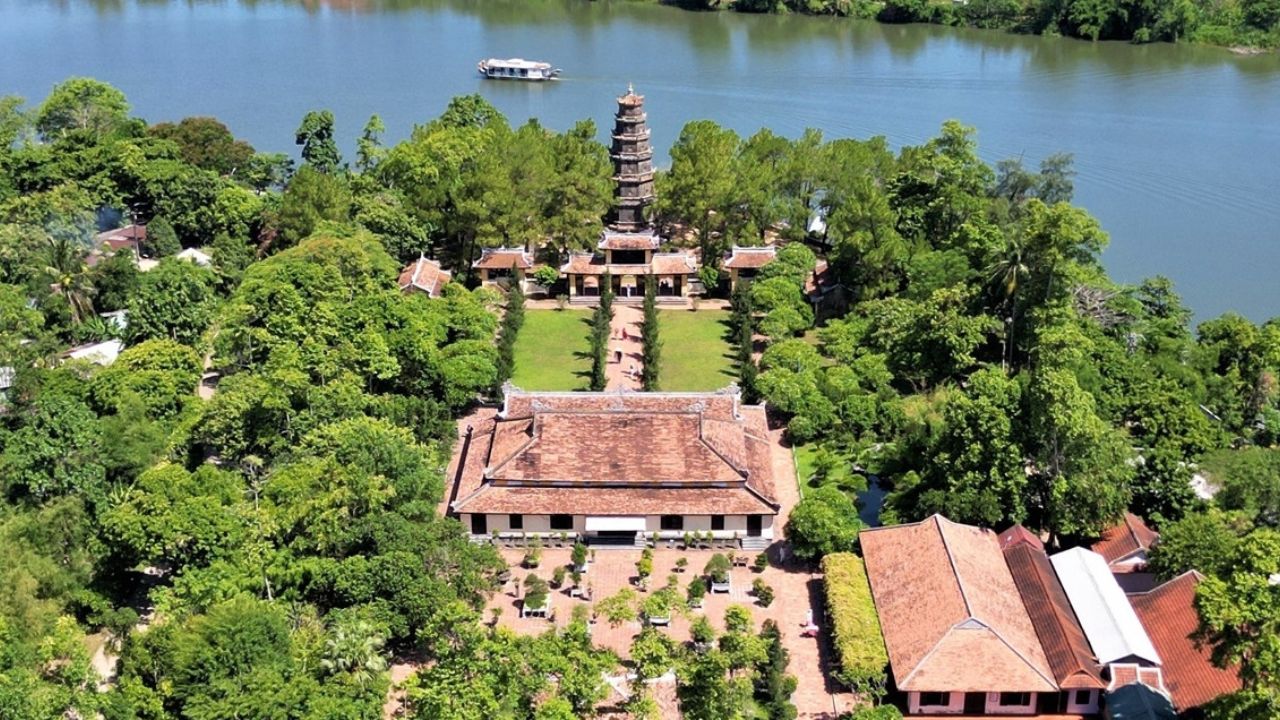
- Exact Location & Accessibility: The complex sits on Ha Khe Hill, within Huong Long Ward, roughly 5 kilometers southwest of the Hue City center. It offers panoramic views directly overlooking the calm waters of the Perfume River.
- Visiting Logistics: The gates open daily from 7:00 AM to 6:00 PM. The entrance fee is completely free, which makes it super easy to add to any itinerary. Since this is an active place of worship, you must wear modest clothing that covers your shoulders and knees.
- Transportation Options: You can take a classic Dragon Boat cruise along the river starting from Toa Kham Boat Station. Alternatively, you can ride a bicycle, rent a scooter, or take a quick taxi along Kim Long Road.
- Optimal Visiting Times: I suggest heading over in the early morning if you want to experience peaceful meditation atmosphere and listen to the monks pray. However, late afternoon is equally amazing because you get to catch the breathtaking sunset over Ha Khe Hill.
If you are putting together a full itinerary, you can check out these top attractions and activities in Hue to complete your daily schedule. For a guided full-day route, our Hue City Private Tour combines a Perfume River dragon-boat ride and Thien Mu Pagoda with the Imperial City, Dong Ba Market and royal tombs.
Nearby Attractions & Tour Itineraries
Because of its convenient location right along the river bank, you can easily pair a visit here with several other popular historical spots across the city.
| Destination | Distance from Pagoda | Highlights |
|---|---|---|
| Imperial Citadel of Hue | ~5 km | Royal palaces, historic gates, museum exhibits |
| Dong Ba Market | ~6 km | Local street food, handicrafts, fresh produce |
I like starting the afternoon with a visit to the Hue Imperial City, followed by a short drive up to the Pagoda. Ending the trip with a peaceful boat ride back along the river as the sun goes down is my favorite sample itinerary for a half-day tour.
FAQs about Thien Mu Pagoda
Is Thien Mu Pagoda worth visiting?
Yes. Between the legend, the architecture, and the history tied to the 1963 Buddhist movement, it offers more depth than a quick photo stop.
How far is Thien Mu Pagoda from Hue city center?
About 5 kilometers, roughly a 15-20 minute ride by car or motorbike.
What is the best way to reach the pagoda?
Either by car/motorbike or by boat along the Perfume River — the boat route is slower but far more scenic.
How much does it cost to enter Thien Mu Pagoda?
Entrance to the pagoda is free. It just has 5k for parking fee if you park a motorbike
