
Truong Tien Bridge Hue: History, Access, Top Activities & Tips

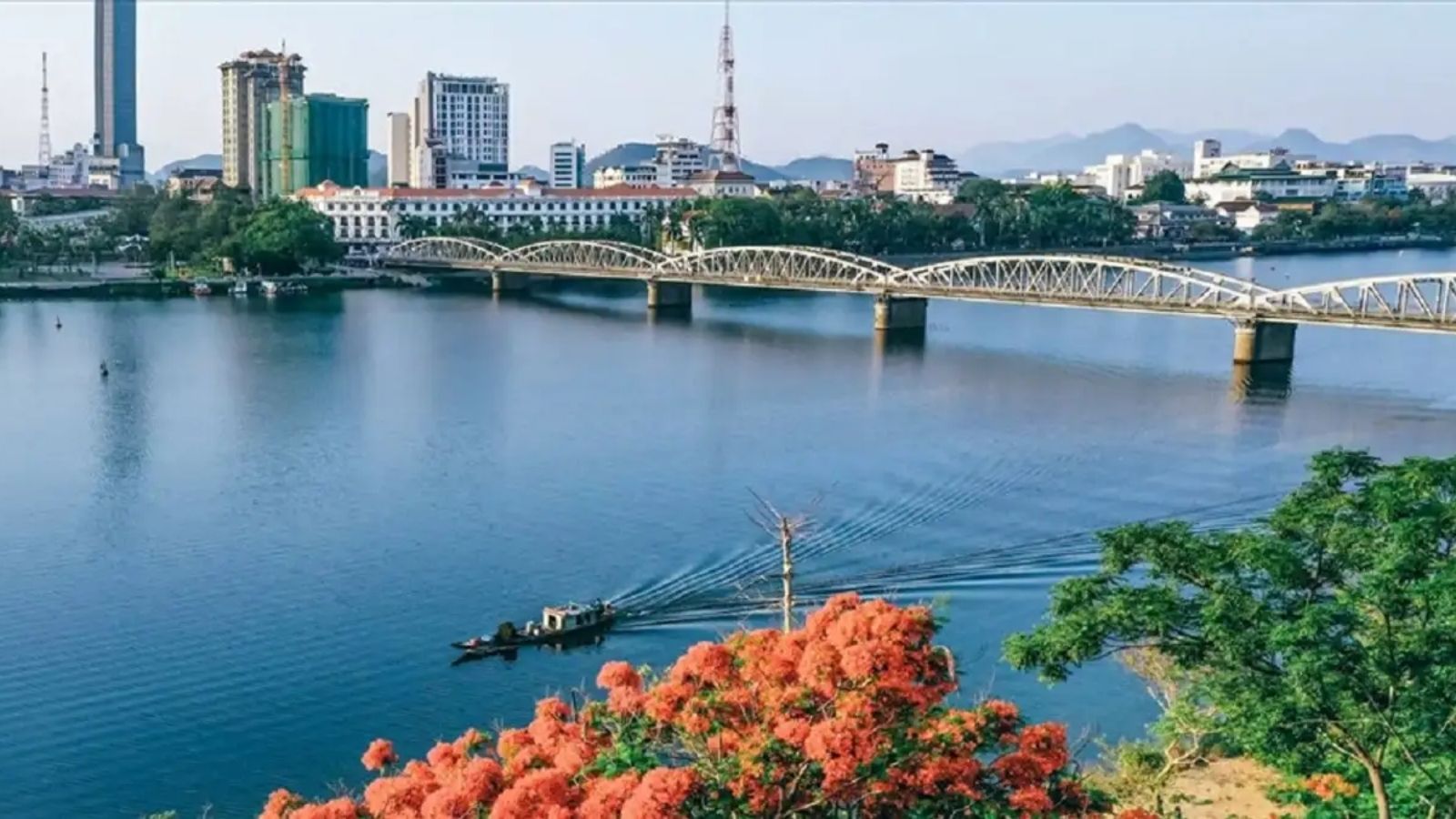
Stepping onto Truong Tien Bridge means walking directly through the living memory of Hue. Floating gracefully over the quiet Perfume River, this historic steel structure links the bustling modern town with ancient citadel quarters. Visitors instantly fall in love with its classic arches, vibrant night lights, and deep historical roots.
Whether looking to uncover colonial engineering marvels or simply enjoy a romantic sunset stroll, this iconic landmark offers an unforgettable connection to central Vietnam.
History and Cultural Significance of Truong Tien Bridge

Commissioning by King Thanh Thai and Design by Gustave Eiffel
Back in 1896, King Thanh Thai officially commissioned Truong Tien Bridge to modernize regional transport across the river. The royal court hired the legendary French engineer Gustave Eiffel, who designed Truong Tien Bridge using advanced European structural techniques.
Construction started in 1897, and by 1899, the team completed this iconic crossing. It became the very first Western-engineered bridge in French Indochina, serving as a proud symbol of late 19th-century innovation.
Name Changes Across Historical Eras
Over the past century, this iconic site changed its name multiple times alongside Vietnam’s shifting political eras:
- Thanh Thai Bridge (1899–1919): Named after the patriotic emperor who ordered its creation.
- Clémenceau Bridge (1919–1945): Renamed during the French colonial era to honor former French Prime Minister Georges Clémenceau.
- Nguyen Hoang Bridge (1945): Renamed under Tran Trong Kim’s administration to honor the Nguyen Lord who established the Thuan Hoa region.
- Truong Tien Bridge (Post-1975): Reclaimed its popular local identity. The name comes from a historic royal mint that operated nearby on the riverbank during the Nguyen Dynasty.
Even though a restoration team temporarily attached a plate reading Trang Tien Bridge in 1995, local authorities officially reinstated Truong Tien Bridge. Today, locals and travelers use both names interchangeably.
Resilience Through Wars, Floods, and Restorations
This structure is a true survivor. A severe typhoon and flood battered the riverway in 1904, dropping several spans into the water. Decades later, wartime conflicts caused significant damage to its structural frame. However, local builders repaired and rebuilt the crossing through major restoration efforts in 1937, 1991, and 2002.
Location and How to Access Truong Tien Bridge in Hue
Finding this iconic landmark could not be easier because it sits directly in the center of Hue City. It spans the serene Perfume River, linking Phu Hoa Ward on the northern bank directly with Phu Hoi Ward on the southern bank.
Getting here is simple no matter how you like to travel. I love renting a light motorbike for around 100,000 to 150,000 VND per day to explore nearby streets at my own pace.
If you prefer a cooler ride, taxis from central Hue hotels take under 10 minutes to reach either side of the river. Walking tours are also extremely popular, allowing you to cross slowly on foot while taking in refreshing breezes from the water below.
Top Things to Do and Experience Around Truong Tien Bridge

There is an incredible energy surrounding the riverbank throughout the day. Early mornings offer peaceful strolls along the pedestrian side walkways, while sunset brings a stunning golden glow reflecting off the steel framework.
- Photography Spots: Capture gorgeous wide shots during sunrise or sunset when soft light hits the water.
- Local Markets: Walk just 10 minutes down the northern bank to reach Dong Ba Market. It is an ideal spot to taste famous Hue street food delicacies like Banh Khoai (crispy savory pancakes) and Banh Beo (steamed rice cakes) or pick up handmade souvenirs.
- Nighttime Pedestrian Streets: Located right on the southern foot lies Nguyen Dinh Chieu Walking Street. As evening falls, local vendors setup colorful craft stalls while musicians and dancers perform under the night sky.
- Historic Imperial Landmarks: Take a short 20-minute walk from the bridge to visit the famous Imperial City of Hue, a UNESCO World Heritage Site filled with ancient royal palaces and grand courtyards.
- Perfume River Cruises: Hop aboard a traditional dragon boat for a night cruise. You can listen to soulful Hue folk music drifting over the water while gazing back at the illuminated river arches.
If you are putting together an itinerary, check out these exciting local attractions and river experiences to make the most of your journey through the ancient capital.
Best Time to Visit and Evening Lighting Schedule
Timing makes a huge difference when planning your visit. The absolute best months to explore Hue are between March and August when weather stays warm and skies remain crystal clear.
- Early Morning: Ideal if you like quiet atmospheres, cool air, and peaceful views of local life waking up.
- Sunset: Perfect for photographers looking for warm golden hues reflecting across the water surface.
- Evening Display: Thanks to a major upgrade in 2002, a modern LED lighting system casts vibrant, changing colors across the river water every single night.
Sample evening schedules usually see the dynamic colors turn on right around sunset, transforming the quiet dark river into a glowing centerpiece.
Architectural Features and Structural Specifications
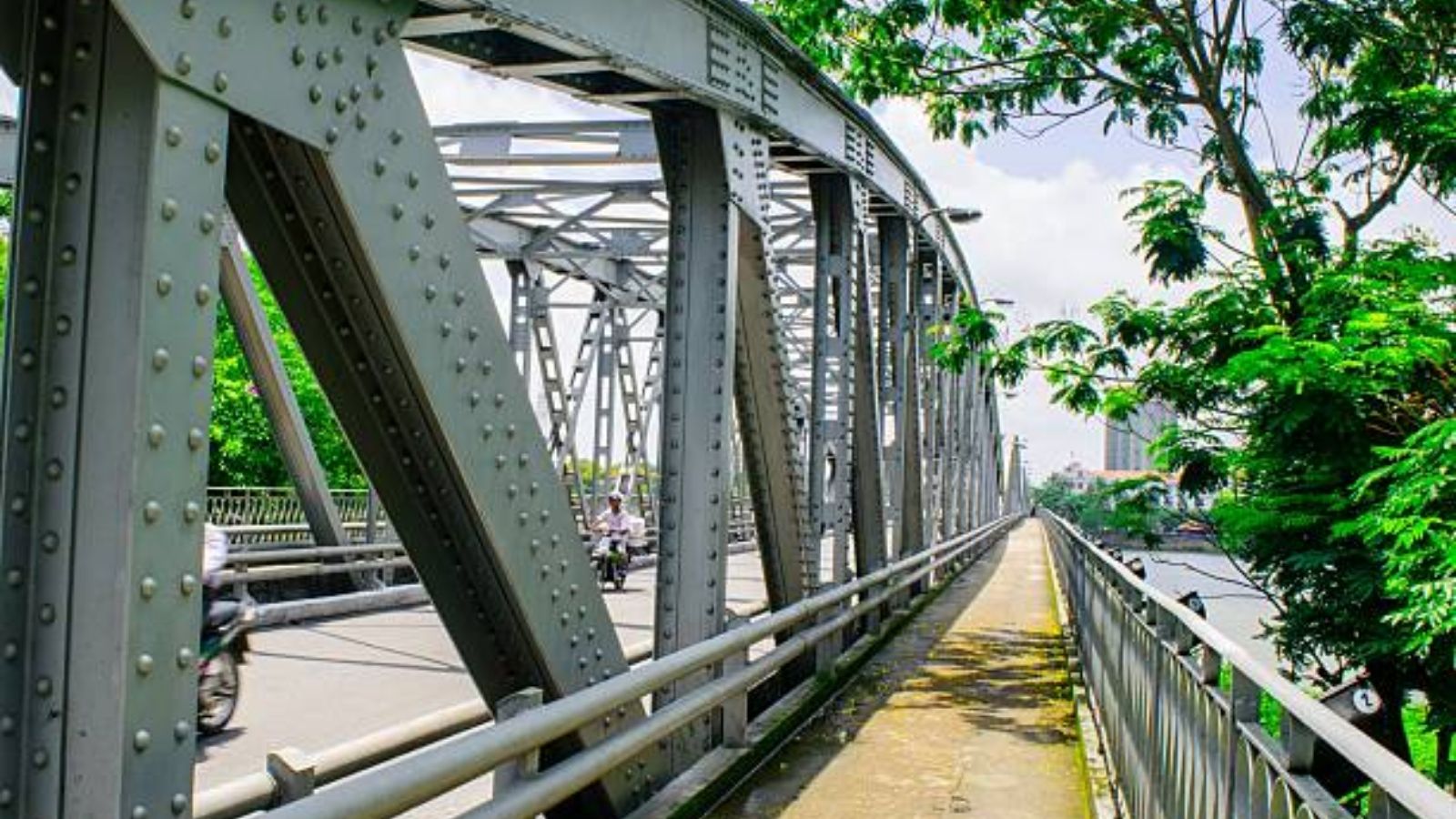
The structural design is a remarkable example of 19th-century European Gothic engineering adapted for a tropical setting. Constructed entirely from imported Western steel, the structure measures a total length of 402.6 meters, a width of 6 meters, and a height of 5.45 meters.
| Attribute | Specification Value |
|---|---|
| Total Length | 402.6 meters |
| Width | 6 meters |
| Height | 5.45 meters |
| Number of Spans | 6 steel girder spans |
| Number of Arches | 12 arches (joined in 6 pairs) |
| Span Length | 67 meters per section |
| Original Flooring | Ironwood floorboards |
| Modern Flooring | Reinforced concrete |
The comb-shaped steel girders underneath the arches form a graceful crown silhouette over the water. While the original builders installed durable ironwood floorboards, later restoration teams upgraded the road surface with reinforced concrete to safely support modern urban traffic.
FAQs about Truong Tien Bridge
What is the official name of the bridge?
The official historical name reinstated by local authorities is Truong Tien Bridge, though Trang Tien Bridge is also commonly used by locals and travelers alike.
When did Truong Tien Bridge collapse in the past?
The bridge suffered structural collapses three times in history: in 1904 due to a massive typhoon, in 1946 during wartime resistance, and in 1968 during the Tet Offensive.
Who designed Truong Tien Bridge in Hue?
The famous French engineer Gustave Eiffel, who also designed the world-famous Eiffel Tower in Paris, engineered the bridge structure.
Is there an admission fee to walk across?
No, crossing on foot or by vehicle is completely free for everyone 24 hours a day.
How far is Dong Ba Market from Truong Tien Bridge?
Dong Ba Market sits roughly a 10-minute walk from the northern end of the bridge in Phu Hoa Ward.
