
Thuy Xuan Incense Village Hue: Ultimate Visitor & Photo Guide

Bright wooden stalls lined with vibrant, flower-like bouquets of drying incense make Thuy Xuan Incense Village one of the most eye-catching destinations near Hue City. Located just 7 kilometers southwest of the city center along Huyen Tran Cong Chua Street, this historic craft community offers visitors a direct look at an ancient Vietnamese tradition.
Beyond the striking colors, the air carries a deep, soothing botanical aroma that draws travelers into a sensory journey through local heritage. From its deep origins supplying the royal court to interactive crafting workshops and nearby scenic monuments, exploring this fragrant landmark provides an essential look into the cultural heart of central Vietnam.
History and Cultural Heritage of Thuy Xuan Incense Village
Origins Dating Back to the Nguyen Dynasty
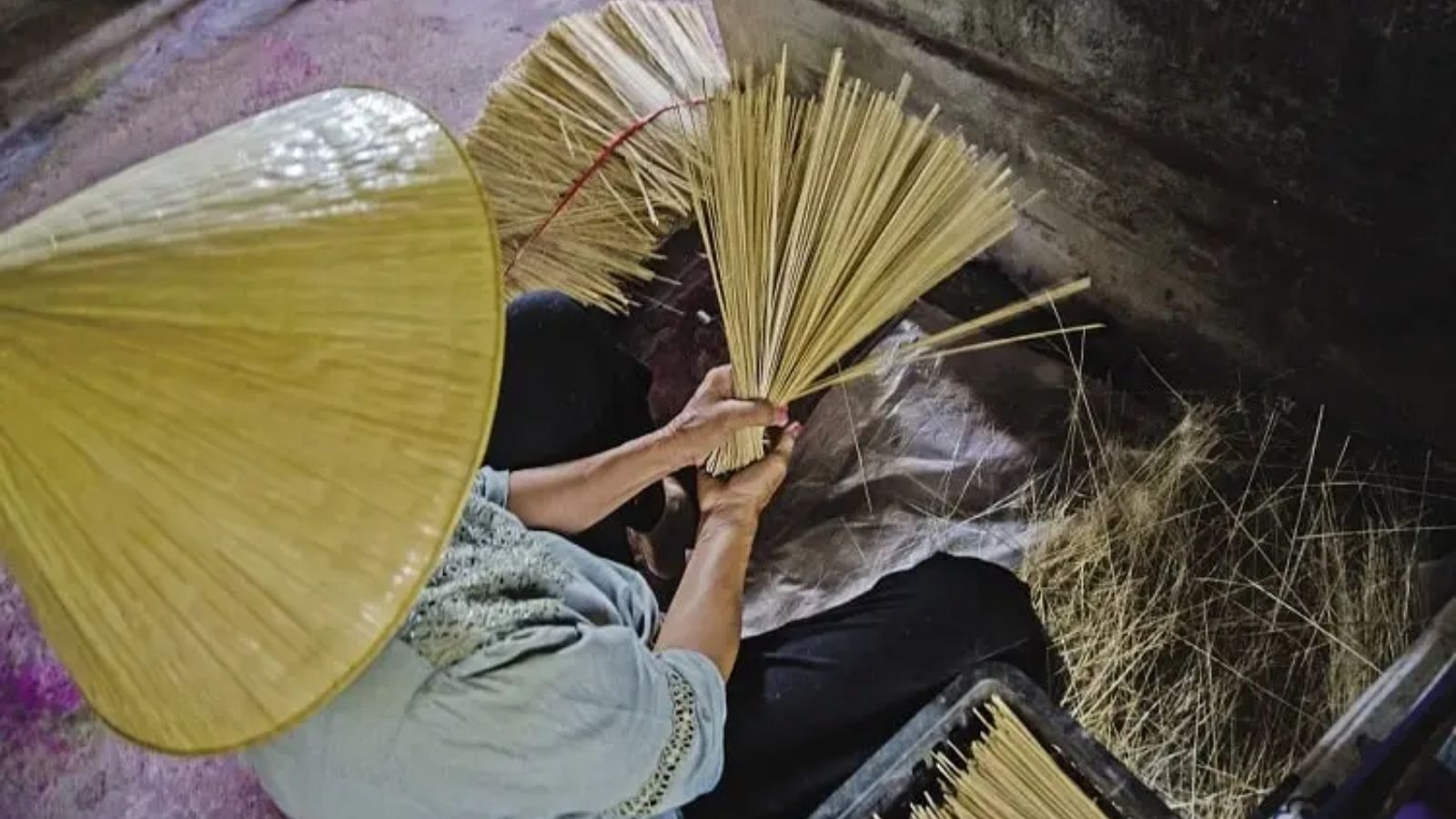
The roots of Thuy Xuan Incense Village stretch back roughly 700 years. During the reign of the Nguyen Dynasty, this small community held the exclusive privilege of crafting aromatic sticks for the imperial court, nobility, and local residents throughout the Thuan Hoa – Phu Xuan region.
Because of its deep historic value, local authorities officially recognized Thuy Xuan incense as a protected Hue Traditional Craft. Walking past the wooden workshops today, you can easily feel how seven centuries of continuous production have shaped the quiet identity of Thuy Xuan Ward.
Role in Hue’s Spiritual and Daily Life
Incense holds a sacred place in Vietnamese spiritual culture, acting as a bridge between the living and their ancestors. Pure, chemical-free sticks from Thuy Xuan burn steadily in family altars, temples, and communal spaces across Hue City.
Local artisan families take immense pride in preserving ancestral crafting methods. Rather than relying on modern chemical additives, parents pass down traditional tools and specialized formulas to their children, keeping the village identity vibrant and authentic.
The Artisanal Crafting Process and Natural Ingredients

This is the part that surprises most first-time visitors. Watching incense making happen by hand is nothing like picturing a factory line. Every stick starts with raw ingredients: cinnamon, agarwood, cardamom, clove, star anise, Litsea bark, and eucalyptus. Artisans grind these into a fine, pliable mixture that becomes the incense powder.
Next comes the bamboo incense sticks part of the process. Thin bamboo sticks get split and sun-dried until they’re crisp enough to burn evenly all the way down. Once dry, the incense powder gets wrapped around each stick by hand, layer by layer, until the thickness looks just right.
Here’s a simple breakdown of the steps:
- Select natural ingredients (cinnamon, agarwood, clove, star anise, eucalyptus)
- Grind ingredients into fine incense powder
- Prepare and dry bamboo cores
- Hand-wrap powder around the bamboo stick
- Dye the sticks in vibrant colors
- Complete incense drying under natural sunlight for several days
- Trim and package the finished sticks
No chemicals go into this process, which explains the naturally bright yellow tone and the soft, earthy scent that doesn’t feel artificial. As someone who’s smelled plenty of mass-produced incense, I don’t like how synthetic most of it feels compared to this. There’s a noticeable difference once you’re standing next to a rack of freshly dried sticks.
Top Things to Do at Hue Incense-making Village

Capture Photos with Colorful Incense Displays
The striking visual arrangement of fan-shaped incense bundles turns the village street into an incredible outdoor gallery. Local shop owners welcome visitors to step inside their courtyards to take photographs amid the rainbow array.
Many nearby shops offer rental traditional Vietnamese attire (Ao Dai) for a small fee. Slipping into a flowing Ao Dai while standing inside a courtyard filled with bright red and yellow incense bundles provides an unforgettable travel memory. If you are building a broader itinerary, exploring these heritage streets ranks among the most unique activities to explore across Hue City.
Join a Hands-On Incense Making Workshop
For a deeper experience, do not just take photos—sit down with a local family for a hands-on workshop. Friendly artisans will gladly show you how to handle the wet powder base and roll your own stick.
I tried making a small batch myself, and while it looks easy when the locals do it, getting the layer perfectly smooth takes real patience! The artisans patiently guided my messy first attempt until I produced a decent stick, giving me a genuine appreciation for their daily dedication.
Buying Authentic Thuy Xuan Incense: Types and Prices
Once the incense is finished, you’ll notice the village sells more variety than expected. Cinnamon incense tends to be the most affordable option, running around 40,000 VND per bundle. Agarwood incense, on the other hand, sits at the premium end, priced between 80,000 and 200,000 VND depending on size and fragrance strength.
You’ll also come across odor-removing incense and circular incense, both popular with locals for home use. If you’re buying as a souvenir, agarwood tends to be the crowd favorite thanks to its deeper, longer-lasting scent. Neutral shoppers who don’t have a strong preference usually end up grabbing a mix — one cinnamon bundle for the color, one agarwood bundle for the smell.
Complete Guide to Visiting The Incense Village in Hue

Exact Location and How to Get There
Getting here isn’t complicated, and the distance from central Hue is just around 7 kilometers. A few transport options work well:
- By motorbike: Self-drive rental costs about 100,000–150,000 VND per day, while a ride-hailing motorbike costs roughly 30,000–50,000 VND one-way. The ride itself takes 15 to 20 minutes, and parking runs about 5,000–10,000 VND.
- By taxi: Fares from the city center land between 100,000 and 130,000 VND, with a travel time close to 15 minutes. Most drivers already know the location since it’s a well-established stop. You can use a private car service combine with visiting other destinations in Hue for the most convenient.
If you’re not confident navigating on your own, a quick check on Google Maps before you leave your hotel saves time and avoids wrong turns down side streets.
Best Time of Day and Year to Visit
To catch the village at its absolute best, time your arrival carefully. Local families set out their colorful incense displays in open courtyards when the sun comes up.
- Best Time of Day: Visit between 8:00 AM and 11:30 AM. The morning sunlight illuminates the colored incense sticks, creating ideal lighting for photos while artisans actively work in their shops.
- Best Season: Travel during the dry season, from March to August. Clear skies ensure that rows of fan-shaped incense arrays cover every courtyard for natural sun-drying.
Nearby Attractions to Combine with The Incense Village
Since the village sits close to a few well-known landmarks, it makes sense to combine your visit with a short loop around the area.
- Tu Duc Tomb — about 3.5 kilometers away, entrance fee around 150,000 VND, known for its poetic layout of pine forests, lotus lakes, and royal pavilions
- Vong Canh Hill — roughly 2 kilometers away, free to enter, best visited at sunrise or sunset for panoramic views over the Perfume River
- Tu Hieu Pagoda — about 1.5 kilometers away, free entry, tied to Nguyen Dynasty history and known as a burial site for royal eunuchs
Travelers extending their trip further often continue toward Hoi An afterward, since the two destinations pair naturally on a central Vietnam route.
FAQs about Thuy Xuan Incense-Making Village in Hue

Is there an admission fee to enter Thuy Xuan Incense Village?
No, entering the village street and browsing the courtyard displays is completely free. However, it is polite to buy a small bundle of incense (around 40,000 VND) or pay a nominal fee if you use a shop’s photo props or join a workshop.
How long should I spend at the village?
Most travelers spend 30 to 1 hour visiting the shops, participating in an incense-rolling workshop, renting an Ao Dai, and taking photos.
Can I bring handcrafted incense home on an airplane?
Yes, packed dried incense bundles are made from natural botanical materials and can be safely packed inside your checked or carry-on luggage.
