
Mausoleum of Emperor Minh Mang: History, Architecture & Tips
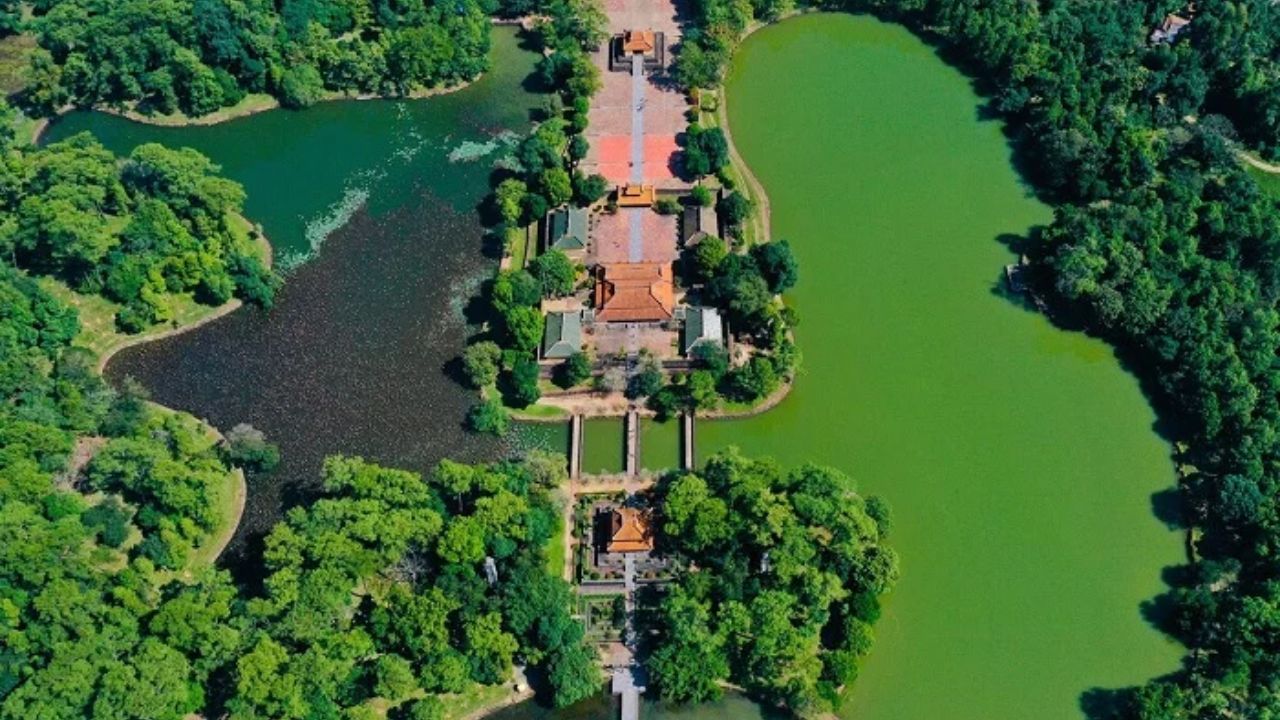
The Mausoleum of Emperor Minh Mang represents one of the most magnificent architectural masterpieces of the Nguyen Dynasty in central Vietnam. Built along a strict central axis, this imperial burial complex harmonizes classical royal design with the serene natural landscape of mountains and rivers.
Understanding its grand layout and deep spiritual philosophy offers visitors an essential glimpse into the golden era of imperial Hue.
Historical Significance and Architectural Vision of the Mausoleum of Emperor Minh Mang
When we step onto the grounds, we can immediately sense the incredible discipline behind this imperial estate. Emperor Minh Mang, the 2nd ruler of the Nguyen Dynasty who reigned from 1820 to 1841, carefully planned the site in 1840. However, he passed away before seeing its completion. His son and successor, Emperor Thieu Tri, finished the massive construction between 1841 and 1843.
Officially named Hieu Lang, the entire complex covers an impressive 28 hectares in An Bang Village, Huong Tra District. Situated near the confluence where two tributaries meet to form the famous Perfume River, the mausoleum sits peacefully amidst rolling hills and pine forests.
Unlike other royal sites, this mausoleum strictly reflects traditional Feng Shui principles. The natural surroundings, including Cam Duc Mount, act as protective barriers that balance human creation with nature. Every single gate, bridge, and courtyard aligns perfectly along a single 700-meter central axis, creating an overwhelming feeling of balance, majesty, and eternal order.
Structural Layout and Key Highlights Along the Central Axis
Dai Hong Mon and the Honor Courtyard
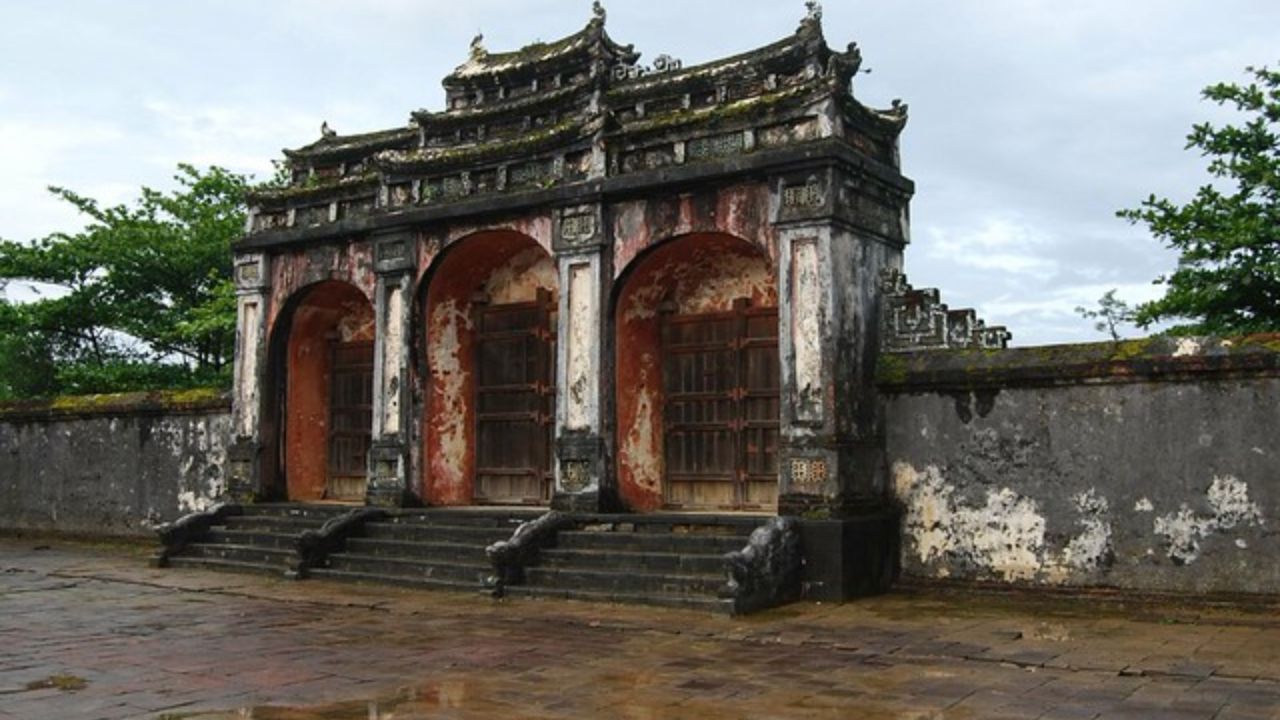
The main entrance is Dai Hong Mon, a grand red gate with three arches. Historical records show this central gate opened only once to carry the emperor’s coffin inside. Passing through brings us to the Honor Courtyard, lined with solemn stone statues of mandarins, horses, and elephants standing guard beside the Bi Dinh stele pavilion.
Sung Duc Palace
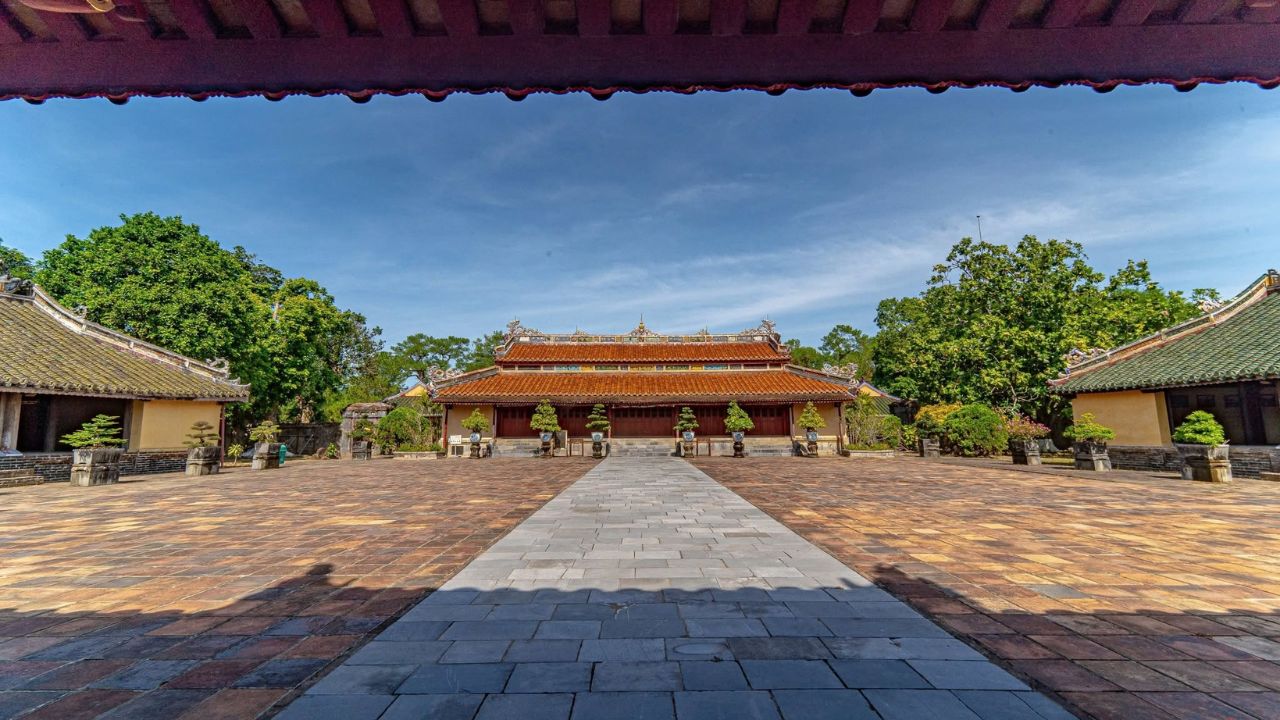
Further down the path stands Sung Duc Palace, accessed through Hien Duc Gate. This central worship area holds the sacred altars dedicated to Emperor Minh Mang and his Empress. The wood carving details and preserved royal relics inside create a deeply reverent atmosphere.
Minh Lau Pavilion and Lake Areas
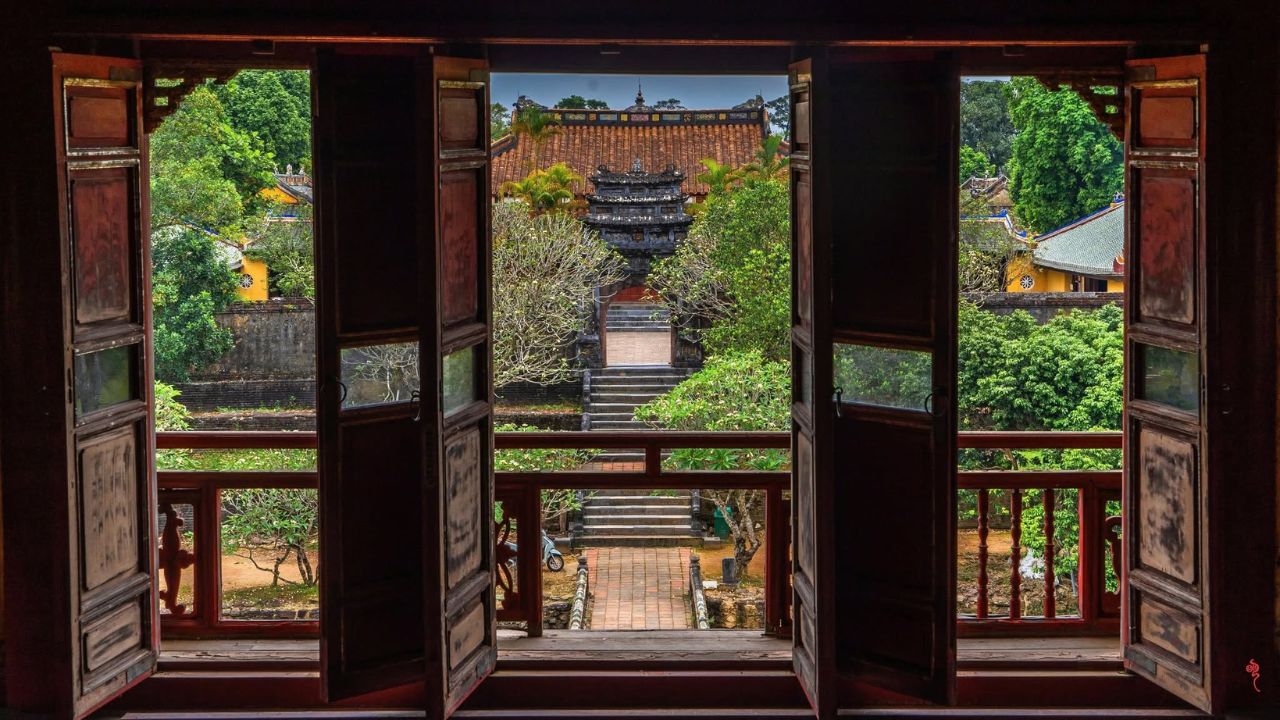
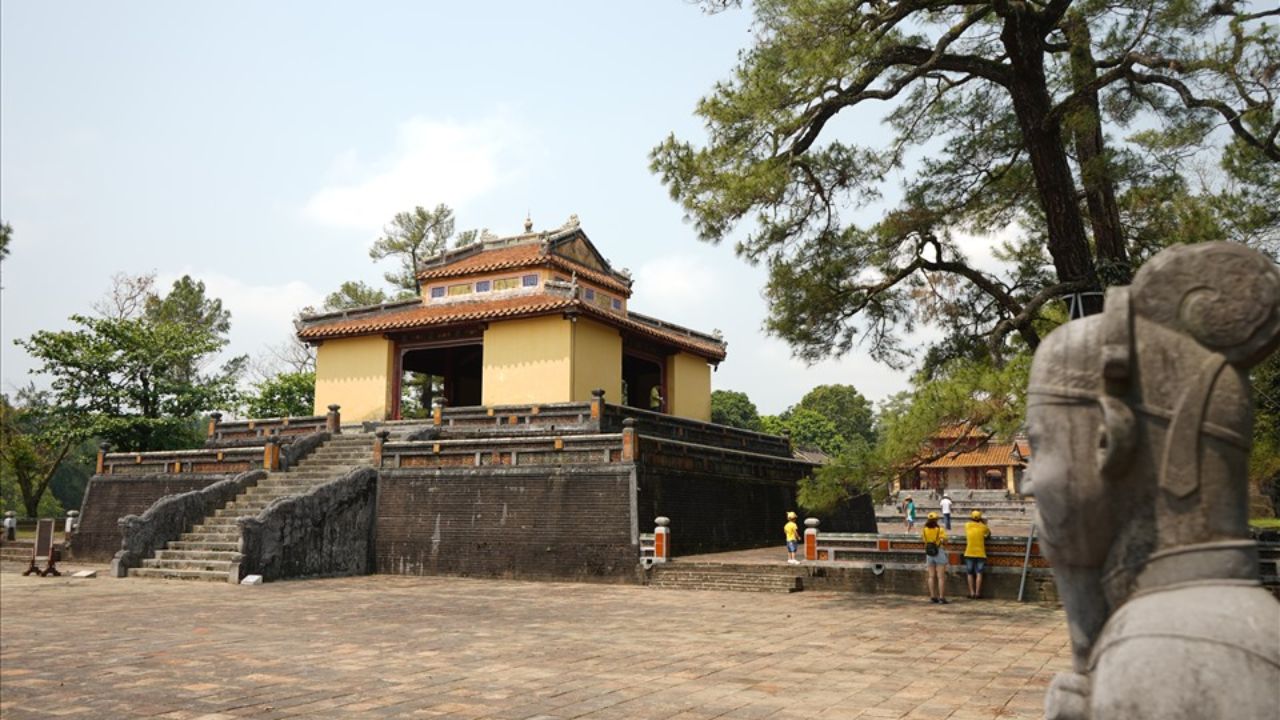
Sitting peacefully between the Lake of Impeccable Purity and Crescent Lake, Minh Lou Pavilion (the Pavilion of Light) offers a stunning visual highlight. The square two-story building features red-lacquered posts and delicate roof curves surrounded by flower gardens shaped like the Chinese character for longevity.
Buu Thanh Enclosure and Sepulcher
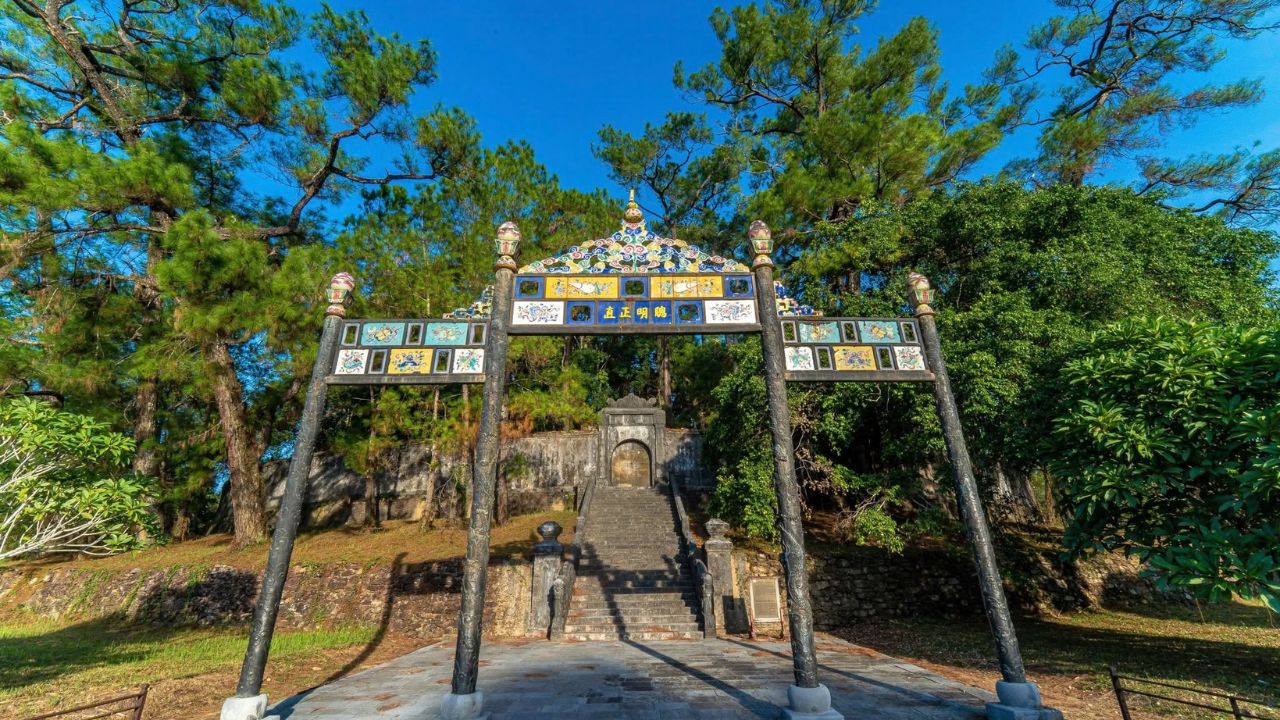
At the absolute end of the 700-meter axis lies the circular Buu Thanh wall. Surrounding a lush, pine-covered hill, this enclosure protects the subterranean burial mound where the remains of Emperor Minh Mang rest. The circular wall symbolizes the sun, representing the emperor’s ultimate return to the universe.
Practical Visitor Guide: Tickets, Opening Hours, and Location Directions
Planning your trip smoothly requires a few essential details before setting out.
| Detail | Information |
|---|---|
| Address | An Bang Village, Huong Tra District, Hue City |
| Distance | ~12 kilometers southwest of central Hue |
| Opening Hours | 7:00 AM – 5:30 PM (Daily) |
| Adult Ticket | 150,000 VND per person |
| Child Ticket | 30,000 VND per person |
Reaching Hieu Lang from central Hue takes about 20 to 30 minutes. We recommend hiring a private driver, renting a motor-scooter along the riverbank, or taking a scenic dragon boat cruise up the Perfume River. Combining this visit with a curated list of unmissable experiences in Hue ensures a seamless day out.
Nearby Attractions to Combine with Minh Mang Tomb
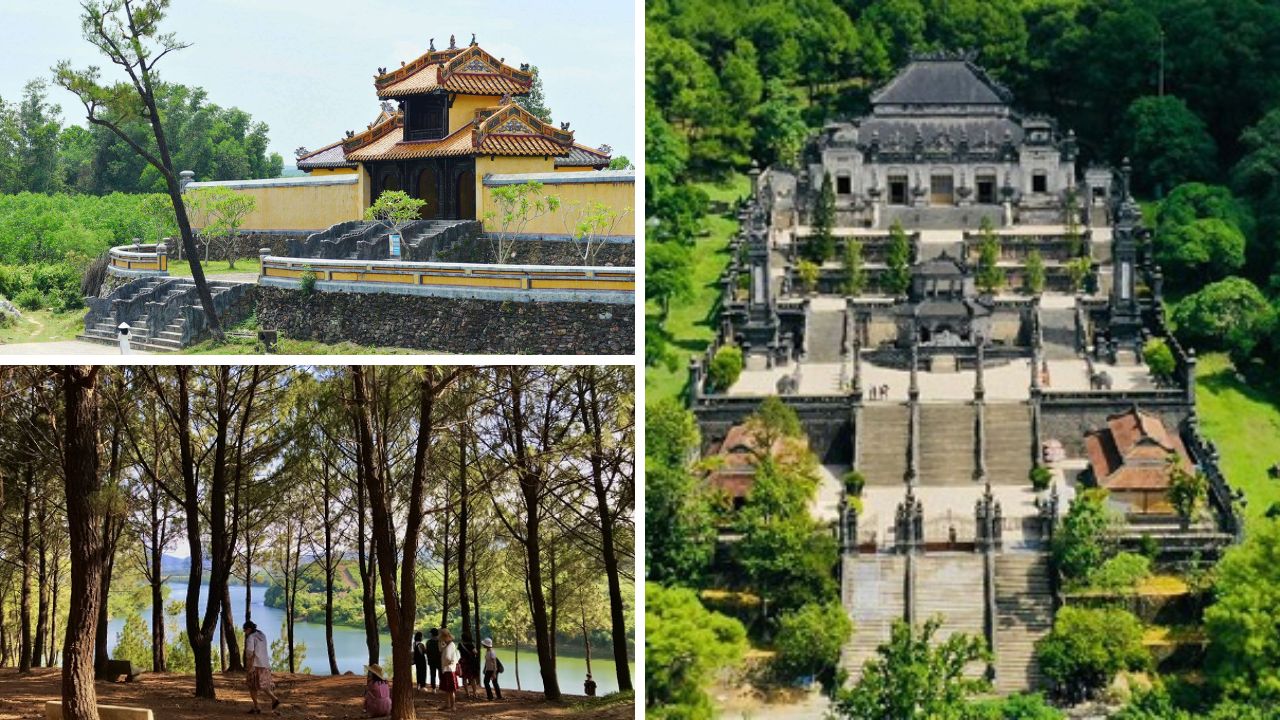
Since the tomb sits in an area rich with historical monuments, combining nearby stops saves travel time and makes for a rich full-day tour.
- Khai Dinh Tomb: This 20th-century site sits 3.5 kilometers away on Chau Chu Mountain. It features a dark concrete exterior. Inside, you will find bright glass mosaics with Western artistic influences. The design creates a striking contrast with Minh Mang Tomb.
- Gia Long Tomb: This large burial site rests about 6.5 kilometers across the river. It serves as the final resting place of the dynasty’s founder. The grounds stay quiet and free from big crowds, offering a very authentic experience.
- Vong Canh Hill: You will find this windy hilltop along the main road back to the city center. It overlooks green pine groves and wide curves of the Perfume River. It is an ideal spot to stop, relax, and watch the sunset.
Comparing Minh Mang Tomb with Other Nguyen Dynasty Royal Tombs in Hue
Every imperial tomb in Hue carries its own distinct personality, reflecting the character of the ruler who created it.
- Minh Mang Tomb vs. Tu Duc Tomb: Minh Mang Tomb emphasizes strict linear symmetry, Confucian order, and grand geometric balance. In contrast, Tu Duc Tomb feels like a poetic garden retreat filled with winding pathways, lotus lakes, and organic wooden pavilions.
- Minh Mang Tomb vs. Khai Dinh Tomb: Minh Mang Tomb preserves traditional Vietnamese woodwork, stone carvings, and natural Feng Shui landscapes. Khai Dinh Tomb represents a modern fusion of French cement, Western arches, and vibrant ceramic mosaic art.
For travelers who want to compare the architecture side by side, a full-day Hue tombs excursion makes it easy.
FAQs about Minh Mang tomb Hue
How long should we spend visiting the Mausoleum of Emperor Minh Mang?
We recommend spending about 1.5 to 2 hours to walk the full 700-meter central path, explore the palaces, and admire the lakes at a comfortable pace.
Is Minh Mang Tomb easy to walk around?
Yes, the main central path uses flat stone paving. However, there are several flights of stairs when crossing from court to court, especially near Minh Lou Pavilion and the Buu Thanh wall.
Can we hire a local guide at the entrance?
Yes, licensed English-speaking guides are often available near the main ticket counter to share detailed stories about royal history and Feng Shui design.
