
Attractions
Dien Tho Palace Guide: History & Architecture in Hue
Sep
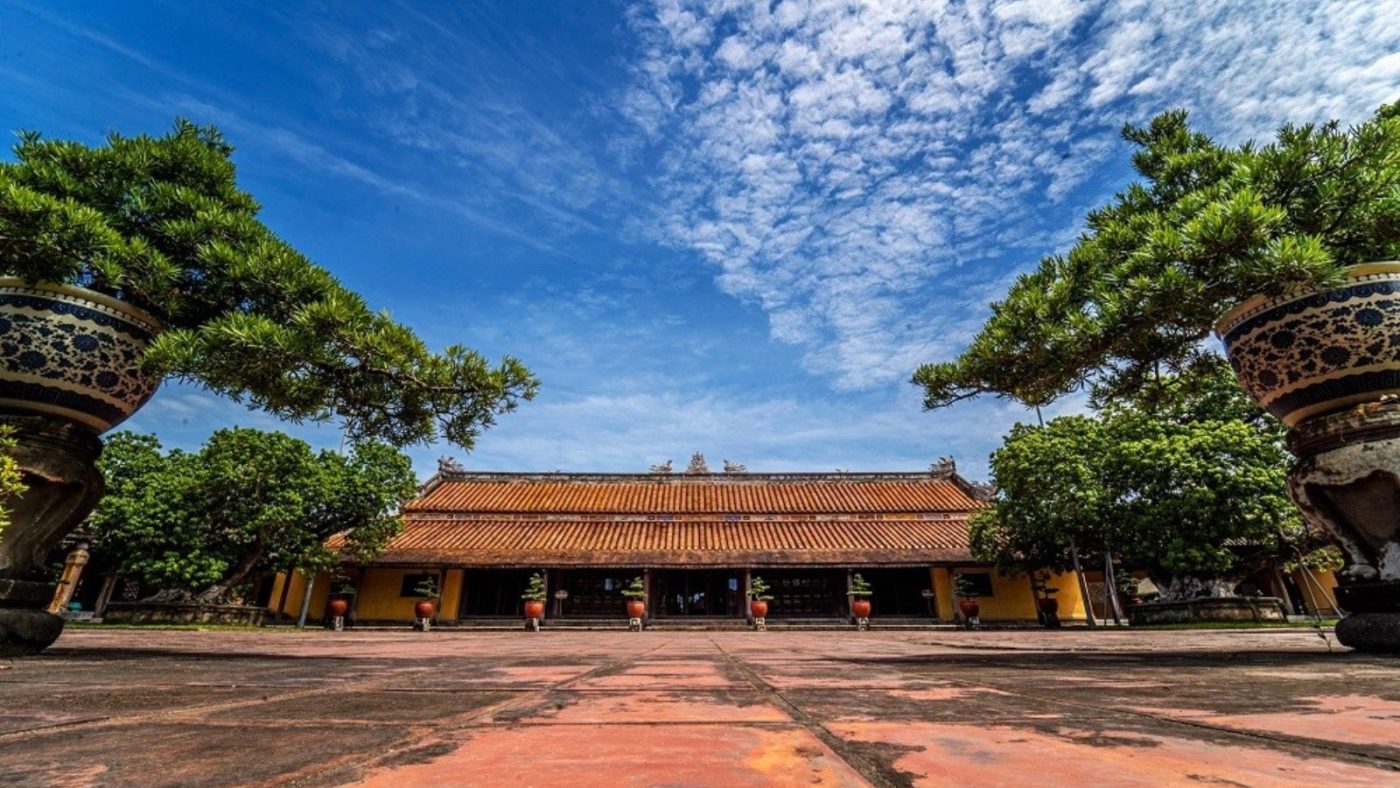
Dien Tho Palace stands as one of Hue Imperial City‘s most graceful royal residences. Built for the Nguyen Dynasty’s queen mothers, this complex blends history with quiet beauty. This guide covers its architecture, opening hours, entrance fees, and the best tips for visiting. Nearby attractions and practical travel details are included too, making trip planning simple and stress-free.
Dien Tho Residence Historical Significance and Development Over Time
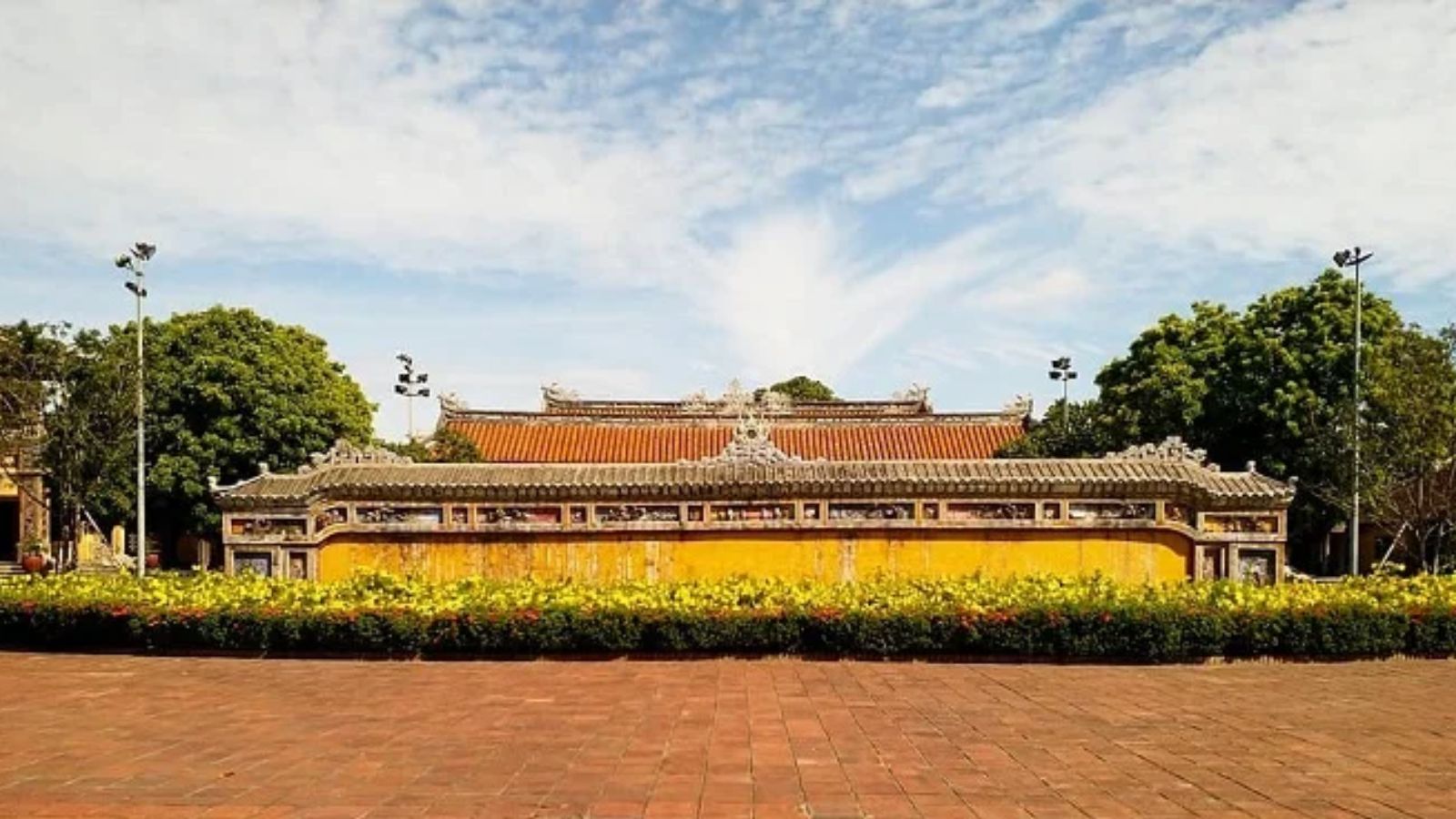
We always love sharing places that carry deep historical meaning, and Dien Tho Palace is a prime sample of royal heritage. Constructed back in 1804 by Emperor Gia Long, this site originally bore the name Truong Tho Palace. Over time, successive rulers updated the complex to honor their mothers. For example, during the Emperor Minh Mang Era, the court renamed it to Tu Tho Palace. Later, during the Emperor Khai Dinh Era, it officially received its current name, Dien Tho Palace.
This sanctuary was far more than just a home. It functioned as an architectural expression of filial piety, a core Confucian belief emphasizing deep respect for elders. We find it fascinating how the Nguyen Dynasty designed this 15,000-square-meter rectangular area specifically to give Queen Mothers comfort and dignity.
Prominent royal figures spent their daily lives within these quiet walls:
- Empress Dowager Tu Du: The influential mother of Emperor Tu Duc, who lived here for decades.
- Empress Dowager Tu Cung: The mother of Emperor Bao Dai, known as the last Queen Mother of Vietnam.
Architectural Layout and Key Structures
Dien Tho Chanh Dien (Main Hall)
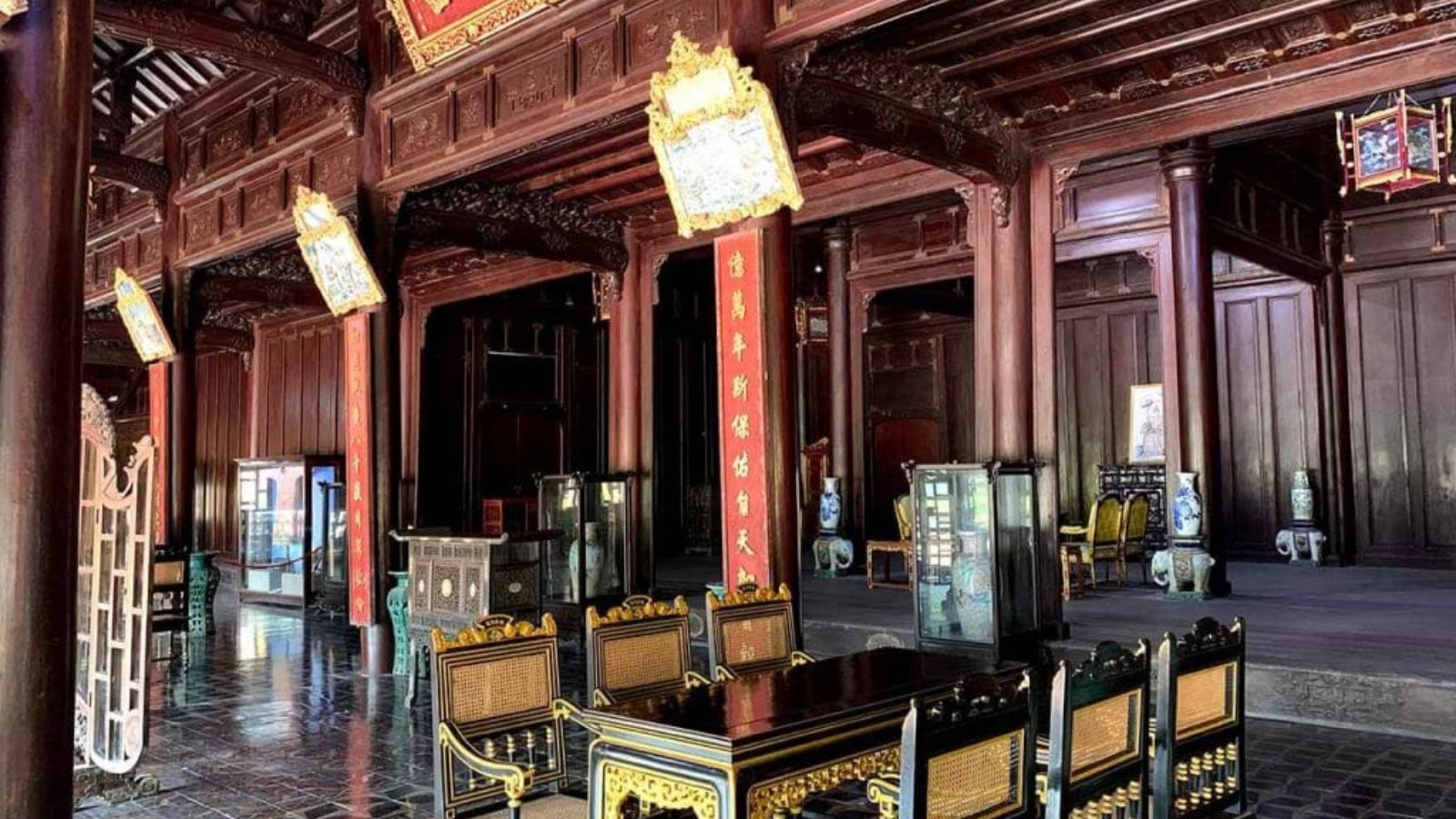
The main hall serves as the central focal point of the whole complex. Covering an area of roughly 960 square meters, this structure showcases classical Vietnamese court architecture:
- Roofing: Beautiful yellow-glazed tiles cover the double-eaved layered roof, signaling top imperial status.
- Carvings: Elegant phoenix motifs decorate the roof edges and beams, symbolizing female royal authority.
- Interior: The central room houses the original Dien Tho Lacquered Board, a rare historic artifact surviving from the imperial era.
Tinh Minh Pavilion
Located near the main hall, Tinh Minh Pavilion presents a striking visual demo of cultural blending. Built during the reign of Emperor Bao Dai for Empress Dowager Tu Cung, this building displays a modern French colonial architectural style. It offers a clear contrast to the traditional wooden buildings nearby.
Truong Du Pavilion and Auxiliary Buildings
We particularly like spending time around Truong Du Pavilion. This delicate two-story pavilion sits directly over a lotus pond, giving royal women a cool spot to read, write poetry, and relax. Nearby, you will find two other key historic structures:
- Ta Tra House: A guest reception building rebuilt with durable cement in 1927 to receive visitors.
- Khuong Ninh Tower: A peaceful two-story structure that functioned as a private Buddhist worship shrine for the Queen Mother.
A key highlight connecting the entire area is the covered wooden corridor system, known as Truong Lang. These covered walkways allowed royalty to walk safely between buildings during heavy rains. In fact, these pathways linked Dien Tho Palace directly to Can Thanh Palace in the Forbidden Purple City, allowing the Emperor to visit his mother daily without walking outside.
Visiting Dien Tho Palace: Location and Travel Guide
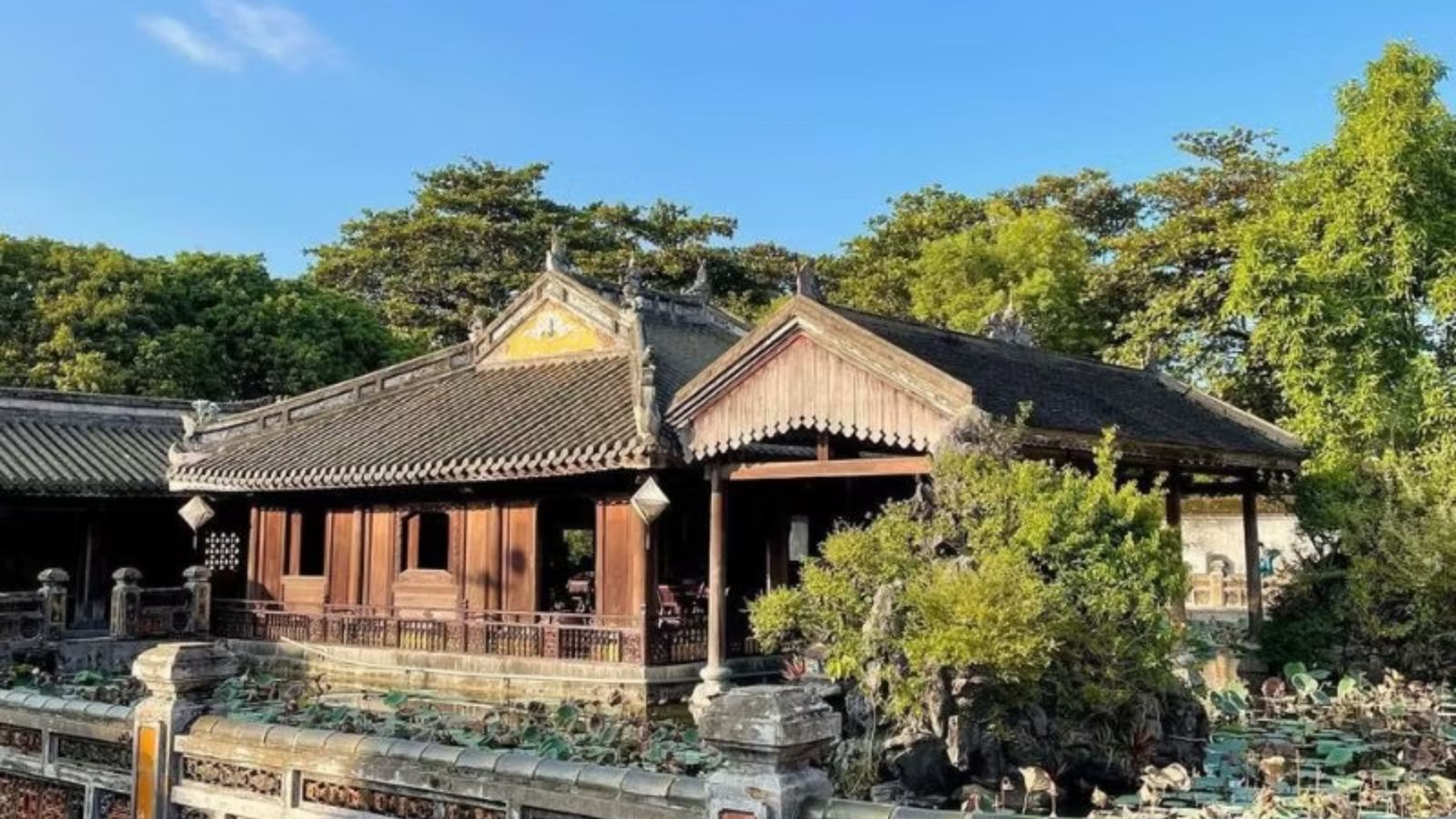
Planning your visit is straightforward since the complex sits right inside the main Citadel grounds. The exact location is 75 Le Huan, Phu Hau ward, Phu Xuan district, Hue city, in the northwest quadrant of the inner courtyard.
To help you organize your itinerary, here are the essential travel specs:
| Feature | Details |
|---|---|
| Opening Hours (Summer) | 7:00 AM – 5:30 PM (April to September) |
| Opening Hours (Winter) | 7:30 AM – 5:00 PM (October to March) |
| Entrance Fee | Included in standard Citadel ticket (200,000 VND per adult) |
| Recommended Time | 30 to 45 minutes for this specific palace complex |
| Best Visiting Window | Early morning (7:00–9:00 AM) or late afternoon (3:00–5:00 PM) |
If you are putting together a full itinerary for your trip, check out our recommended list of top activities to try in Hue to make the most of your day.
Surrounding Landmark Relationships within the Imperial City
Visiting Dien Tho residence allows you to explore several surrounding royal monuments located nearby:
- Can Thanh Palace: The official residence of the ruling Emperor, connected directly via covered corridors.
- Truong Sanh Palace: Another residential complex reserved for Grand Queen Mothers.
- Thai Hoa Palace & Ngo Mon Gate: The main ceremonial throne hall and grand entrance gate located a short walk south.
- Nine Dynastic Urns: Famous bronze urns positioned near the main temple area.
The entire area forms a key section of the Complex of Hue Monuments, which earned recognition as a UNESCO World Cultural Heritage site in 1993. Visiting this palace offers an unforgettable look into Vietnam’s imperial history.
