
Ngo Mon Gate Hue: History, Architecture, Location & Visiting Tips
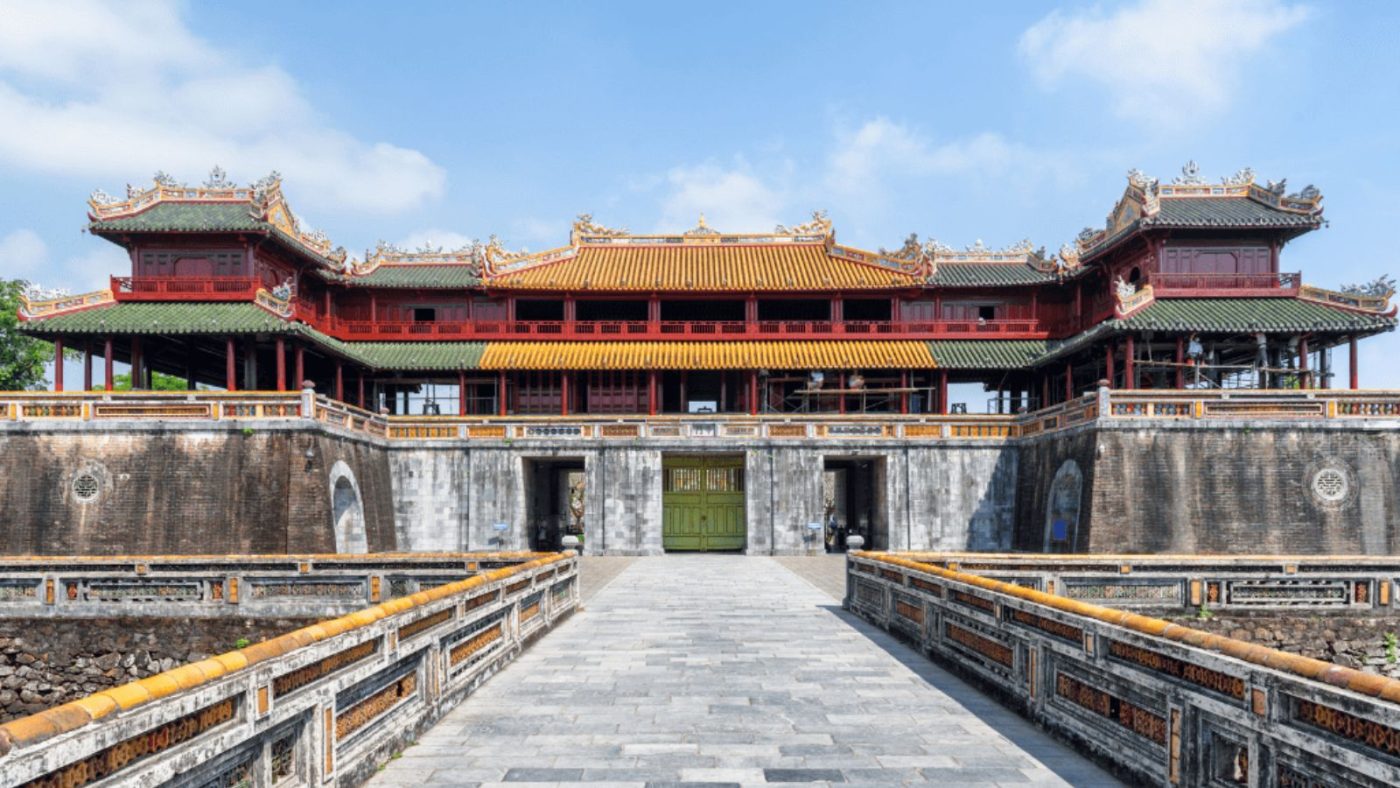
Ngo Mon Gate stands as the grand southern entrance to the ancient Hue Citadel. As the principal face of the Nguyen Dynasty’s royal enclosure, this landmark attracts millions of visitors each year. Travelers exploring Vietnam often start their historic journey right at this monumental gate. Understanding its deep historical roots and intricate pavilion design will make your trip truly unforgettable.
Ngo Mon Gate at a glance

Ngo Mon Gate, often called the Meridian Gate, marks the main entrance to the Hue Imperial City. It sits at the heart of the Hue Imperial Citadel gate system. Locals and travelers alike see it as the face of the old feudal dynasty.
The name “Ngo” refers to the south. That’s the direction the gate faces. This ties back to an old principle called “Toa can huong ton,” which shaped the entire citadel’s layout.
Some visitors mistake the name for “Noon Gate.” That’s a common mix-up. In Sino-Vietnamese, “Ngọ” can mean noon too. But the correct translation leans toward Meridian Gate, since the name points to direction, not time. Understanding this small detail helps travelers appreciate the gate’s true purpose within Dai Noi.
History of Ngo Mon Gate
Construction work began in 1833, ordered by King Minh Mang, the second ruler of the Nguyen Dynasty. He built this gate as part of a larger citadel upgrade. Before then, other structures stood on the same spot, dating back to the Gia Long era.
These included Nam Khuyet Dai, a viewing pedestal, and Can Nguyen Palace above it. Two side doors, known as Left and Right Doan Mon, flanked the area. All of these were removed to make room for the new gate.
War doesn’t spare monuments, and Ngo Mon Gate was no exception. In 1968, during the Battle of Mau Than in Hue, the structure suffered heavy damage. Restoration efforts followed in 1970, bringing the gate back closer to its original form.
Beyond construction and repair, this gate holds a deeper story. It hosted the Truyen Lo ceremony, where scholars earning doctorate titles received recognition. It also held the Ban Soc ceremony, when the king distributed calendars to his people.
These ceremonies, though significant, weren’t the gate’s most dramatic moment. That came on August 30, 1945, when King Bao Dai’s abdication took place right here, marking the end of Vietnam’s feudal monarchy. Just days earlier, on August 23, 1945, the flag of the Democratic Republic of Vietnam flew here for the first time. Together, these two events symbolized a clean break from centuries of royal rule.
Architecture and Structure of Ngo Mon Gate

The design of Ngo Mon Gate reflects Nguyen Dynasty architecture at its finest. It’s split into two main parts, and each one tells its own story.
The first part is the Dai forming the base of the gate. It’s shaped like a U and built from brick and stone. The total area measures more than 1,560 square metres with the length of 57.77 metres, the width of 27.06 metres and the height is nearly 5 metres. This base uses brass bars for extra strength. Its thick, sloped walls have helped it survive time, weather, and war.
The Dai holds five separate entries. Each one served a different rank in the old dynasty:
- The central entrance (the yellow one) — reserved only for the king.
- Two U-shaped side entries — used by mandarins, soldiers, horses, and elephants.
- Two outermost entries — open to commoners.
Every entrance top curves into a large arch, reinforced with brass crossbars. The exterior features copper foil laminate, adding a polished, regal look.
Sitting above the ground foundation is the Ngu Phung pavilion, also known as the Five Phoenix pavilion. This upper section has two floors, and its entire frame is made from iron wood, supported by around 100 pillars.
There are 13 rooms and 5 roofs arranged in a row. The roofs split into two lines. The lower roof connects to the ground level, forming a shaded corridor. The upper roof divides into nine sets: one central yellow-tiled roof and eight green-tiled roof sets around it.
I like how the roof colors create a visual hierarchy. Yellow marks royal status, while green fills out the rest. It’s a small design choice with a big meaning.
Some architects compare this structure to the Meridian Gate in Beijing’s Forbidden City. There’s a resemblance, sure. But the details, materials, and layout clearly reflect Vietnamese craftsmanship instead of a copy.
In the past, women weren’t allowed inside Ngu Phung Pavilion. There was one exception, though. Empress Nam Phuong became the first woman to enter, standing beside her husband, Emperor Bao Dai.
Ngo Mon Gate’s Role in Hue Imperial Citadel
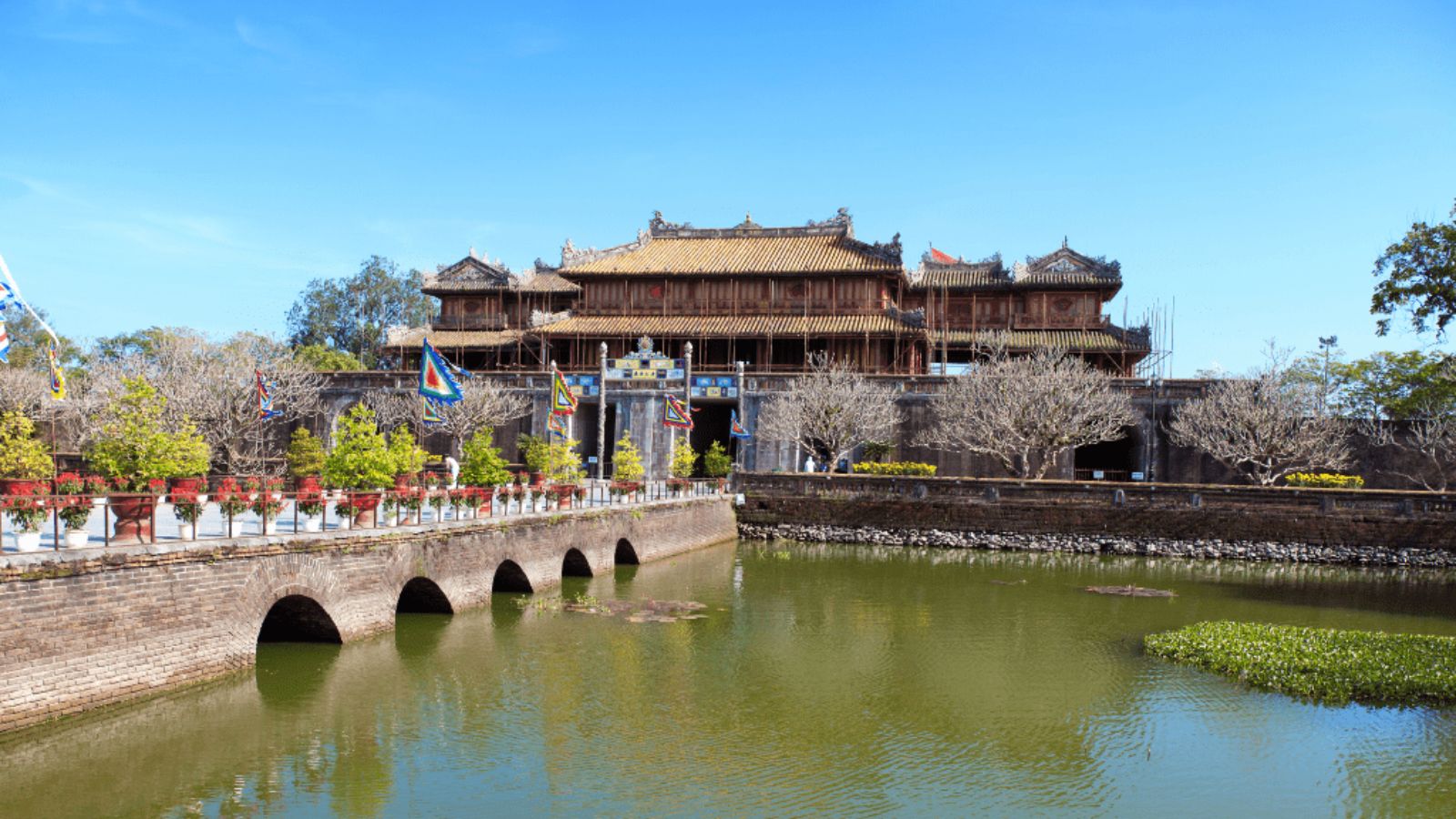
Ngo Mon Gate doesn’t stand alone. It connects to several other landmarks inside the citadel.
Walking further inside, visitors cross Trung Dao Bridge over Thai Dich Lake. This path leads straight to Thai Hoa Palace, once the throne hall of the Nguyen kings. From there, the route continues toward Dai Trieu Nghi courtyard, a grand open space used for royal ceremonies.
This whole complex, including Ngo Mon Gate, belongs to the Complex of Hue Monuments. UNESCO recognized this site as a World Heritage Site, placing it alongside the world’s most valued cultural landmarks.
Visitor Guide: How to Visit, Location, and Entry Requirements
Reaching Ngo Mon Gate is easy because it sits right in the heart of Hue City along the famous Perfume River.
- Exact Address: Phu Hau Ward, Hue Imperial Citadel Complex, Hue city.
- Operating Hours: Open every day from 7:00 AM to 5:00 PM.
- Ticket Purchase: Buy your official entry ticket at the main kiosks outside the Citadel before passing through the turnstiles.
Getting to the monument is simple for all travel styles:
- Walking: If your hotel sits along the riverfront, enjoy a morning walk across the main bridges toward the Citadel grounds.
- Ride-Hailing Apps: Use mobile apps like Grab or Be to book a quick car taxi or traditional motorbike driver (xe om).
- Guided Tours: Book a full-day city tour that includes private bus transport and professional guide services. Or take a private walking tour with a local guide to understand deeply about the Nguyen Monarch’s stories.
Proper etiquette is required when stepping onto these historic grounds:
- Dress Code: Wear respectful clothing that covers your shoulders and knees. Avoid sleeveless tops or short skirts.
- Photography Rules: You can take outdoor photos freely. However, filming and photography are strictly banned inside sacred sanctuary spaces and royal shrines.
- Safety Rules: Smoking, carrying flammable materials, or bringing explosives onto the premises is completely forbidden.
For the best experience, visit early in the morning near 7:00 AM to avoid crowds and afternoon heat. If you visit between April and May during the annual Hue Festival, you can witness stunning cultural reenactments of traditional imperial ceremonies right in front of the gate.
Nearby Attractions to Explore

Ngo Mon Gate is the main south entrance to get into the Imperial City. Once you get into the gate, you’ll have the chance to explore other important monuments such as Thai Hoa Palace, Forbidden Purple City, Nine Urns, The Mieu Temple,..
Also, Dong Ba Market sits a short distance away. It’s a lively, colorful spot filled with local goods, food stalls, and daily city energy. It’s worth a stop if you enjoy soaking up local culture.
The citadel itself holds more landmarks worth checking out too, from royal tombs to scenic river spots along the Perfume River. For a broader look at everything the city offers, this guide on places worth visiting around Hue covers more spots beyond the citadel walls.
Whether you’re drawn to history, architecture, or simple photo opportunities, Ngo Mon Gate delivers a rich, memorable stop on any Hue itinerary.
