
Kien Trung Palace: History, Architecture & Visiting Guide

Kien Trung Palace Overview
Kien Trung Palace sits at the rear of the Forbidden Purple City, inside the wider Hue Imperial City complex. The name carries deep meaning. “Kien” means to establish or found. “Trung” suggests integrity and a straight path. Together, the name reflects the founding principles of the Nguyen Dynasty.
I find this detail fascinating because most visitors skip the meaning behind the name. Yet it tells you exactly why the site mattered so much to the royal family.
This palace was not a public ceremonial hall. It was a private home. Emperor Khai Dinh lived and worked here. Later, Emperor Bao Dai made it his residence too. Unlike the grand ceremonial buildings nearby, Kien Trung Palace feels more personal. It shows how royal life shifted toward modern governance in the early twentieth century.
The History of Kien Trung Palace
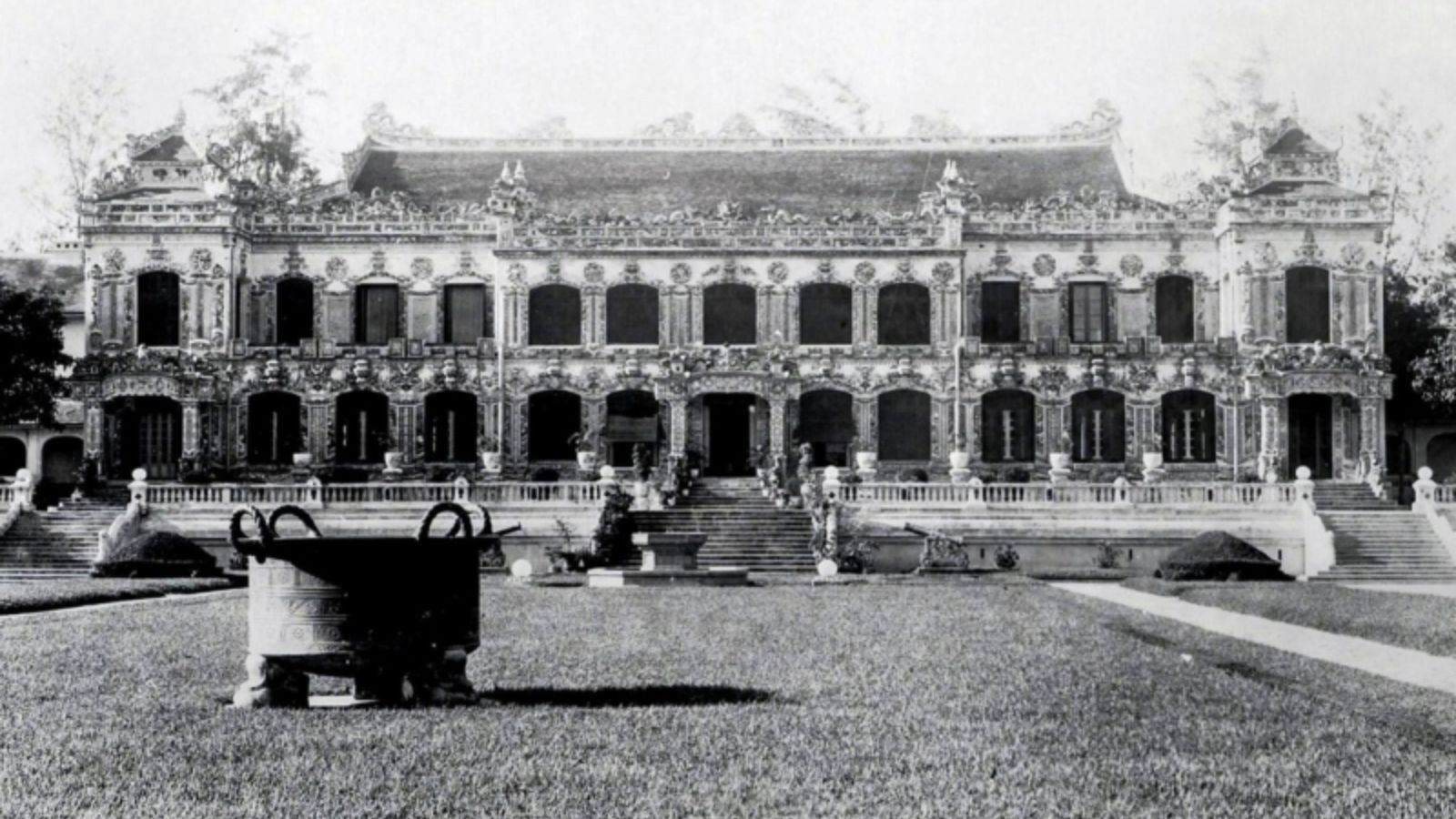
The story of this site stretches back nearly two centuries. It did not start as the palace you see today. Instead, it began as a simple wooden tower built for royal leisure.
King Minh Mang built the first structure here in 1827. It was called Minh Vien Pavilion, a wooden building standing about 15.8 meters tall. He used it as a place to relax and enjoy cool air.
Later, King Thieu Tri renovated the tower and added a glowing pearl to its roof. He even ranked it in his famous poetry collection about Hue’s most beautiful landscapes. However, the tower did not last. King Tu Duc had it dismantled.
In 1913, King Duy Tan rebuilt the site in a new style. He named it Du Cuu Tower. This structure stood until King Khai Dinh renamed it Kien Trung Tower in 1916.
Between 1921 and 1923, Emperor Khai Dinh rebuilt the entire structure. He transformed it into the grand palace we recognize today. The design blended French Baroque, Italian Renaissance, and traditional Vietnamese architecture.
This was not like anything built in Vietnam before. Craftsmen used cement, steel, porcelain shards, and glass. That choice marked a sharp break from the ironwood palaces common across Hue at the time.
Once completed, Kien Trung Palace became more than just a building. It became the center of royal family life. Emperor Bao Dai lived here with Empress Nam Phuong. Their children, including Crown Prince Bao Long and several princesses, grew up within these walls.
Crown Prince Bao Long was actually born inside the palace in 1936. That detail alone makes this site historically significant. It also witnessed a major turning point in Vietnamese history. In 1945, King Bao Dai met with government officials here to discuss his abdication.
Sadly, the palace did not survive the following decades unharmed. In 1947, war destroyed most of the structure. Only the foundation and a few balustrades remained standing. For decades, this once-grand palace sat in ruins.
The Restoration of Kien Trung Palace
In 2019, the Hue Monuments Conservation Center began a major restoration project. The goal was ambitious: bring this royal residence back to life. Workers preserved the original foundation as much as possible.
The project covered an area of over 3,800 square meters. It cost approximately 123 billion Vietnamese dong. Restoration teams rebuilt the main structure, the enclosure walls, courtyards, and decorative elements like fountains and watch towers.
By early 2024, the restoration was complete. The palace reopened its doors to visitors after more than seventy years of silence.
The Architecture and Design of Kien Trung
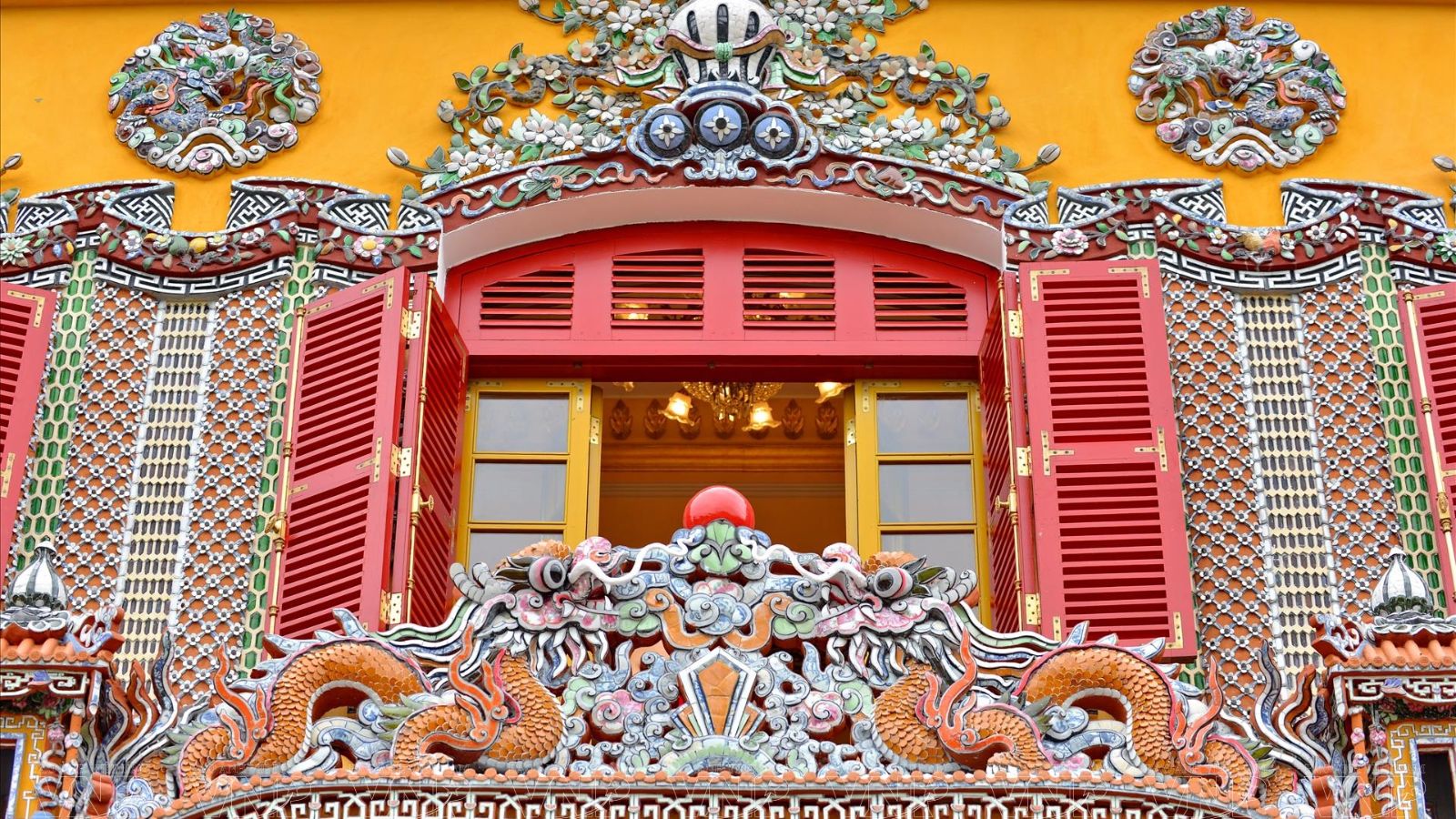
The exterior features detailed porcelain mosaic art. Craftsmen used thousands of ceramic shards and glass pieces. These pieces form intricate images of dragons and phoenixes across the facade.
I like this decorative style because it feels unlike typical royal decoration in Vietnam. It shows real artistic ambition. Historians consider it a signature feature of late Nguyen Dynasty craftsmanship.
The main facade includes thirteen door openings on each floor. This design makes the building feel open and light. Three grand staircases, each decorated with dragon motifs, lead visitors up toward the entrance.
The roof uses yellow enamel tiles, a color once reserved only for royalty. Builders relied on reinforced concrete and steel instead of traditional timber. By the 1930s, the palace even had electric lights and running water. At the time, this made it a working sample of modern living in royal Vietnam.
How to Visit Kien Trung Palace
Planning a visit here is simple. Your general Hue Imperial City ticket already covers entry to Kien Trung Palace. You do not need a separate pass.
During summer, the site opens from 6:30 AM to 5:30 PM. In winter, opening hours shift slightly later, starting at 7:00 AM.
Here are a few tips before you go:
- Head straight to the second-floor balcony for the best panoramic view.
- Look for the royal family’s personal items displayed inside.
- Dress respectfully by covering your shoulders and knees.
- Avoid using flash photography near delicate artifacts.
If you want to make the most of your day, pair this visit with other nearby sites. Rento Travel can help you plan a full route through notable landmarks and experiences across the city. A private car transfer is often the easiest way to move between these spots without stress.
Kien Trung vs. An Dinh Palace

Many travelers ask whether they should visit Kien Trung Palace or An Dinh Palace. Both sites reflect the same East-meets-West transition in Nguyen Dynasty architecture. Yet they feel very different.
Kien Trung Palace sits inside the Citadel, right on the royal axis. Its style leans heavily on porcelain mosaic and Baroque influence. The overall vibe feels imperial and grand.
An Dinh Palace, on the other hand, sits outside the Citadel near the An Cuu River. Its design favors mural painting and a European villa look. It once served as a royal summer home, giving it a more private, elegant feel.
I don’t think one site is better than the other. They simply offer different experiences. If you have time, visiting both gives you a fuller picture of royal Vietnamese life during this era.
Ready to see this royal residence for yourself? Rento Travel can arrange a smooth, private visit to Kien Trung Palace and other highlights across the Hue Imperial City. Book your tour today and experience this restored piece of Vietnamese history firsthand.
