
Forbidden Purple City Hue: Step Inside Vietnam’s Last Royal Secret
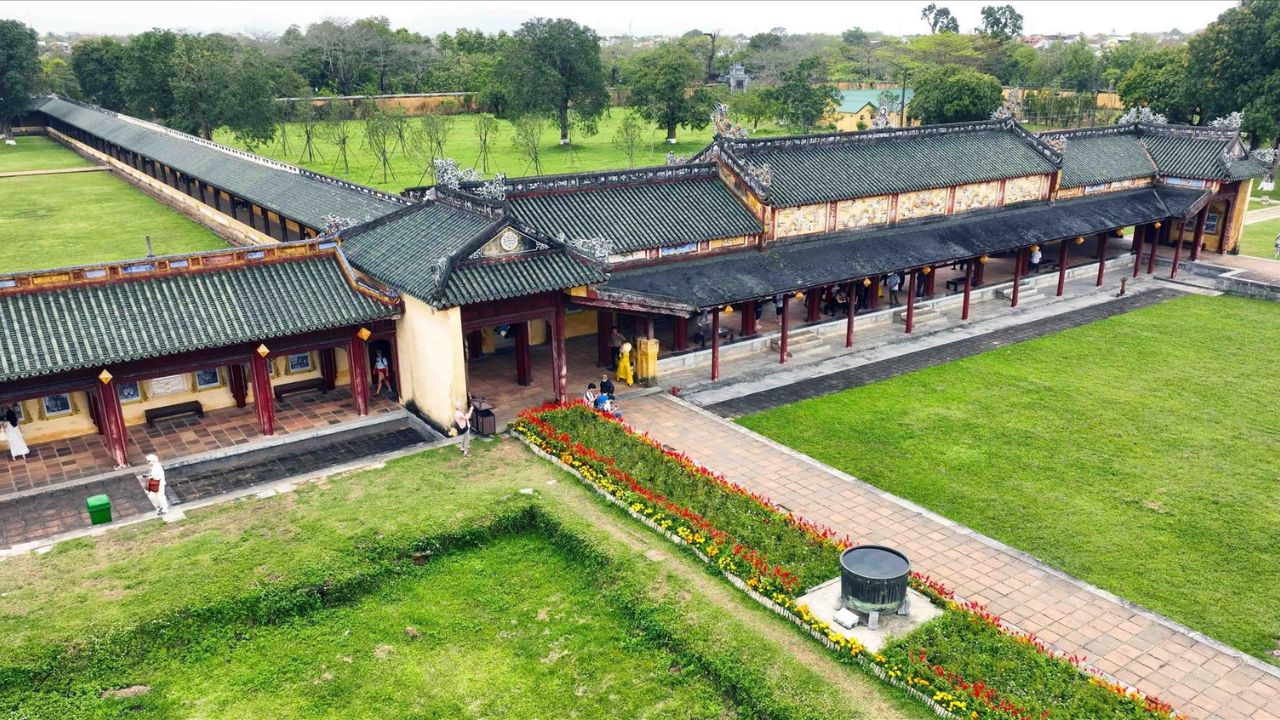
The Forbidden Purple City Hue sits at the heart of Vietnam’s imperial heritage, offering travelers a fascinating step back into the era of emperors.
Nestled inside the Hue Imperial City along the scenic Perfume River, this citadel sanctuary served as the exclusive home for the royalty of the Nguyen Dynasty. Understanding its deep history, stunning layout, ticket details, and visiting tips makes a huge difference when planning your trip.
Overview and Historical Significance of Forbidden Purple City Hue
Naming Origin and Meaning of Tu Cam Thanh
When King Gia Long founded the Nguyen Dynasty in 1802, he requested construction of the imperial citadel. The innermost area began as Cung Thành in 1804 and was completed in 1807. In 1822, King Minh Mang renamed Cung Thành to Tử Cấm Thành, which translates directly to Forbidden Purple City.
In Mandarin, “Tu” roughly translates to “the son of heaven,” which explains the “purple” in its name — though don’t expect purple walls. The dominant color here was actually yellow, a shade tied to imperial power and the earth itself.
Role in the Nguyen Dynasty
For over a century, the Forbidden Purple City operated as a private imperial sanctuary. It housed the living quarters of the Nguyen Kings, their queens, royal children, concubines, and serving eunuchs. Commoners and standard mandarins were strictly forbidden from stepping inside these walls under penalty of death. This explains the word “forbidden” in its name.
Throughout the 19th and early 20th centuries, monarchs like King Thieu Tri, King Dong Khanh, and King Khai Dinh expanded and refined the complex. They added ornate gardens, reading pavilions, and entertainment halls.
Tragically, major conflicts in the mid-20th century devastated the grounds. Heavy bombardment during war in 1947 and 1968 burned most wooden structures to the ground. In 1993, UNESCO recognized the Complex of Hue Monuments as a World Heritage Site. Since then, intensive ongoing restoration projects have brought key architectural gems back to life.
Architectural Layout and Key Attractions Inside the Sanctuary
Main Gates and Central Enclosure Specifications
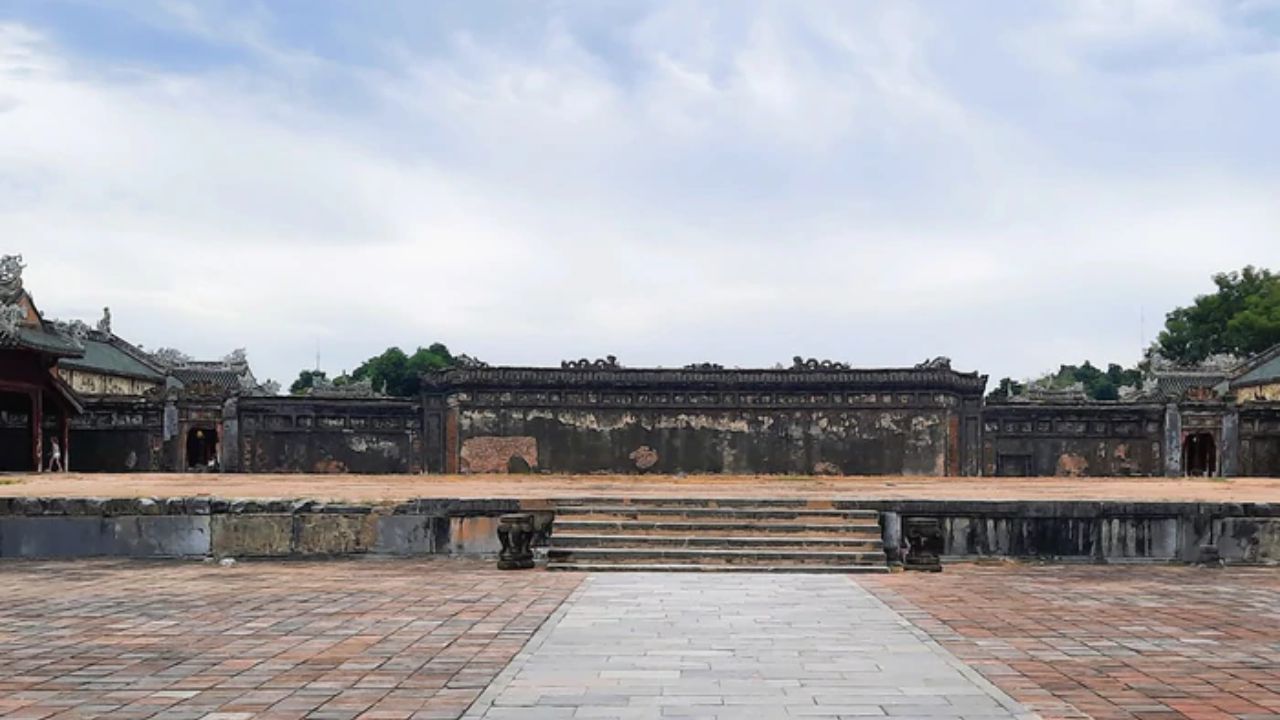
The structural layout follows strict traditional symmetry. The Forbidden Purple City expands across a massive 114,000 m² footprint enclosed by 3.72-meter-tall brick perimeter walls. The long sides stretch 324 meters while the short sides measure 290 meters.
Ten gates connect the inner compound to the surrounding Hue Citadel. The primary entry point is Dai Cung Mon (the Great Palace Gate), positioned on the southern wall directly behind Thai Hoa Palace.
Prominent Restored Palaces and Pavilions
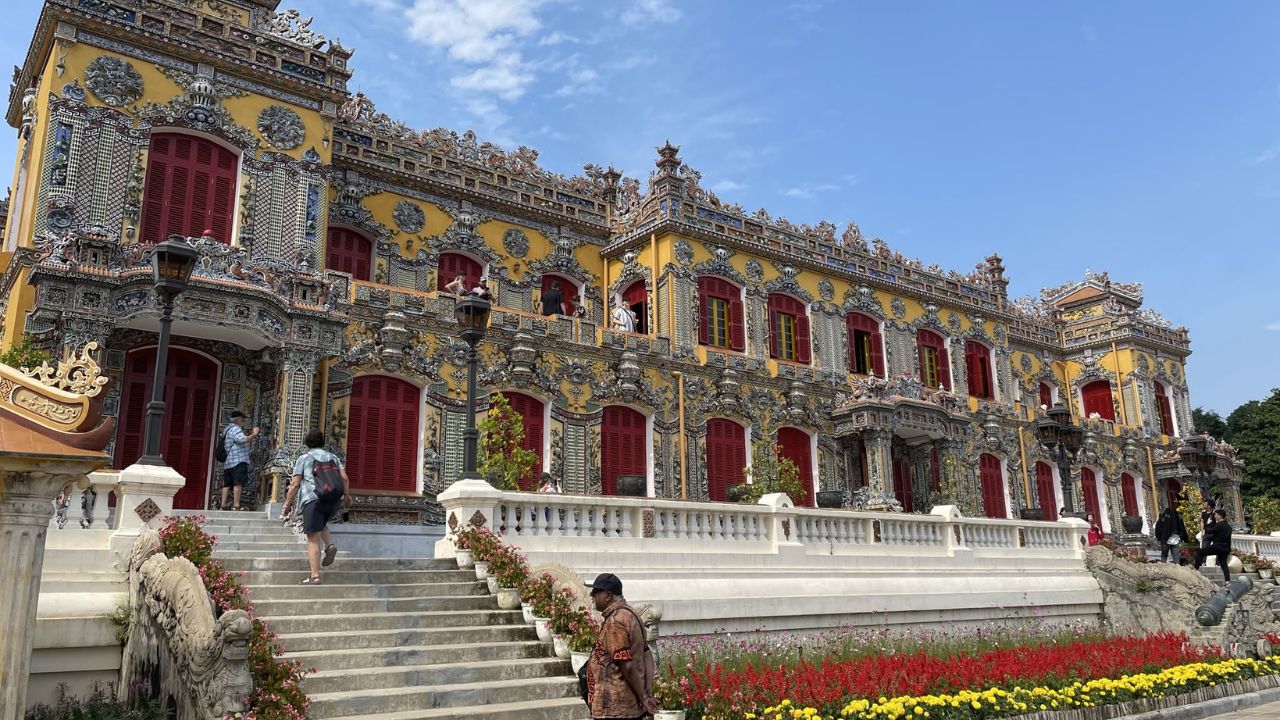
- Kien Trung Palace: Constructed between 1921 and 1923 under King Khai Dinh, this palace served as the home for Emperor Bao Dai (the last king of Vietnam) and his family. It features a unique fusion of French colonial architecture and classic Vietnamese decorative art. It recently reopened after a comprehensive 5-year restoration.
- Thai Binh Pavilion: Standing 10 meters tall, King Dong Khanh built this reading retreat in 1887. The structure stands out for its intricate ceramic mosaic craftsmanship reflecting off surrounding quiet ponds.
- Nhat Thanh Pavilion and Thieu Phuong Garden: King Thieu Tri built Nhat Thanh Pavilion in 1841 for royal family members to read and compose poetry. Nearby lies Thieu Phuong Garden, a peaceful green retreat laid out in a swastika pattern of covered walkways.
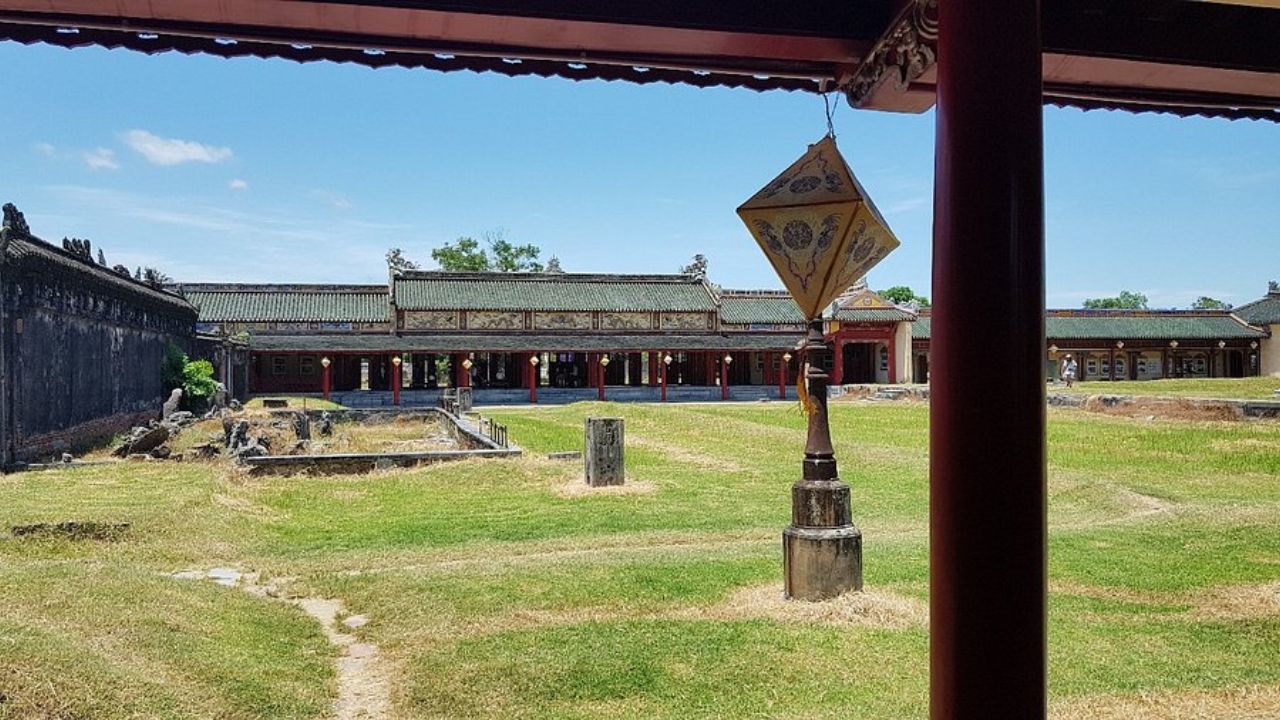
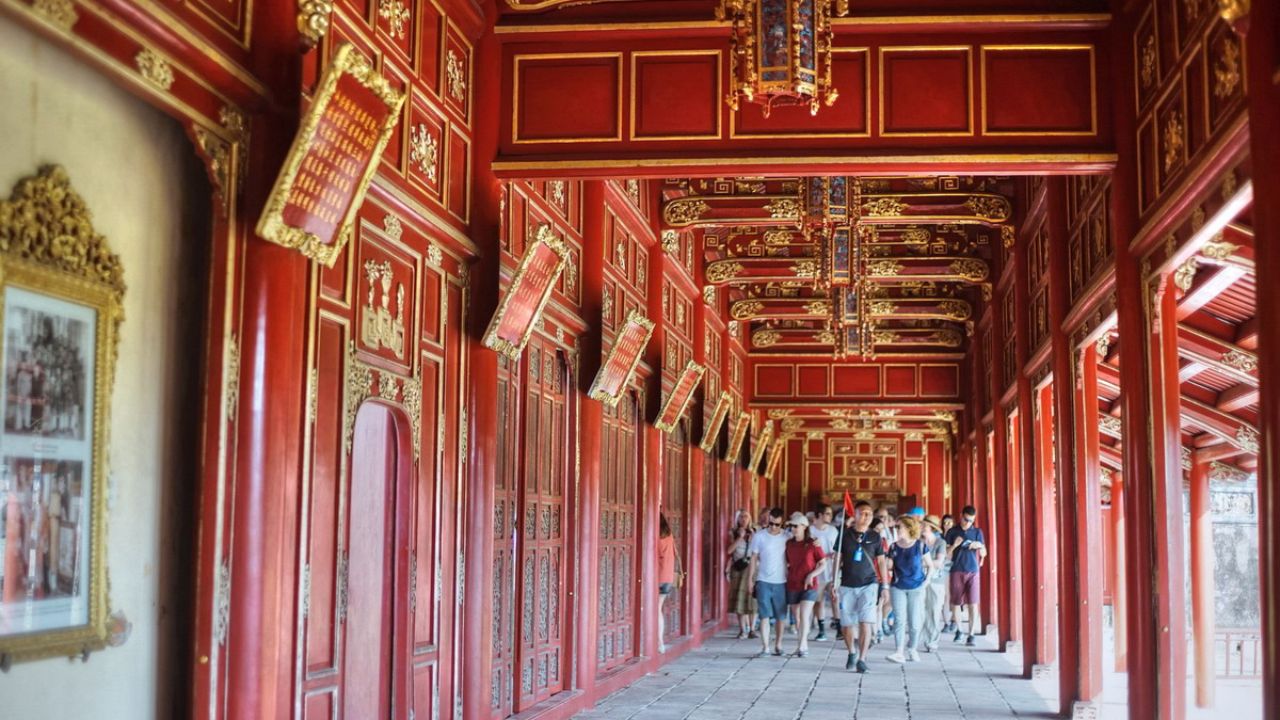
- Truong Lang (Long Corridors): The Truong Lang spans nearly 1 km of covered, lacquer-red wooden walkways connecting the core palaces. Walking here gives me a strong sense of how royalty moved between buildings sheltered from rain and sun.
Cultural Performance Venues and Historic Artifacts
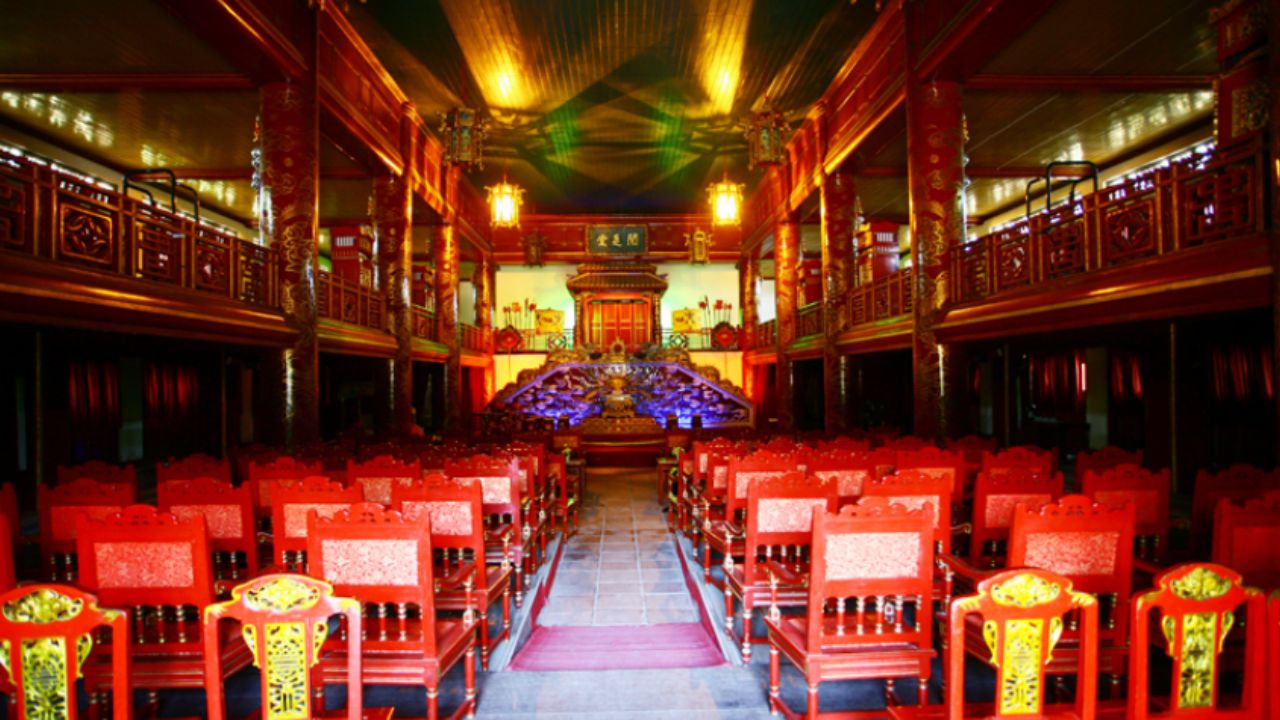
Beyond living quarters, the royal sanctuary hosted high art and ceremonial symbols:
- Duyet Thi Duong Royal Theatre: Built in 1826 under King Minh Mang, this is the oldest remaining royal theater in Vietnam. Historically, royalty watched classical Tuong opera here. Today, you can attend live performances of Nha Nhac (Hue Court Music), an intangible cultural heritage recognized by UNESCO.
- Ta Vu and Huu Vu (West and East Houses): Built in 1819 on either side of the Can Chanh Palace courtyard. Ta Vu features exhibits on imperial literature and architecture, while Huu Vu houses a visitor center and photography rental shop where you can try on royal costumes.
- Ancient Bronze Urns: Cast by the Nguyen Lords, these 7 massive bronze urns are over 300 years old. Recognized as a National Treasure of Vietnam, they symbolize the stability and lasting authority of the monarchy.
Historical Foundations of Lost Palaces
While restoration efforts continue, several areas feature historic brick foundations where grand halls once stood before the 1947 fires:
- Can Chanh Palace (Palace of Audiences): Originally built by King Gia Long in 1804 for high-level government meetings on fixed lunar dates.
- Can Thanh Palace: Located directly behind Can Chanh Palace, this served as the private residence for the emperor.
- Khon Thai Palace: Situated behind Can Thanh Palace, this served as the official quarters for the imperial noble consort (hoang quy phi).
Visitor Guide: Opening Hours, Ticket Fees, and Location
Getting to the Complex
The complex is located on 23/8 Street in Phu Xuan District, Hue City. Positioned inside the Hue Citadel along the northern shore of the Perfume River, it is easily reachable via taxi, bicycle, or walking from downtown Hue.
Also, read our guide on exploring top historical landmarks in Central Vietnam.
Operating Hours and Entrance Pricing
| Ticket Type | Price (VND) | Details |
|---|---|---|
| Adults | 200,000 VND | Includes access to the wider Imperial City complex |
| Children (7–12 years) | 40,000 VND | ID or height check may be required |
| Children (Under 7) | Free | Free entry for young kids |
Opening hours vary slightly by season:
- Summer / Dry Season: 6:30 AM – 6:00 PM
- Winter / Rainy Season: 7:00 AM – 5:30 PM
Essential Rules and Travel Tips for Exploring the Royal Citadel
Dress Code and Conduct
Because the citadel grounds house active altars and sacred historical spaces, modest clothing is strictly enforced. I always make sure my shoulders, chest, and knees are fully covered before entering. Avoid thin, see-through fabrics.
Seasonal Weather Preparation
Hue weather reaches extremes depending on when you travel:
- Dry Season (March to August): It gets quite hot. Bring a wide-brim hat, sunscreen, sunglasses, and plenty of drinking water.
- Rainy Season (September to February): Frequent heavy downpours occur. Pack a light poncho, a sturdy umbrella, and wear waterproof footwear. Storms and floods often occur in October and November, so make sure to plan the trip before going.
Plan to allocate roughly 1 to 2 hours inside the purple city grounds, or 3 to 4 hours if you wish to tour the entire imperial complex. To help plan your full itinerary, you can book a Hue city day tour with us.
Neighboring Heritage Sites Within the Hue Imperial Complex
You can easily pair your walk through the purple city with nearby landmarks within the same ticketed area:
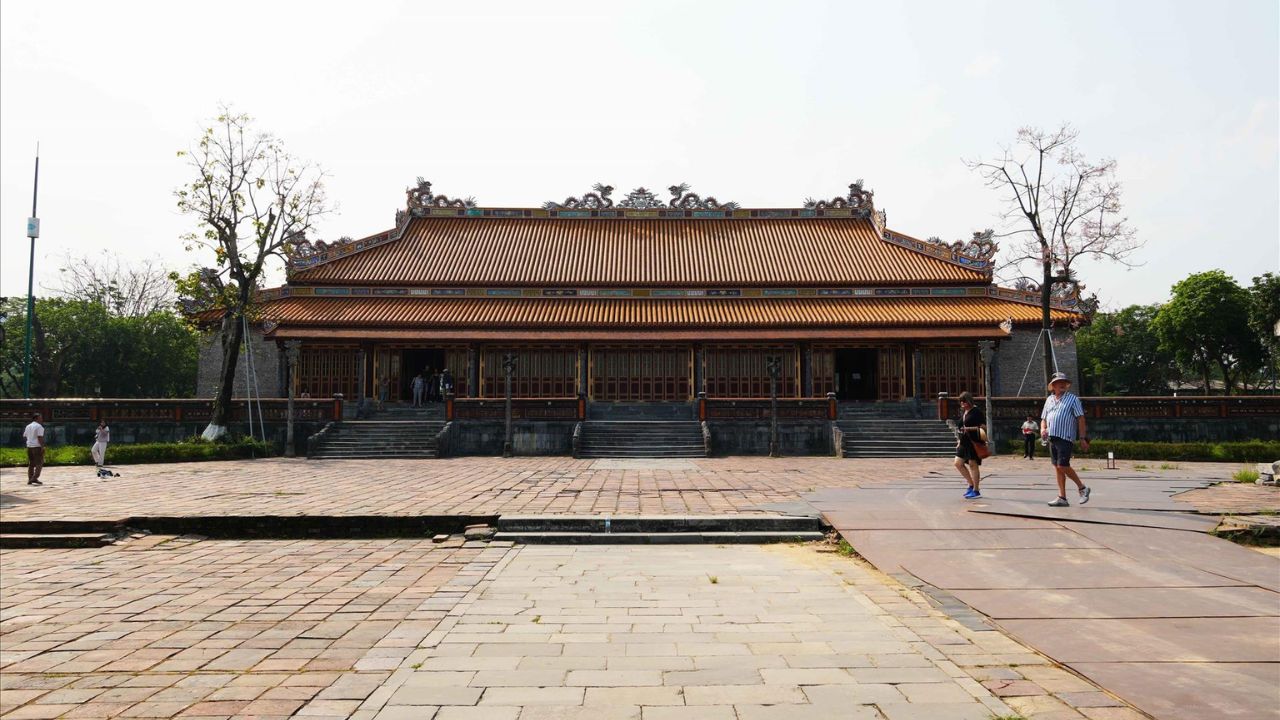
- Thai Hoa Palace: The grand hall of Supreme Harmony situated right at the front gate.
- The Mieu Temple: Ancestral shrine dedicated to the emperors of the dynasty.
- Nine Dynastic Urns (Cuu Dinh): Nine giant tripod bronze vessels standing in the courtyard of The Mieu Temple.
- Dien Tho Palace: The peaceful residence of the Queen Mothers.
- Truong Sanh Residence: Royal garden residence built for Dowager Empresses.
FAQs about Purple Forbidden City
Is the Forbidden Purple City actually purple?
No, the buildings are not painted purple. The word “Purple” comes from the Chinese term for the polar star, symbolizing the emperor’s heavenly authority. The buildings are painted red and golden yellow.
How much time do I need to tour the Forbidden Purple City Hue?
I recommend spending about 1 to 2 hours specifically inside the purple city enclosure. If you want to explore the whole Hue Imperial City, plan for 3 to 4 hours.
Can I hire a tour guide at the gate?
Yes, local English-speaking guides are available for hire near the main entry gates of the citadel, or you can book a guided tour in advance.
