
Thanh Toan Bridge Hue: History, Architecture & Visitor Guide
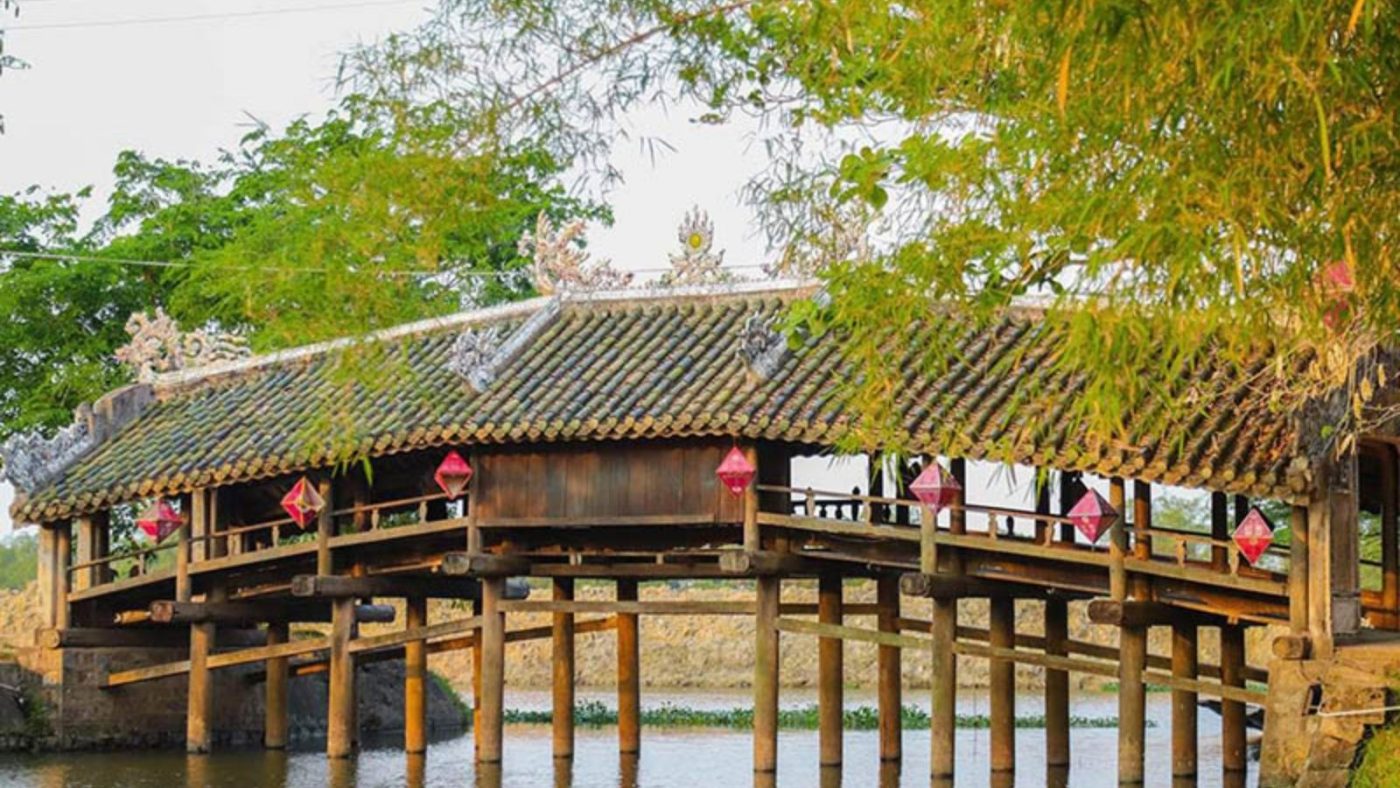
Thanh Toan Bridge Hue sits quietly outside the busy tourist trail, yet it holds one of the most fascinating stories in the whole province. This ancient tile-roofed bridge blends history, craftsmanship, and community life into one small stretch of wood and ceramic tile. From the tale of the woman who built it, to the seven-compartment roof structure, to the festivals still held here every year, there’s a lot packed into this modest countryside landmark.
This guide walks through where to find the bridge, what makes its architecture so unusual, which festivals bring it to life, and practical details for planning a smooth visit — everything needed before booking a trip out to Thanh Toan.
Where Is Thanh Toan Bridge and How to Get There

Thanh Toan Bridge Location
Thanh Toan Bridge sits in Thuy Thanh Commune, Huong Thuy Town, part of Thua Thien Hue Province. It’s tucked into a quiet corner of countryside, not in the middle of the city, so I always tell people not to expect crowds or souvenir shops lining the path.
From Hue’s city center, the bridge is roughly 6 to 8 kilometers away. That’s close enough to reach on a short motorbike ride, but far enough that you feel the shift from urban streets to rice paddies pretty quickly. A taxi or Grab ride takes around 12 to 17 minutes, and honestly, that’s the option I recommend if you’re not confident riding a scooter through Vietnamese traffic.
Here’s a quick breakdown of travel times by transport method:
- Motorbike: about 15–17 minutes
- Car or taxi: about 12–15 minutes
- Cyclo or bicycle: around 30 minutes
Best Routes from Hue City Center
The most straightforward route follows To Huu Street, then continues onto Vo Nguyen Giap Street. At the intersection with Hoang Quoc Viet Street, turn left and keep following the road until you reach Thuy Thanh Commune. Some locals also suggest turning at the Hoang Quoc Viet intersection directly toward the Tile Bridge market — either way works, and the roads are well paved.
If this is your first stop in Hue, it pairs naturally with a broader day exploring the region. Many travelers combine it with a longer list of things you can experience around the city, and honestly, planning a route that covers a few countryside stops in one afternoon is one of the smarter ways to see Hue without wasting daylight.
History and Legacy of Mrs. Tran Thi Dao

The story behind this covered bridge is just as beautiful as its physical structure. Back in the 15th century, 12 patriarchs settled in this area, and by 1776, a charitable woman named Mrs. Tran Thi Dao made history here. As a 6th-generation descendant of the Tran family and wife of a high-ranking official under King Le Hien Tong, she personally funded the construction of Thanh Toan Bridge.
She noticed that local villagers struggled to cross the canal for daily farming and work. So, she used her own wealth to build a sturdy covered crossing that also provided shelter for travelers. Deeply moved by her generosity, King Le Hien Tong reduced taxes for the entire village to encourage others to perform good deeds.
Later in 1925, King Khai Dinh officially ordered an altar set up inside the bridge to worship her. Over the centuries, local communities preserved the wooden structure through floods and wars by executing four major restorations in 1847, 1906, 1956, and 1971.
Architectural Features of the House Above Bridge Style
Structural Layout and Dimensions
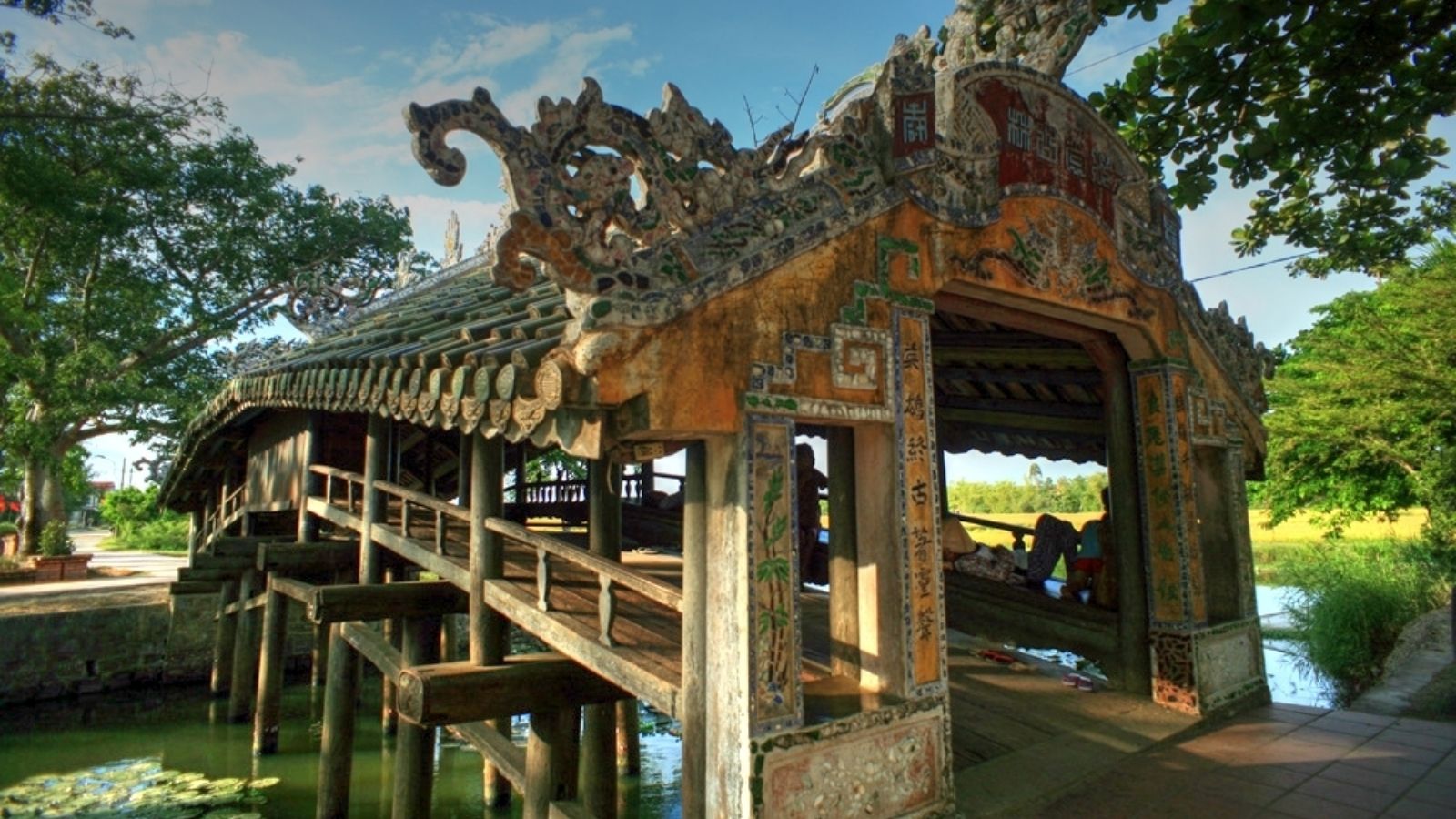
The architectural style here is known as “house above a bridge” (Thuong Gia Ha Kieu). This style combines a functional bridge deck with a full roof and shelter system above it. Originally built in 1776, the bridge measured 18.75 meters in length and 5.82 meters in width. After various restoration efforts over time, the current modern dimensions measure 16.85 meters long and 4.63 meters wide.
The structure is divided into 7 distinct compartments:
- 6 Side Compartments: These areas feature wide wooden stages and railings where travelers can sit down, catch a cool breeze, and rest.
- 1 Central Compartment: This locked middle section houses the sacred altar dedicated to Mrs. Tran Thi Dao.
Materials and Structural Integrity
The construction relies on classic materials of ancient Vietnam, specifically wood, bricks, and ceramic tiles. The support system features 3 rows of round wooden pillars set across 6 columns. These pillars are joined using traditional tenon blocks rather than complex metal fasteners, which helps prevent ground subsidence.
Up above, the roof is layered with glazed pipe tiles in dark brown and lapis lazuli shades. At the very top of the roof ridge, detailed porcelain-inlaid decorations feature two soft-curving dragons flanking a central sun symbol.
Architectural Comparison: Thanh Toan Bridge vs. Japanese Covered Bridge (Cau Pagoda)
It is helpful to compare this site with another famous structure in Vietnam:
- Thanh Toan Bridge: Located in a quiet, rural village surrounded by fields. It uses plain, unadorned round wooden pillars that highlight authentic countryside design.
- Japanese Covered Bridge (Cau Pagoda): Located in the bustling, urban trading port of Hoi An. It features more ornate Japanese and Chinese decorative influences.
Both share the rare “house above a bridge” framework, but Thanh Toan Bridge Hue offers a far more tranquil, rustic atmosphere.
Festivals and Events at Thanh Toan Bridge
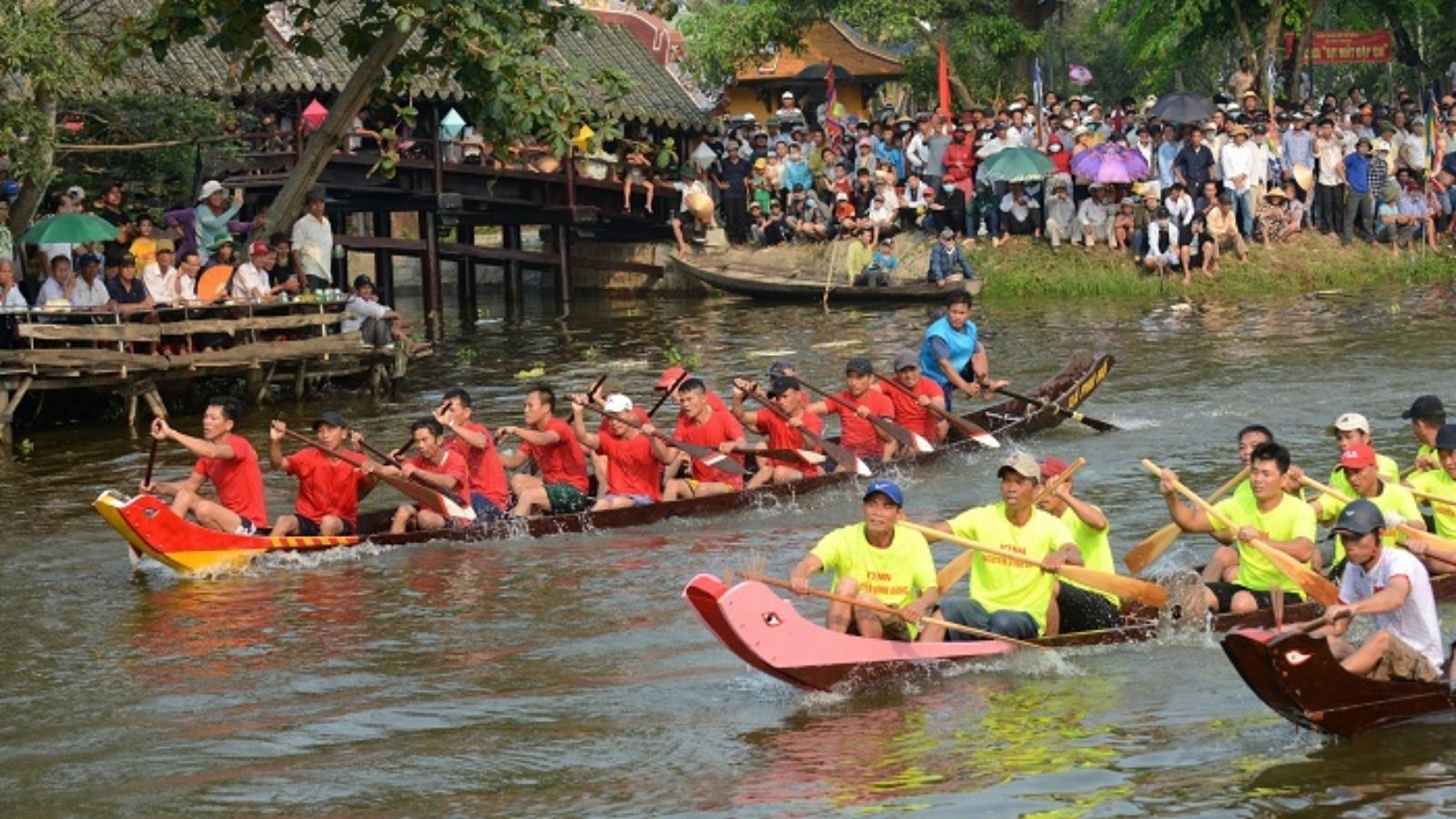
If you want to experience the absolute peak of local culture, try visiting during one of the annual festivals held around the bridge ground:
- Bai Choi Festival: Takes place on the 3rd day of the Lunar New Year (after Tet Holiday). This event combines traditional folk singing, theatrical performances, and card games recognized by UNESCO as Intangible Cultural Heritage.
- Tran Thi Dao Commemoration: Held every year on the 15th day of the 8th lunar month (Mid-Autumn Festival). The village gathers at the communal house for solemn rituals commemorating her death and lasting contributions.
- Hue Festival: Occurs every two years (biennial). During this celebration, the village organizes a grand procession carrying the memorial tablet of Mrs. Tran Thi Dao to launch the “Festive Day on the Countryside Market.”
- Traditional Folk Games: During festive seasons, the canal and nearby temple yard host sailboat racing, water puppetry, fish catching, tug-of-war, human chess, and blind man’s buff.
Culturally Rich Activities and Attractions Around Thanh Toan Village
Visiting this landmark goes far beyond just crossing a bridge. I like starting my visit right at the bridgehead. You can sit on the thick wooden platforms inside, enjoy the breeze, and look out over the canal filled with water lily blossoms. Right next to the structure stands a giant hundred-year-old banyan tree, a countryside temple, and sprawling green rice fields.
Just a short walk away sits the traditional Thanh Toan Rural Market. Here, local vendors sell fresh produce, fish, agricultural tools, and local street foods. Beyond shopping, you can take part in engaging village experiences:
- Rent a bicycle and pedal along quiet countryside paths.
- Row a small wooden boat along the village canal.
- Learn how to wrap traditional sticky rice cakes (Banh Chung and Banh Tet).
- Try your hand at making iconic Vietnamese conical hats with local artisans.
Visitor Information for Thanh Toan Bridge
Here are the practical numbers before you go:
- Opening hours: 24/24 daily
- Entrance fee: 30,000 VND
- Best suited for: solo travelers, couples, families, and groups alike
The best time to visit is right after Tet Holiday or during the Mid-Autumn Festival, since these are the two periods when the bridge’s most important festivals take place. Visiting outside these windows is fine too — it’s just quieter, more of a neutral, low-key countryside stop rather than a festive one.
FAQs About Thanh Toan Tile-roofed Bridge Hue

Is Thanh Toan Bridge worth visiting?
Yes. It’s a rare example of 18th-century “house above bridge” architecture, and the surrounding countryside adds a peaceful contrast to Hue’s more crowded royal tombs and citadel.
How much does it cost to enter?
The entrance fee is 30,000 VND, and the site stays open 24 hours a day.
How far is Thanh Toan from Hue city center?
It’s about 6 to 8 kilometers southeast, roughly 15 minutes away by motorbike or car.
Is Thanh Toan Bridge similar to the Japanese Covered Bridge in Hoi An?
They share the same architectural style, but they’re not alike in materials, proportions, or overall feel once you see them in person.
When is the best time to visit?
Right after Tet Holiday or during the Mid-Autumn Festival, when the bridge hosts its most significant cultural events.
Thanh Toan Bridge Hue rewards travelers who slow down and look past the obvious postcard spots. Between the story of Tran Thi Dao, the seven-compartment tiled roof, and the seasonal festivals still celebrated today, this small countryside bridge offers a genuinely memorable stop. Pair it with a market visit, a bit of cycling through rice paddies, and a well-timed festival date, and it turns into one of the most satisfying half-days you can spend outside central Hue.
