
Attractions
Japanese Bridge Hoi An: History, Architecture & Visitor Guide
Sep
Ever wandered through a 400-year-old living museum and wondered how it survived centuries of floods and changing dynasties?
Let us take you straight to the heart of Vietnam’s most iconic landmark – Japanese Bridge Hoi An. Standing proudly in the middle of a UNESCO World Heritage Site, this covered bridge connects past and present like nothing else we have ever seen. If you love discovering legendary spots that grace national currency, you are in the right place. Let’s dive into.
Discovering the History and Legends Behind the Japanese Bridge

Walking across the wooden planks of the Japanese Bridge Hoi An, we often feel the weight of four centuries beneath our feet. Japanese businessmen initially helped build this remarkable structure back in the 17th century. Like many travelers, we love uncovering old stories, and this bridge carries one of the most fascinating legends in Southeast Asia.
Ancient folklore connects the crossing to a mythological Japanese monster named Namazu. People believed this creature caused massive earthquakes and floods because its head sat in India, its body stretched across Vietnam, and its tail reached Japan. To pin down the monster’s back, builders designed this bridge to act like a magical sword. Consequently, this kept natural disasters at bay, ensuring peace and prosperity for Vietnam, Japan, and India.
Years later, in 1719, Lord Nguyen Phuc Chu visited the area and carved three Chinese characters above the entrance. Locals translate this name as Lai Vien Kieu, meaning the bridge to receive guests from afar. On February 17, 1990, the government officially recognized the landmark as a National Historic-Cultural Heritage Site. Today, it remains a breathtaking reminder of a bustling trading port.
Architecture and Design of the Bridge
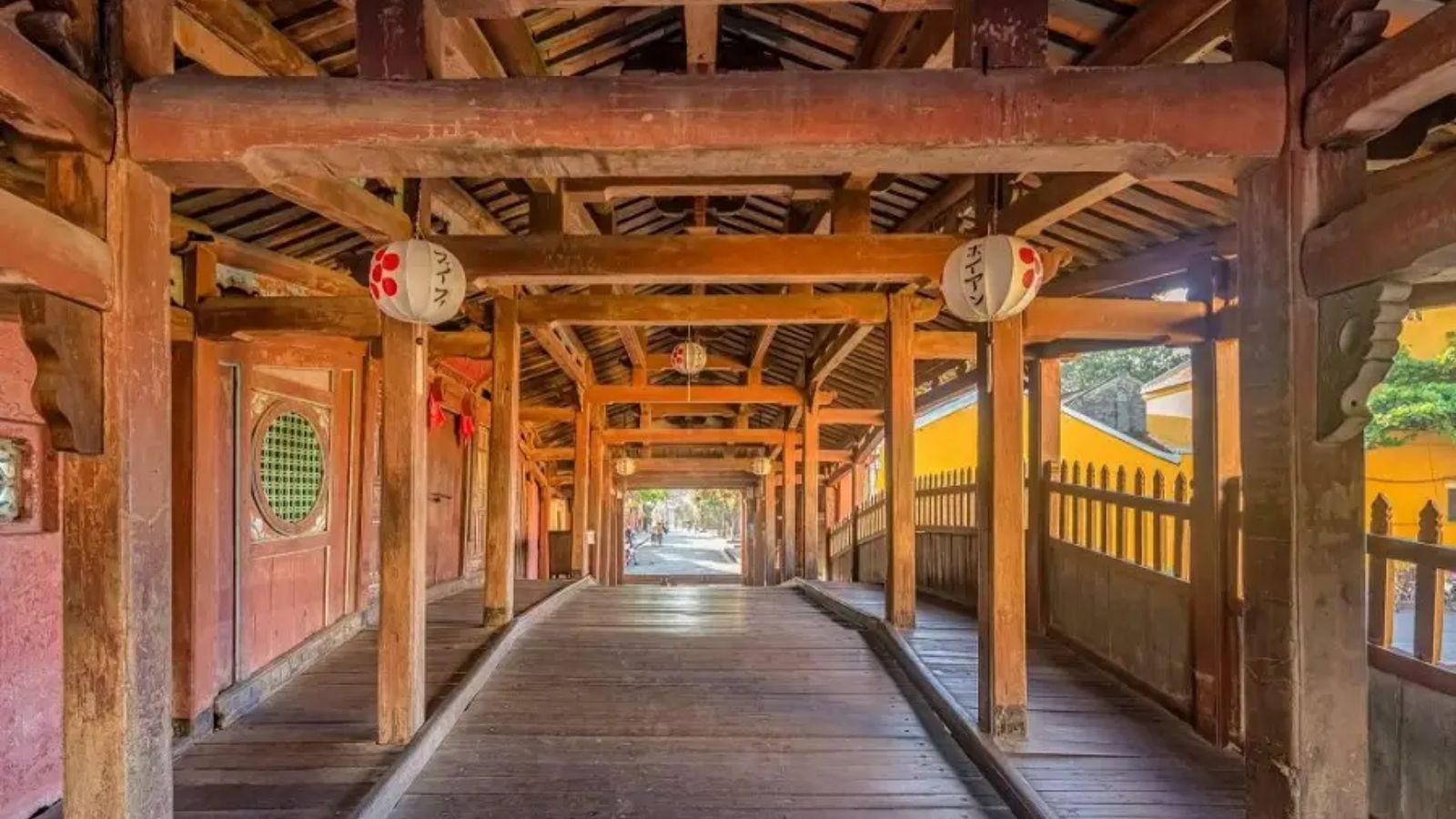
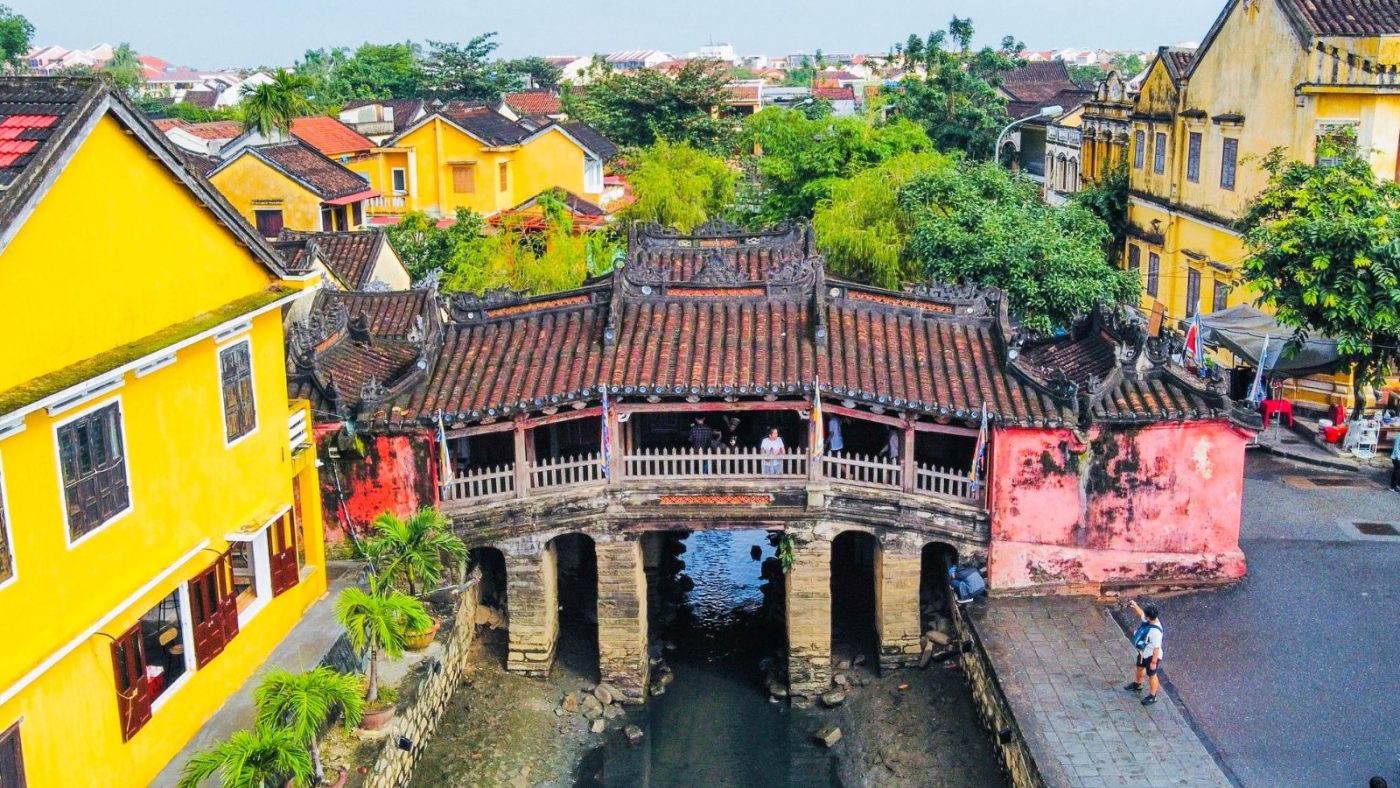
The bridge stretches 18 meters across the river. That’s not huge, but every inch counts. Builders used red lacquered wood for the structure and roof. The base, though, rests on solid stone.
What strikes me most is the blend of cultures here. Vietnamese, Japanese, and Chinese influences all show up in the design. You’ll spot this mix in the materials, patterns, and layout. It’s not like a single-style building you’d find elsewhere.
The curved roof gives the bridge its signature Japanese look. Yin and yang patterns decorate the top, adding a Vietnamese touch. Small corridors run along both sides. Benches invite visitors to sit and take in the river view.
Two guardian statues stand watch at each end. A dog sits at one side. A monkey sits at the other. These animals symbolize protection in Japanese culture. Local legend says construction began in the Year of the Monkey and finished in the Year of the Dog.
Behind a thin wooden wall sits the temple portion. Unlike most Vietnamese temples, this one doesn’t worship Buddha. Instead, it honors Tran Vo Bac De, a deity linked to happiness, wealth, and health. That detail alone makes this Hoi An temple bridge unique among Vietnam’s religious sites.
Renovation History of the Japanese Covered Bridge
Nothing lasts forever without upkeep. This bridge has survived seven major renovations across roughly 400 years. Records point to work done in 1763, 1815, 1875, 1917, 1962, 1986, and 1996.
The Minh Huong Commune handled the earliest three repairs. During French colonial rule, officials made a bold change in 1917. They converted the pedestrian-only bridge to support motorized vehicles. That decision didn’t last, though.
By 1986, the bridge returned to its original pedestrian-only design. That renovation, along with the 1996 update, counts as the most significant work done on the structure.
Flooding has taken a toll over the years. Poles and beams weakened, raising concern about safety. In response, the Quang Nam provincial government approved a preservation project worth nearly one million dollars. Work began in early 2020 to protect this landmark for future generations.
Interesting Facts About the Japanese Covered Bridge
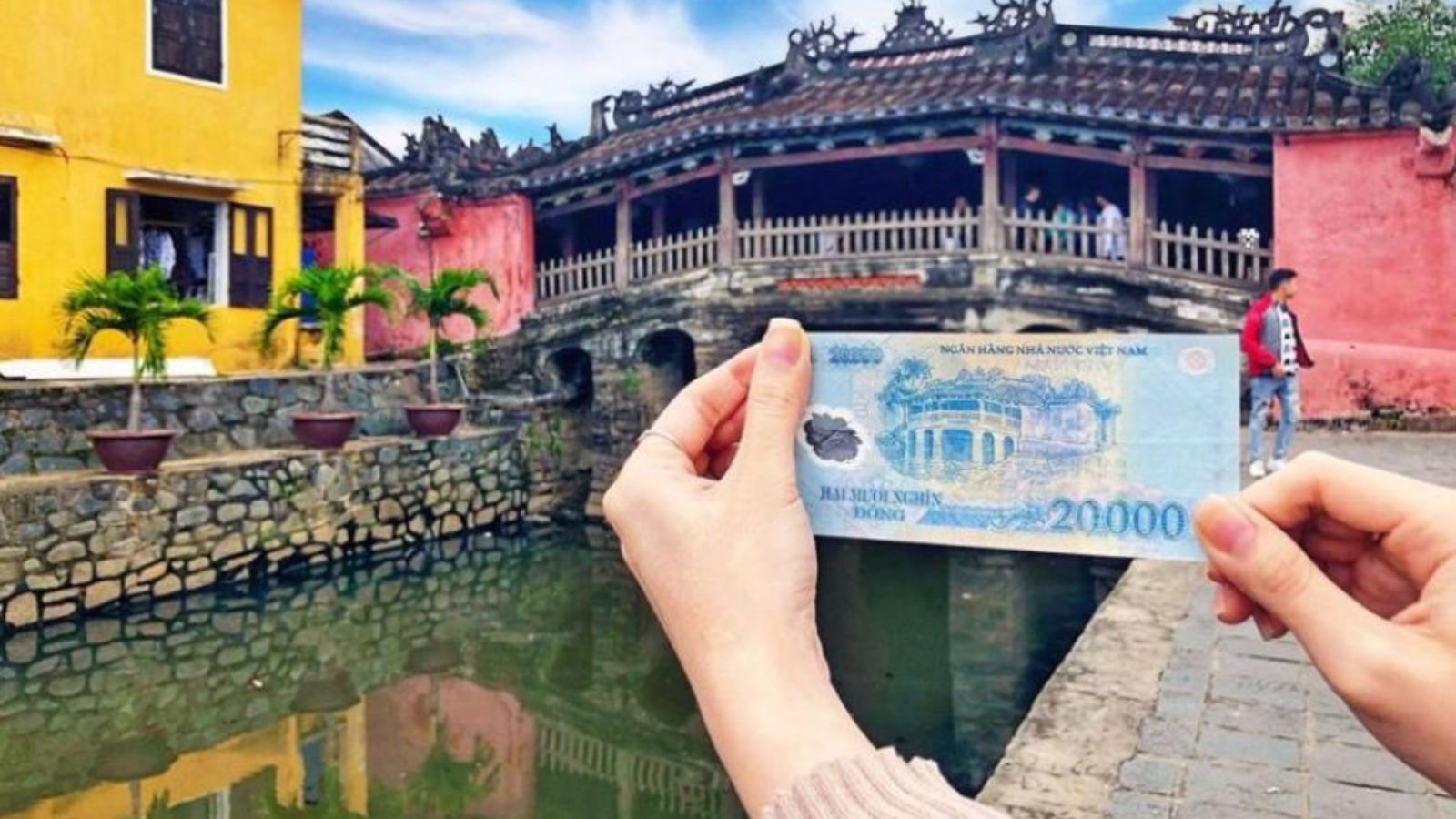
A few details make this bridge stand out from typical tourist stops.
- Its image appears on the back of Vietnam’s 20,000 VND banknote.
- The attached temple doesn’t worship Buddha, unlike most Vietnamese temples.
- The structure actually has two separate parts: the bridge and the temple.
That last point surprised me the first time I learned it. The bridge came first, built over the Thu Bon River. The temple followed roughly 60 years later, added to the north side. Together, they form what locals call “Chua Cau,” meaning temple-bridge.
How to Get to the Japanese Bridge
Finding this landmark isn’t hard, even for first-time visitors. Start at Central Market, then walk down Tran Phu Street. Cafes and restaurants line both sides of the road. Grab a drink or snack before continuing your walk.
Once you reach the end of the street, the bridge entrance appears. The full address is Nguyen Thi Minh Khai Street, Hoi An Ward, Da Nang City.
Good news for budget travelers: entry is completely free. The bridge stays open 24 hours every day, so there’s no rush to plan around opening times.
Best Time and Tips for Visiting the Japanese Bridge
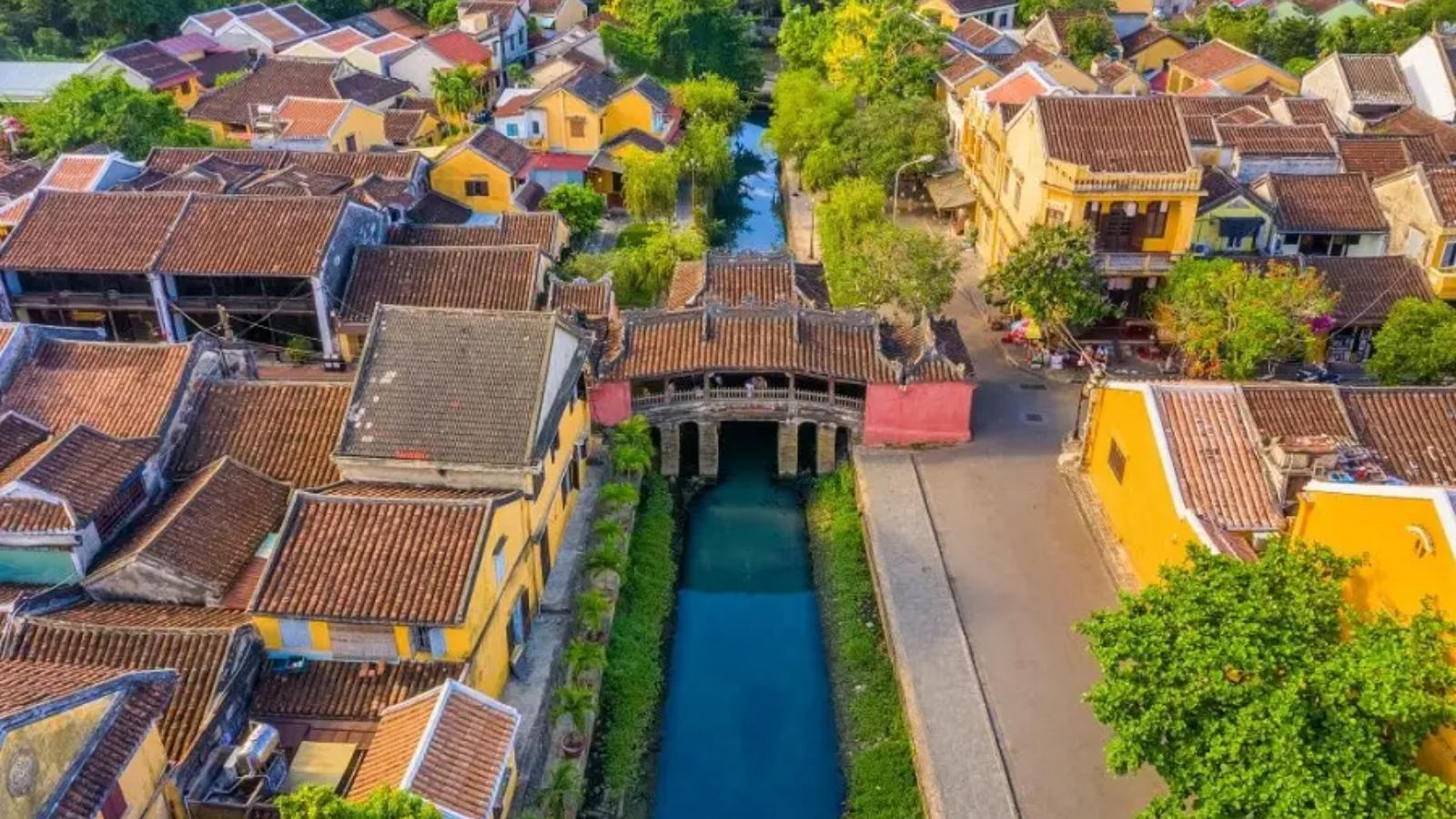
Timing matters if you want a peaceful visit. Aim for the window between 9:00 a.m. and 3:00 p.m. Crowds thin out during these hours, giving space for photos and quiet moments.
Evenings bring a different kind of energy. Between 7:00 p.m. and 8:30 p.m., street performances and folk games fill the Old Town. It’s worth sticking around for that atmosphere.
Consider a bamboo boat cruise along the canal at night. Lights reflect on the water, creating a nostalgic mood. It’s a demo of Hoi An’s charm that photos alone can’t fully capture.
Hiring a local guide adds value too. Guides explain the bridge’s history and architecture in detail. That context makes the visit feel richer, not like a quick photo stop.
For deeper background on the area surrounding this landmark, check out this explore more Hoi An highlights guide from Rento Travel.
Nearby Attractions to Explore After the Japanese Covered Bridge
Once you’ve explored the bridge, other historic sites sit within easy walking distance.
- Quan Cong Temple — a peaceful shrine with striking details.
- Phuc Kien Assembly Hall — a 300-year-old hall showing Chinese influence.
- Tan Ky Ancient House — a seven-generation family home open to visitors.
Each spot adds another layer to the story of Hoi An. None of them feel like filler stops. They’re genuine pieces of the town’s long history.
