
Attractions
Fujian Assembly Hall: History, Architecture & Visitor Guide
Sep
Wandering through the yellow-walled alleys of Vietnam’s most famous trading port feels like stepping straight back into the seventeenth century. Among the dozens of historic monuments, the Fujian Assembly Hall stands out as a true masterpiece of ancient craftsmanship.
Built by the Fujian diaspora, this landmark showcases stunning Chinese architecture. Furthermore, it serves as a spiritual sanctuary for locals and travelers alike. Let us dive deep into what makes this heritage site an absolute must-visit.
History and Origins of the Phuc Kien Assembly Hall
The history of this remarkable monument dates back to the 1690s. Originally, the site was just a small thatched-roof Buddhist pagoda named Kim Son Pagoda. Back then, local fishermen built it to worship a sacred Buddha statue that had drifted ashore.
Following the collapse of the Ming Dynasty in China, the Qing Dynasty won power. Many loyalist families and merchants from the coastal Fujian province migrated southward.
Lord Nguyen permitted these families to settle in Hoi An. By 1757, wealthy Fujian merchants purchased the deteriorating pagoda grounds. They completely restored the structure and officially renamed it the Fujian Assembly hall. Years later, in 1990, the government officially designated the complex as a National Historic and Cultural Relic.
Architectural Design and Layout Features
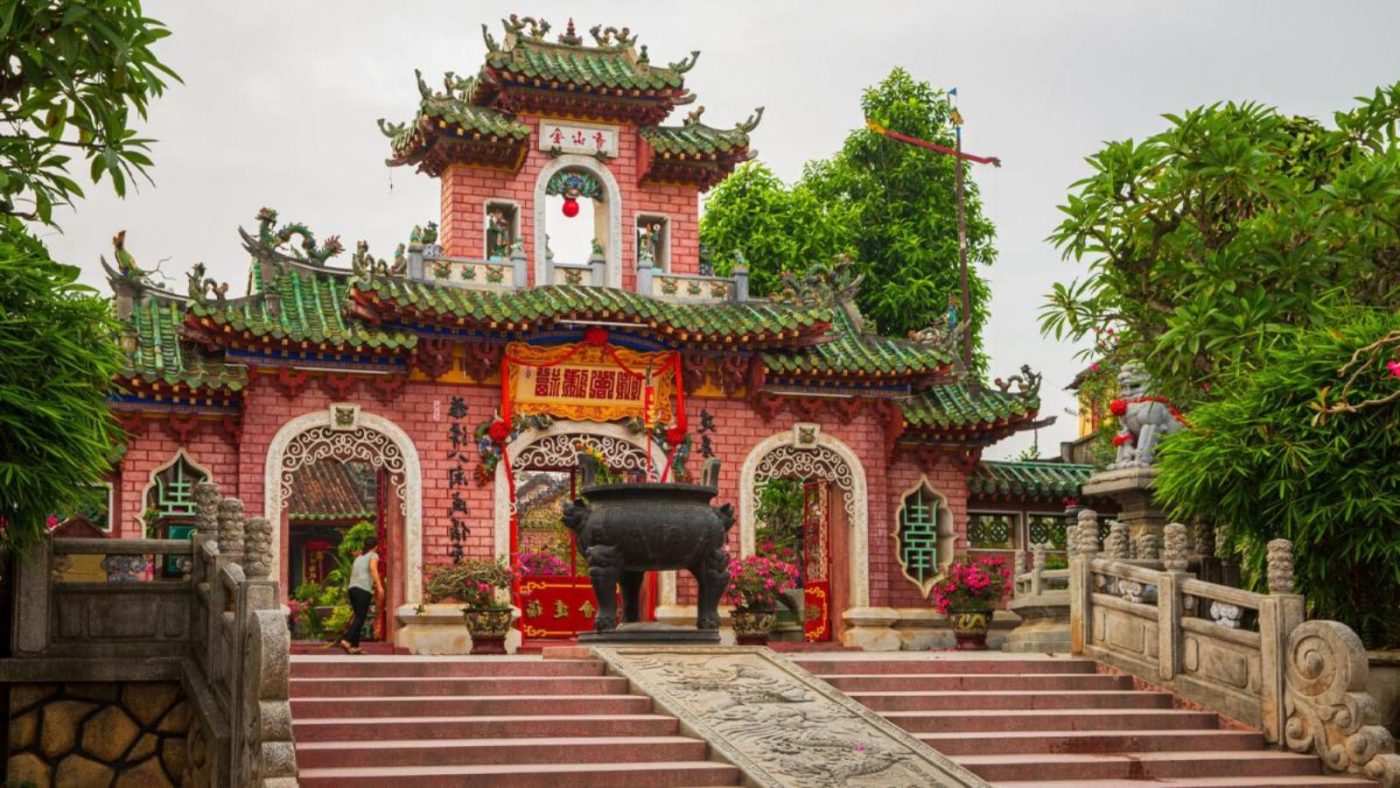
Walking into the complex reveals an astonishing 2000 square meters of architectural brilliance. The entire layout follows a traditional three-section design based on the Han character “三” (Tam – Three).
The structure is arranged in a deep axial sequence. First, you encounter the three-arched Tam Quan gate, which was constructed using durable brick and tile. This gate symbolizes Heaven, Earth, and Humanity. Beyond the gate lies an open forecourt featuring bonsai trees and a serene Koi Carp rockery.
The primary color palette relies heavily on vibrant red, symbolizing luck and prosperity in East Asian culture. Furthermore, the roofs feature traditional yin-yang roof tiles resting on sturdy carved wooden pillars.
Sacred Deities Worshipped Within the Sanctuary
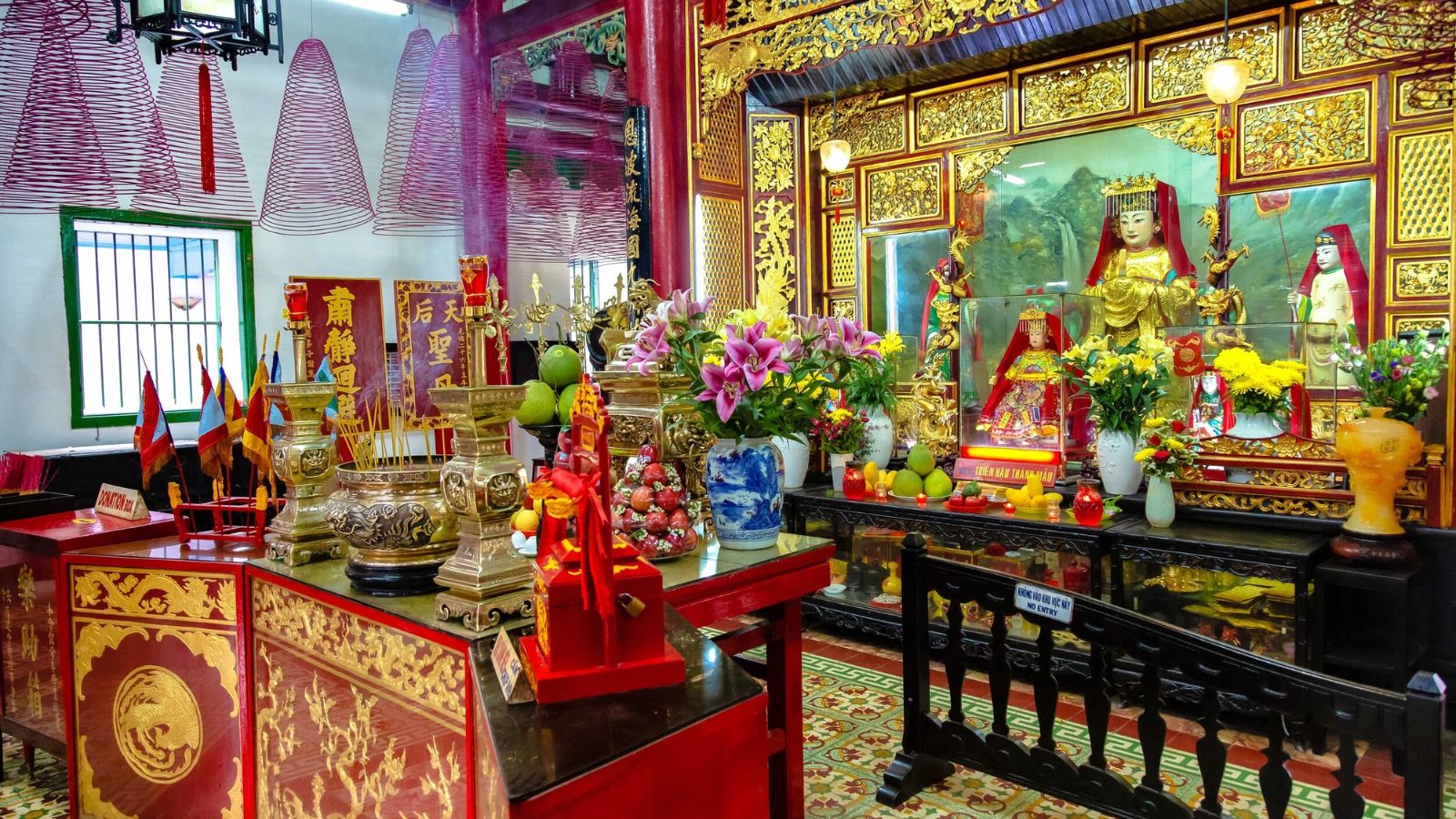
Inside the main sanctuary, the atmosphere shifts to deep reverence. The hall is primarily dedicated to Lady Thien Hau (Mazu), who serves as the revered goddess of the sea. Sailors and fishermen historically prayed to her for safe ocean voyages.
Flanking Lady Thien Hau are two guardian deities known as the Thousand-Li Eyes and Favorable-Wind Ears. These divine assistants help the goddess watch over travelers across vast distances.
Additionally, you will find altars dedicated to the Six Fujian Patriarchs, the Twelve Midwives, and the Three Ladies of Childbirth. I found it fascinating how locals still pray here for fertility and family well-being. You can also spot altars honoring the Sun God and Moon Goddess.
Cultural Traditions and Artifacts Inside the Hall
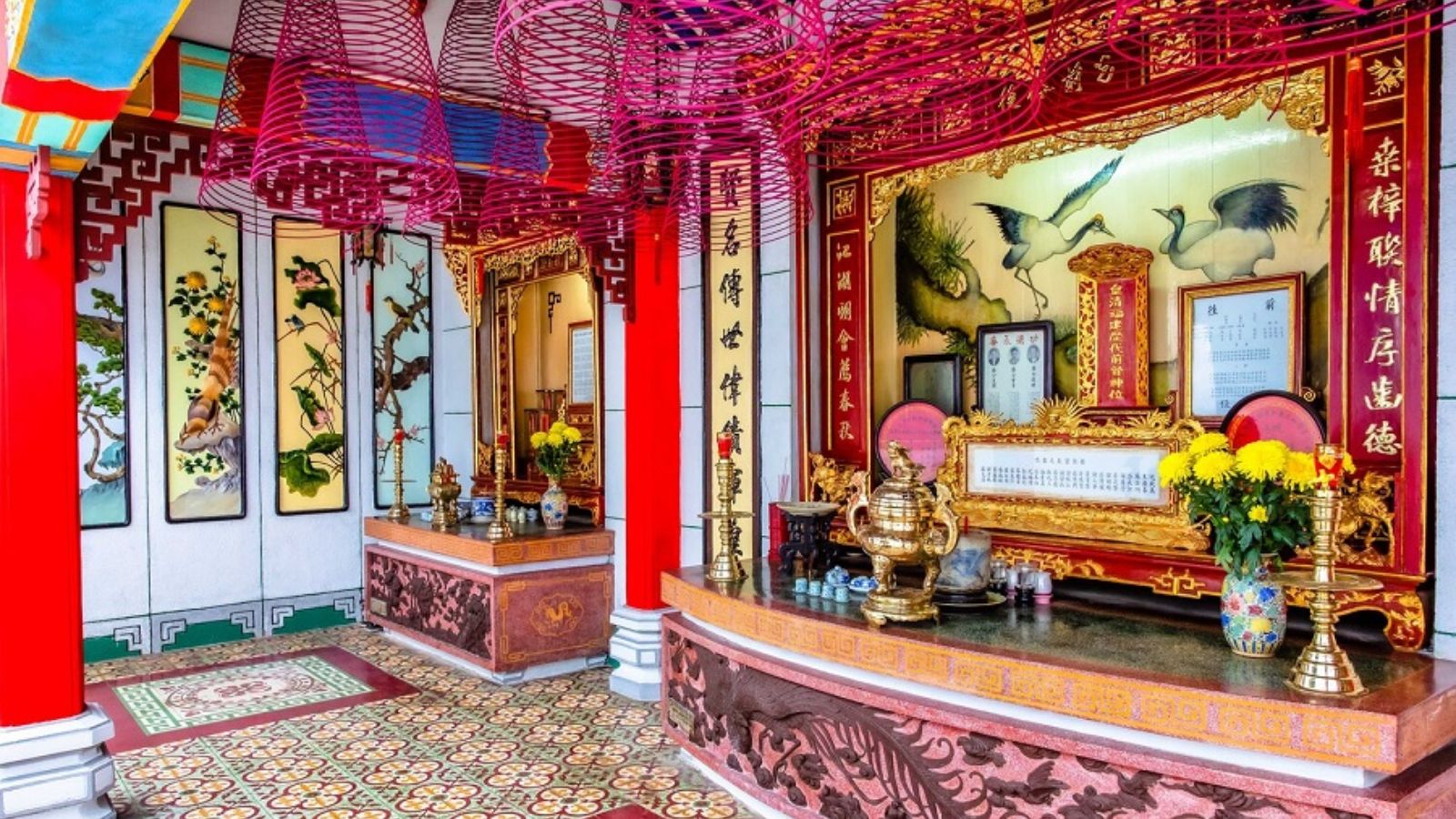
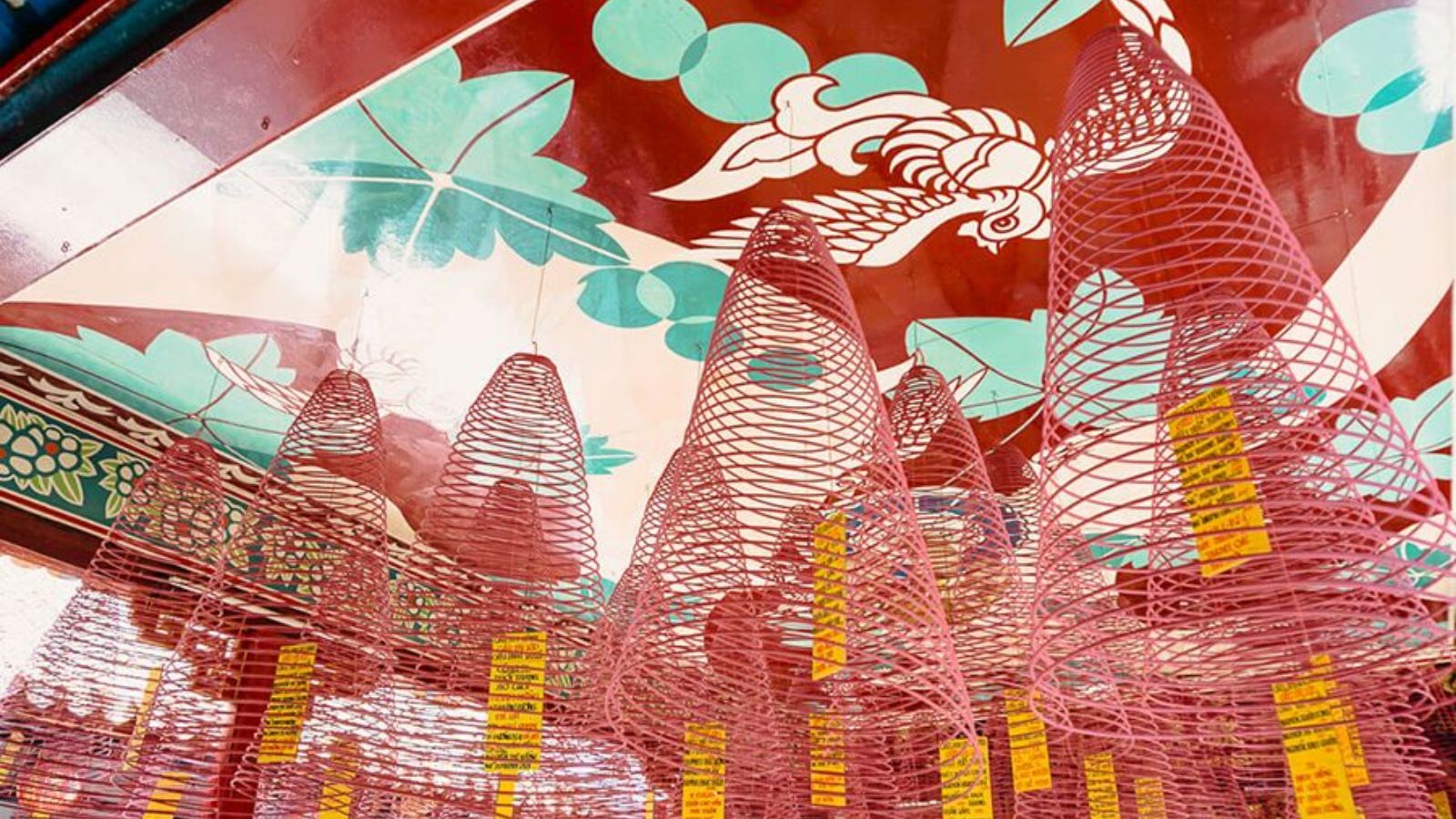
Walking deeper into the halls, you will notice massive spiral incense coils hanging densely from the ceiling. Visitors can write their personal wishes on slips of paper and attach them to these coils. Because these coils burn continuously for up to thirty days, they symbolize long-lasting prayers sent up to the heavens.
The site also houses priceless antiquities. A magnificent bronze bell cast in 1790 sits proudly within the complex alongside ancient bronze drums and gilded wooden statues. Visitors can inspect 14 lacquered horizontal plaques inscribed with ancient Chinese characters.
Another remarkable highlight is an intricate model of a nineteenth-century merchant ship. During major cultural events like the Lantern Festival or the Lady Thien Hau Festival, the entire courtyard fills with lively lion dances and local worshippers.
Fujian Hall Essential Visitor Information
Planning a trip can feel overwhelming, but I always keep my checklist handy. The Fujian Assembly Hall sits proudly at 46 Tran Phu Street, Hoi An. You can easily walk there from the famous Japanese Bridge in about six minutes.
Doors open daily from 7:00 AM to 5:00 PM. Admission requires a standard Hoi An Ancient Town ticket, which costs around 120,000 VND for international visitors.
If you are planning a trip, checking out a comprehensive Hoi An sightseeing route will help you map out your daily itinerary easily.
Exploring Nearby Heritage Sites and Local Cuisine
After exploring the sacred rooms, you can easily walk to other famous landmarks nearby. The historic Japanese Covered Bridge and the preserved Tan Ky Old House sit just a short stroll away down Tran Phu Street.
When hunger strikes, I always love trying regional street food. You must sample Fujian stir-fried noodles, which feature soft rice noodles tossed with dried shrimp, dried squid, diced pork, and fresh greens.
Other local specialties like cao lầu, mì Quảng, sweet soup (chè), and tofu pudding (tào phớ) are widely available around the corner. Finally, you can browse nearby shops to purchase colorful handmade lanterns and traditional handicrafts as souvenirs of your journey.
